Hassan Lahouti; a translator who reintroduced Rumi
Iran’s Book News Agency (IBNA) Provincial Service – Jamal Modirshanehchi, writer and researcher: The region of Khorasan, this fertile land of Persian culture and literature, has always been a place for nurturing brilliant figures whose glow of knowledge and art has illuminated the expanse of Iran. From the famous Ferdowsi to Attar of Nishapur and Asadi Tusi and Khajeh Nizam al-Mulk Tusi and… this land has nurtured valuable individuals whose names are intertwined with Iranian identity.
This treasure trove is not limited to the past. In the present era, Razavi Khorasan has also introduced poets, writers, and thinkers to society, each of whom has played a significant role in the flourishing of the culture and literature of this land. Luminaries such as Mohammad Reza Shafiei Kadkani, Malek-o-Sho’ara Bahar, Akhavan Sales, Badiozzaman Forouzanfar, and many others, who, with their thought and exquisite works, have not only preserved the Persian language but also provided a comprehensive picture of the concerns, aspirations, and issues of their time. The series of articles ‘Introduction to Contemporary Literary Greats of Khorasan’ intends to introduce one of these contemporary literary figures every Tuesday, providing a new opportunity to become familiar with their works and ideas.
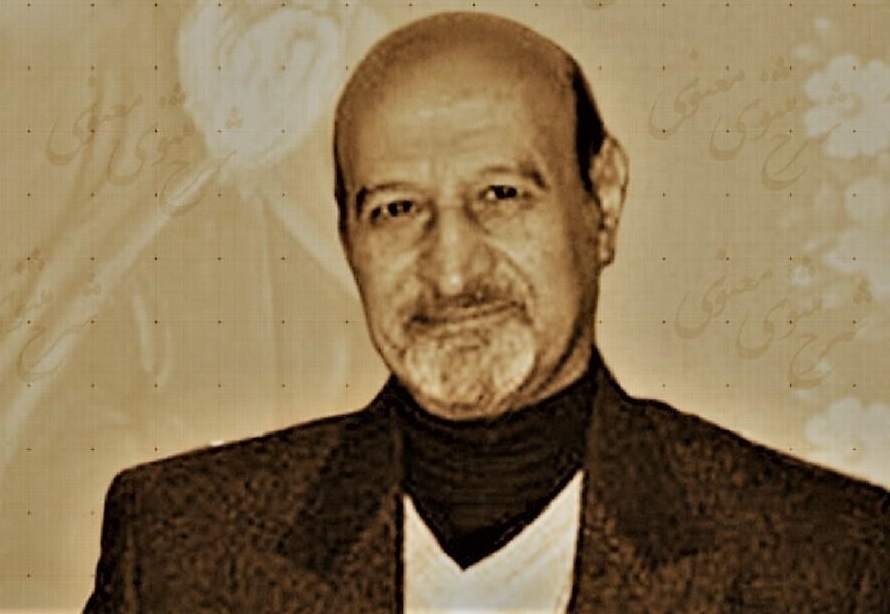
Hassan Lahouti, researcher, writer, translator, scholar, and Rumi expert, was born in 1323 (Solar Hijri calendar, approximately 1944) in Sabzevar city, Khorasan province. After completing secondary education and receiving his diploma, he entered the Faculty of Literature and Humanities at Ferdowsi University of Mashhad and earned his bachelor’s degree in English Language from this university. In the 1960s (Solar Hijri) and during his time at university, he was hired by the news section of Mashhad Radio and, after completing military service, officially joined the national Radio and Television of that era.
Lahouti’s abundant enthusiasm and interest in learning made him eager to pursue higher education in America. After getting married, he traveled to the US. Lahouti successfully completed his studies at Michigan University and obtained his master’s degree from Michigan State University.
After the revolution, Hassan Lahouti returned to Mashhad. Around that time, and following his retirement from television, in 1363 (approximately 1984), he joined the translation group of the Islamic Research Foundation of Astan Quds Razavi and began translating ancient texts. Lahouti later started teaching at the university as well. During the same period, Hassan Lahouti attended the philosophy and mysticism classes of the Eastern philosopher, Seyyed Jalaleddin Ashtiani, focusing on Islamic mysticism, philosophy, and wisdom.
Friendship and association with his master Allameh Ashtiani sparked Lahouti’s interest in translating philosophical and mystical texts. Lahouti completed the translation and commentary of Rumi’s Masnavi-e Ma’navi by Reynold Nicholson under Allameh Ashtiani’s guidance. The six-volume commentary on Masnavi-e Ma’navi by Hassan Lahouti was also selected as the winner of the 14th edition of the Islamic Republic of Iran Book of the Year Award.
Apart from this marvelous work, other translations by Hassan Lahouti into Persian include ‘Janan-e Janan’ and selections from ‘Divan-e Shams’ by Nicholson, the book ‘Splendor of Shams’ and ‘Muhammad, the Messenger of God’ by Annemarie Schimmel (a Harvard University professor), ‘Muslim Contribution to Geography’ by Nafis Ahmad, as well as ‘Muslims of India and Britain’ and ‘Islamic Movement and Ethnic Trends.’ These works were greatly welcomed by enthusiasts and researchers.
In the 1980s and 1990s (Solar Hijri), Hassan Lahouti’s works became established as reliable sources for Rumi studies. By translating Franklin Lewis’s book ‘Rumi; Past and Present, East and West’ (a professor at the University of Chicago), he rendered a great service to the translation and publication of mystical works.
His book ‘Organon of Rumi’ (Arghun-e Molavi), which is his only original work, is a precise and novel interpretation of several Rumi stories. Hassan Lahouti’s scientific articles and research, published in scientific and cultural journals during the 1980s, 1990s, and 2000s (Solar Hijri), are notable aspects of the life of this distinguished contemporary researcher of mysticism and philosophy. Their number exceeds fifty articles, with most published in journals like Kelk, Golcharkh, Meshkat, Tabaran, and Hekmat va Marefat, and other scattered publications. In the opinion of the author of these lines, Hassan Lahouti is one of the most famous and prominent researchers and translators of mysticism and philosophy in the present era.
Many years of proximity and cohabitation with Allameh Seyyed Jalaleddin Ashtiani, the undisputed master of Islamic Sufism and mysticism, made him an unparalleled translator and researcher. When Allameh Ashtiani passed away in April 1384 (Solar Hijri, approximately 2005), Lahouti’s passion and dedication to researching and studying mystical works did not stop. Lahouti was fond of classical literature and mysticism. For many years, he taught and translated at Islamic Azad University, Payame Noor University of Mashhad, and Khayyam University. As a faculty member of Islamic Azad University, he also engaged in research, and many students benefited from the pure spring of his knowledge.
Finally, after a lifetime of research and study in Islamic philosophy and mysticism, Hassan Lahouti passed away in March 1391 (Solar Hijri, approximately 2013) at the age of 68 due to lung cancer in Haslett, Michigan, USA. His body was transferred back to Iran and laid to rest in the first garden of Khajeh Rabiei Mausoleum in Mashhad.