Custody is not enough; the Parliament Library has been tasked with producing meaning
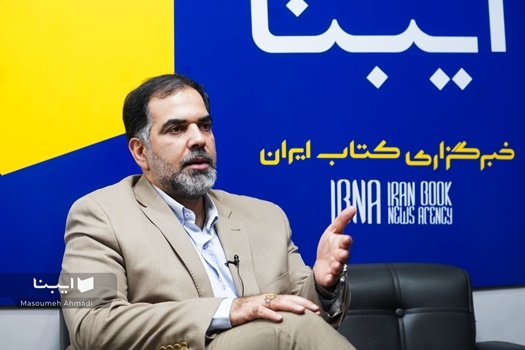
In an interview with the correspondent of Iran Book News Agency (IBNA), Masoud Moeinipour elaborated on the achievements and actions of the Parliament Library. He stated: “The Parliament Library is one of Iran’s most unique cultural assets; a treasure that represents the intersection of the country’s three political systems, centered on law, and symbolizes justice and progress for Iran through law.”
The head of the Islamic Consultative Assembly Library continued: “This collection has historically been known for its approach to preservation and protection, but today, in addition to care, it must prioritize the publishing and development of its heritage so that audiences understand what a treasure they possess.”
Referring to the fact that the Parliament Library has nearly 30,000 manuscripts, considered among the most precious works in Iran and globally, he added: “These works have been repeatedly cited in international lists of world writing history.”
Emphasizing the importance of the Parliament Library’s manuscript sources in the region, Moeinipour stated: “Study and religious groups from various countries, including Turkey and Yemen, have come to Iran to view specific manuscripts; this demonstrates a sample of this treasure’s global importance.”
Referring to the civilizational impact of the collection gathered in the Parliament Library, he said: “The late Professor Haeri sought to produce a history of Islamic sciences by purchasing and collecting manuscripts, and this vast collection, with over 28-29 thousand valuable manuscripts, has the capacity to produce a history of Islamic science. A project titled ‘Establishing the History of Science’ has begun in the library to transform this heritage into a scientific current.”
The head of the Parliament Library, stating that the library has a unique archive of pre-revolution periodicals, exceeding 1,200 titles, added: “The current goal is to extract a narrative flow from these publications; a narrative that can reflect Iran’s political sociology and issues throughout different historical periods.”
Moeinipour, referring to researchers’ experience in foreign libraries, said: “Keeping a document is only valuable when it serves research and historical narrative.”
Library Building and Researcher Access
He mentioned that the current library building has been active since the 1980s and is now accessible to the general public with a national ID card. However, the project to build the new building has been assigned to the Ministry of Roads and Urban Development and has been delayed for the past 15-20 years due to changes in contractors.
Moeinipour continued: “We have asked Dr. Ghalibaf to transfer the project contract to Parliament so that we can complete it ourselves. We hope this will happen in the current term.”
Regarding the Parliament Library joining the unified services window, the head of the Parliament Library noted that around 1,400 visitors with different IPs use the library’s website daily, adding: “Connection to the unified services window for major national libraries is being pursued, and its technical infrastructures are being completed.”
He added: “Digitization of manuscripts was finished before the year 1400 [2021], but the process of ‘summarization’ and data conversion continues. The library’s digitization unit, using artificial intelligence, has digitized the equivalent of 15 years’ worth of documents and books in the past 9 months. This unit operates in three shifts with 13 staff and 13 devices.”
The head of the Parliament Library, referring to the library’s approximately 6 million pages of documents whose modernization was celebrated in June this year, added: “Digitization is extensive and complex, but we are progressing by utilizing artificial intelligence experts. The goal is to convert data into specialized intelligent assistants that can help researchers.”
Emphasizing the academic and research importance of the Parliament Library, Moeinipour added: “The Parliament Library is not just a heritage for preservation, but an asset for producing knowledge and historical narratives in Iran. We hope that with the completion of building projects, connection to the unified window, and expansion of digitization, this treasure will be of greater service to researchers, elites, and society.”