Tabriz; The Pole of Playwriting in Iran / Who are the prominent figures of dramatic literature in Azerbaijan?
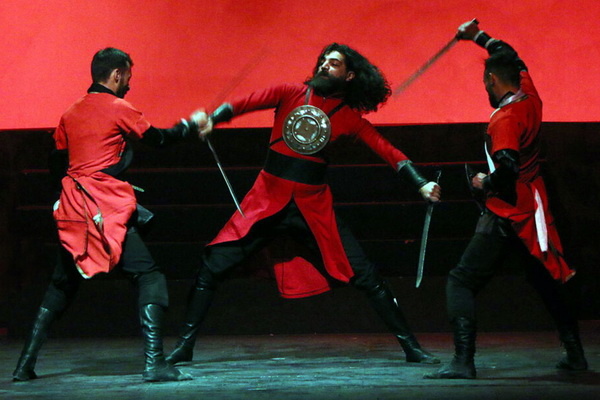
IBNA Provincial Services – Mehrdad Khoshkar Moqaddam: The land of Iran has always been a place of conflict, war, and ultimately destruction throughout time due to the invasion of various domestic tribes and the greed of foreign governments. The combination of these issues and other causes has led to Iran, with an approximate history of seven thousand years, not having the amount of written literature it should. What remains of written literature related to the world of dramatic literature, which is the product of years of a strong presence of oral literature and dramatic rituals, are religious texts and rituals that have been preserved as much as possible due to their deep connection to the specific people of the time and have reached us. This is why Iran, as a contemporary of the ancient Greek and Roman empires, today lacks any writing in the field of dramatic literature.
Despite this, Azerbaijan, especially Tabriz, simultaneously with the transformations of the Qajar era, became the cradle of modern playwriting in Iran and was introduced to the country.
We interviewed Hadi Valipour Qarahkiyeh, a writer and researcher of dramatic literature and winner of several national festivals in this field, about the status of dramatic literature in Tabriz and literary movements in this region.
He is the author of six books and several research articles in the field of dramatic literature and a university lecturer. Last year, his latest works, including the research book “The Holiest Tragedy of Islam; Anthropology of Performance” and the play “War and Peace,” were unveiled at the General Directorate of Culture and Islamic Guidance of East Azerbaijan.
Mr. Valipour, you are the author of several books in the field of theater and dramatic literature. How do you evaluate the characteristics of the local literature of East Azerbaijan?
This region is bilingual due to its geographical location. The common language of this province is Azerbaijani Turkish, and like other ethnic groups, Persian is the second language of its people, following the official language of the country. Within the province, each city and region speaks with its own specific tone and accent, and more interestingly, within each city, the accents of different areas also differ from each other. The local literature of the province is based on the Azerbaijani Turkish language, which, due to its proximity to the two countries of the Republic of Azerbaijan and Turkey, the common languages in those countries, including the Azerbaijani Turkish accent across the Aras River and Istanbul Turkish, are briefly understood among these people, and there is a possibility of responding to the extent possible.
As we know, Azerbaijan and Tabriz are the cradle of playwriting in Iran. Who were the pioneers in this field?
East Azerbaijan has a very significant role in initiating the playwriting movement in Iran. The emergence of figures like Mirza Fatali Akhundzadeh (1191-1256 Shamsi), who was born into an Iranian family residing in the Shaki Khanate in the Caucasus and became known as the first Western-style playwright in Iran in the Turkish language, or Mirza Agha Tabrizi as the first Western-style playwright in Iran in the Persian language, who was born in Tabriz, and their spirit of documenting their works, is sufficient reason for this claim.
In what areas can the similarities and differences between these two prominent figures in the field of dramatic literature be summarized?
The works of Akhundzadeh and Tabrizi, whose lives coincided with a strong European presence in Iran, included descriptions of beliefs such as law and legislation, freedom, nationalism, emphasizing women’s roles in society, general literacy, and more. The difference is that Akhundzadeh’s language in his works is Turkish, and his entire effort was to follow the path of playwriting style in Europe. The content of these works is comical, satirizing traditions (domestic) and praising modernity (foreign – imported). Akhundzadeh’s entire effort is social criticism, and addressing women’s issues is highly important to him.
Tabrizi’s efforts in his works show a combination of Iranian performances like “Takht-e Hozi” and “Naqqali” with Western methods. He focused on entertaining the audience in his works, which led to him not achieving as much success in playwriting according to Akhundzadeh, who received his works for review. However, his focus on moral content and realistic reflection of conversations between various classes and utilizing the specific spirit and behavior of ordinary people have made his works enduring.
It seems that although Tabriz is a pioneer of dramatic literature in the country, after Akhundzadeh and Tabrizi, a period of decline in dramatic literature took hold in Azerbaijan. How long did this situation continue?
That’s right. After these two figures, no national figure from Azerbaijan in the field of dramatic literature was seen for more than half a century, but after them, the golden years of dramatic literature in Azerbaijan began again with figures such as Bahman Forsi and Gholamhossein Saedi.
What are the specific characteristics of these two figures that distinguish them in the field of dramatic literature in Iran?
In 1312 (1933), a different figure named Bahman Forsi was born in Tabriz. From the age of four, he grew up with his family in Tehran and developed alongside great figures of Iranian theater like Jamshid Layeq, Ali Nassirian, and others, eventually moving to London before the Islamic Revolution. Bahman Forsi is remembered as one of the first figures of absurd playwriting in Iran. Forsi’s works tended towards nihilism due to the prevailing atmosphere of despair and meaninglessness in Iranian literature following the coup of August 19, 1953. In his works, he refers to the social, cultural, and political conditions of society during his lifetime and the decades before it. The characters in his plays depict complex bodies and minds with unpredictable behaviors. Forsi attacks social collapse and, by using symbols, shows the chaotic and deteriorating world of humanity.
Almost simultaneously with Forsi, the genius of modern Iranian dramatic literature was born in Tabriz: Gholamhossein Saedi, with the pen name Gohar-Morad. Saedi took to writing from his youth, and this tendency to write in various forms of stories, plays, and screenplays made him an enduring figure. While studying psychiatry at the doctoral level, he associated with figures like Samad Behrangi, Jalal Al-Ahmad, and Shamloo, and his presence among the prominent intellectuals of that era completed his personality. Saedi left Iran for Paris in 1981, which was then the center of the world’s most important artistic activities, and passed away four years after settling there due to internal bleeding.
The greatest reason for the success of Saedi’s plays was understanding the pains of the people around him, and at the same time, he was saddened that these people did not achieve appropriate progress simultaneously with the speed of Western modernity, believing the reason lay in Iranian ideology. His works are full of signs and symbols, and he never held back from explaining the reasons for the backwardness of the Iranian people.
Who do you consider pioneers among contemporary figures, especially the current generation?
Dramatic literature relies on research alongside playwriting. East Azerbaijan has not been deprived of research, and over the years, due to the presence of art schools and specialized theater colleges, it has cultivated prominent figures. Dr. Abdolhossein Laleh, Amir Alizadegan, Mansour Hamidi, Farzad Taghiler, Sirus Mostafa, Mehdi Salehyar, Narjes Ebrahimi Ghanemi, and many other interested students are considered active participants in this field.
Given this, how do you evaluate the province’s share in the national literary movement, especially in the field of dramatic literature?
East Azerbaijan’s dramatic literature, considering its specific climate, has played a significant role in shaping playwriting and prominent theatrical performances. Playwriting in Turkish and performances at the national level and in neighboring countries exemplify this wave of movement creation by the province’s artists in the region. The lack of a specific school or style of dramatic literature in East Azerbaijan is due to aligning with the growth process of written dramatic literature in the country. In fact, there is no specific school of dramatic literature anywhere in the country, but the focus on local theater among the artists of this province and its influence on artists in other regions is an example of Azerbaijan’s strong contribution to other regions of the country.
You have many publications and articles in the field of dramatic literature; what is your analysis of the living literary movements in East Azerbaijan?
Given the existence of fine arts schools and higher education centers like Nabi Akram (PBUH) and Charkh Niloufar, the University of Applied Science and Technology of Culture and Art Alif, as well as numerous theater and cinema training institutes, and also the significant role of Rhythm Publications as a specialized publisher of art books, especially theater, and the holding of numerous theatrical festivals in the province (Arasbaran International Festivals, Baghchehban and local festivals of Sardrud, Marand, calendar mourning rituals of Basij Artists, National Basij Festival, etc.), and the meaningful presence of drama researchers at national and international levels, the dramatic literature movement is also alive, dynamic, and pioneering. Furthermore, students from these centers are trying to perform their handwritten plays so that this movement can grow and continue. The Theater Association of the Department of Culture and Islamic Guidance and the Basij Artists’ Theater Association are considered important executive arms of theatrical programs in the province.
In your research, how have you evaluated the challenges and opportunities of dramatic literature in Tabriz?
One of the significant obstacles to development in dramatic literature in the province is the inconsistent view of the Department of Culture and Islamic Guidance towards the Turkish language in playwriting. It is clear that the equivalent of some Persian words in the Turkish language is not widely used, and therefore, using those words on stage or in a play text faces radical and unfavorable positions such as Pan-Turkism and others. The use of Azerbaijani dance (as an indigenous art form that has a definite status among other ethnic groups) during performances is also a meaningful challenge due to accusations of Pan-Turkism; whereas dance (under titles such as local movements or form, etc.) in various forms is performed on stage in the capital without specific considerations. The characteristics of local theater described in detail in the author’s book titled “An Introduction to Theater Localization” need to be considered by officials, as local theater is an example of “what comes from the heart will necessarily sit in the heart.” The Turkish language and utilizing all the provincial capacities in form and content lead to the audience watching theatrical works with more enthusiasm.
Another challenge for theater in the province is the mismatch between the increasing number of people joining the theater community (through academic channels like art schools, universities, and private art institutes) and the lack of suitable performance venues, which has led to severe traffic in performances.
Moving beyond the challenges, the translation of Istanbul Turkish and English plays is also progressing step by step in the province, mentioning translators like Abdolhossein Laleh, Farzad Taghiler, Pari Eshtari, and others.
Given what has been said, what will be the outlook and future of dramatic literature in this region?
After the Islamic Revolution in Iran, the path of playwriting among the people of Azerbaijan changed again. During that period, revolutionary institutions were interested in producing works with content stemming from the revolution, war, sacred defense, and moral issues of society, and playwrights turned to works of this kind.
In recent decades, skilled playwrights such as the late Asad Sadeghi, the late Morteza Hashempour, Ayub Aghakhani, Nader Borhani Marand, Amir Alizadegan, Ali Hasanzadeh, Aref Mahtab, Rasoul Bangin, Nader Saeivar, Fereydoun Valaei, Farzad Taghiler, Akbar Shariat, Ali Pourian, and a large number of educated young people have joined the ranks of playwrights and researchers of dramatic literature, which is very encouraging.
In my opinion, despite focusing on the fields of culture and art (as drivers of education, growth, and interaction), giving importance to the activities of artists and researchers by specialized agencies, providing material and moral support to them, addressing the living affairs of artists such as artist insurance, patients’ conditions, housing problems, and verbal appreciation from provincial leaders for artists’ efforts will create a growing path, and the statistical growth of the new generation, which hopefully aligns with studying and improving the quality of their works, promises to enhance the province’s cultural indicators.