My issue is neither Foroughi’s literature nor his knowledge
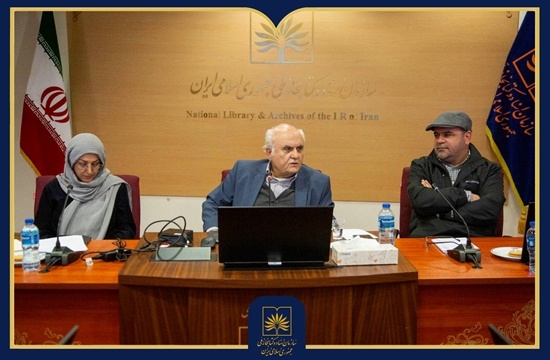
According to Iran Book News Agency (IBNA), a review session for the book “Sirat-e Foroughi; New Findings, New Sayings” was held at the National Library Cultural Think Tank. The participants included Naser-al-Din Parvin, the author; Mahboubeh Joudaki, a faculty member of the Encyclopedia of Islam; and Ali Mohammad Tarafdari, a faculty member of the National Archives and Library Organization, serving as secretary of the meeting.
Initially, the meeting secretary, referring to the nature of the work, emphasized that the book naturally has been exposed to diverse and sometimes conflicting judgments and opinions. He added: “Foroughi, like many political figures in contemporary Iranian history, has always been the subject of dual judgments; one judgment sees and praises his scientific and research personality, while the other follows his political performance, or as the author puts it, Foroughi’s character (Sirat), which naturally does not yield a positive judgment.”
He emphasized the book’s approach, saying: “We are dealing with a polemical book, and it is natural that such a book, regardless of its subject matter, would be subject to sharp and contradictory judgments; judgments that began when the book was published and continue to this day.”
Naser-al-Din Parvin, the author, referring to his research background, emphasized that his view of Mohammad Ali Foroughi was formed from the perspective of political historiography based on historical documents.
Parvin, referring to the book’s central focus, added: “My issue is neither Foroughi’s literature nor his knowledge in some fields; my issue is the statesman. If someone is a man of letters, it doesn’t mean their political performance should be ignored. The constitution is the country’s honor, and Foroughi has repeatedly violated it, which is exactly what I have pursued in this book, with precise documentation.”
The author of “Sirat-e Foroughi,” emphasizing the book’s documentary approach, said: “Everything in this book is based on documentation and citation. If someone disagrees with this narrative, they must oppose each individual document, write a response, and provide arguments; historical judgment does not proceed based on personal interest or passion.”
Following this, Joudaki emphasized that Foroughi is not merely a historical figure, but has become a model for judging the relationship between intellectuals and politics. She added: “Foroughi has become a model for future generations regarding the relationship between intellectuals and politics; an intellectual who neither chose confrontation nor isolation and practically accepted every responsibility offered to him, entering the structure of power.”
Referring to the book’s approach of focusing on Foroughi’s political aspect, she described the main purpose of the work as follows: “The aim of this book is to demonstrate the inconsistency between claims and actions, and political and social immorality in the record of some contemporary history officials, not to prove popular or personal accusations.”
Joudaki, referring to the articles and press reviews included at the end of the book, stated that the critique of Foroughi’s political responsibility is also prominent in this section. She said this view is clearly reflected in Rahnama’s writing; Joudaki quoted Rahnama: “A head of state cannot consider himself compelled; if he determines he cannot defend the borders of the country and the rights of people being imprisoned in droves, he must step down from his position and resign.”
The meeting concluded with questions from participants and answers from the speakers.





