“Joys and Sorrows of Ancestors”; A Look at People’s Festivals and Mourning Rituals in the Safavid and Qajar Eras
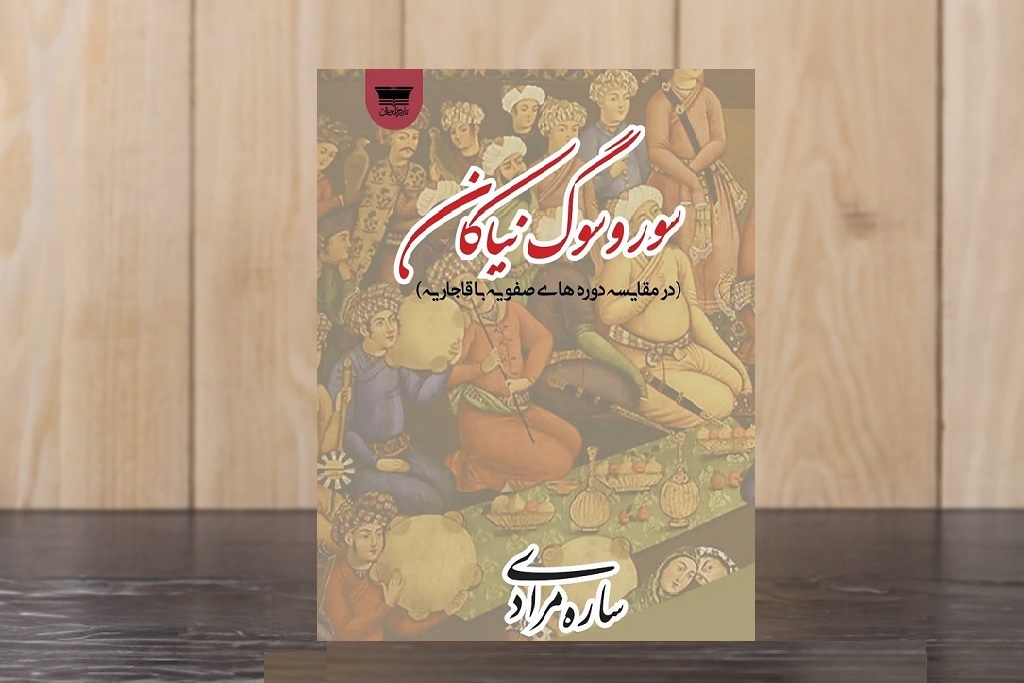
According to the correspondent of the Iran Book News Agency (IBNA) in Rasht, the book “Joys and Sorrows of Ancestors; Comparing the Safavid and Qajar Periods,” written by Sareh Moradi, has been published by Tarikh Andish Publications in 236 pages and released to the market for 280,000 Tomans.
The book has four chapters: Chapter One; People’s leisure and entertainment in the Safavid and Qajar periods, Chapter Two; People’s mourning rituals in the Safavid and Qajar periods, Chapter Three; Comparison of religious and national festivals of Iranians in the Safavid and Qajar periods, and Chapter Four; Comparison of religious and national mourning rituals of Iranians in the Safavid and Qajar periods.
The author writes in the book’s preface: In the early tenth century AH, corresponding to the sixteenth century AD, the Safavid dynasty came to power and introduced itself as a new power in the Islamic world. Following this, it engaged in political and ideological alignment in the Islamic world, especially between Iran and the Ottomans, as well as the West… Part of the policy of the Safavid founders was to intervene in the holding of festivals, feasts, and mourning ceremonies for Shiite Imams. The goal was to consolidate national unity, integrate all segments of the population, and bring them closer to the state. During this era, especially under Shah Abbas, various methods were used to promote national unity and create an image consistent with the Safavid worldview and the role that its kings defined for themselves as a national-Shiite state unifying the land of Iran, by utilizing national or ancient festivals, religious holidays, and religious mourning rituals.
However, in the Qajar period, a hundred years after the Safavid era, attention to religious and national customs and traditions not only diminished but also became a subject of ridicule. During this period, celebrations were held for various occasions such as the king’s birthday, the crown prince’s birthday, or marriage, and cities were decorated with lights for these events. However, there were no collective ceremonies with specific rituals attended by the king and various segments of the people, as were held during the Safavid period.
Moradi further states in this preface: To understand the customs of the people in the Safavid era, we need sources other than primary Persian documents and resources… because the reports of contemporary chroniclers and historians are nothing more than a list of the lives of the great figures of their time. However, regarding the Qajar period, it must be said that authors in this era, while alluding to popular culture in their works, have rarely dedicated independent discussions to culture and customs (in festivals and mourning rituals) or have simply compiled writings for gathering and analyzing popular culture.
The author also states: In popular culture, we encounter a kind of sociology of cooperation; participation, aid, and collaboration in all aspects of their lives, from weddings to death and mourning, and in baking bread, building houses, milking, circumcisions, neighborhood cleanliness, harvesting, and threshing. There are many untouched and hidden areas for collecting popular culture, and it is the duty of researchers to illuminate the dark and unknown aspects of Iran’s popular culture through persistent research, study, and exploration, thereby revealing the richness and greatness of Iranian culture.





