Intersection of Sin, Poetry, and Detective Story in the Works of Nicholas Blake
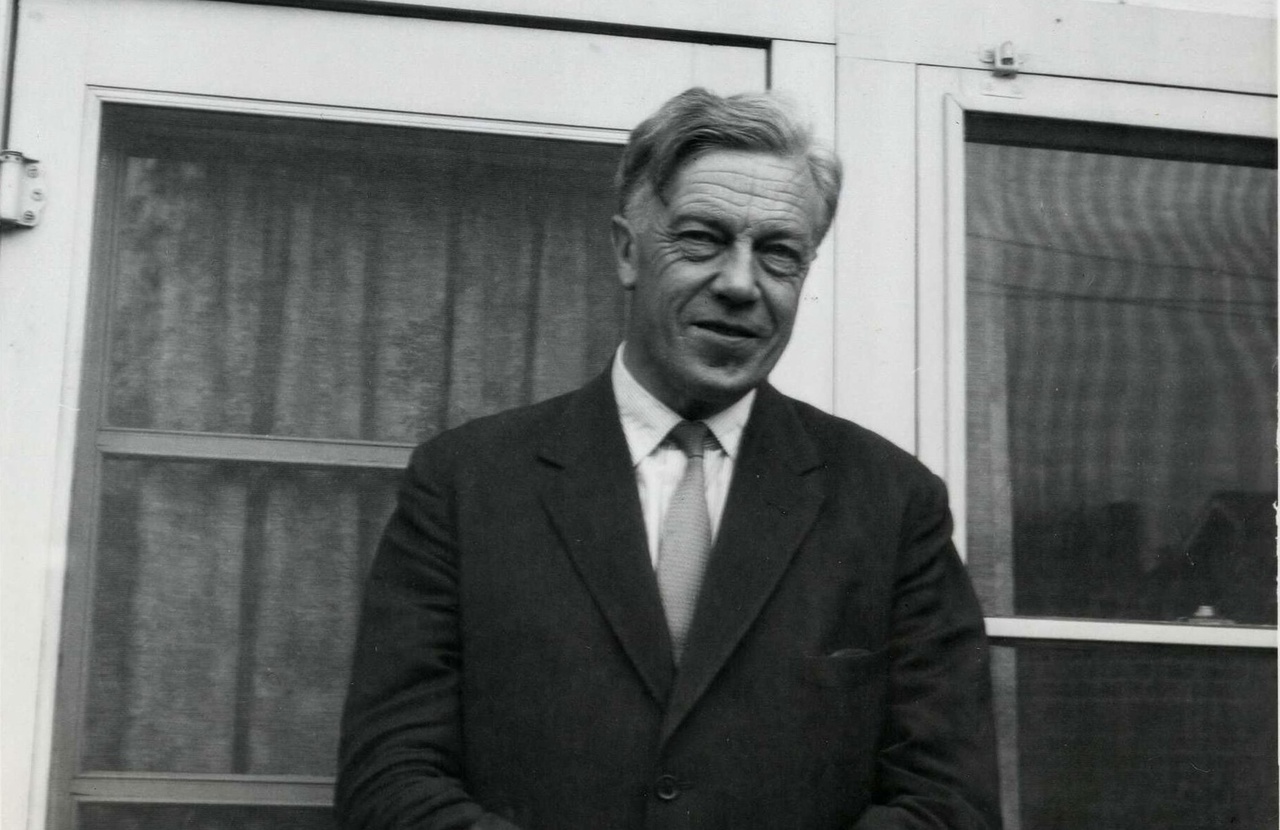
IBNA Literature Service – Mehrdad Morad: Nicholas Blake, the pseudonym of C. Day Lewis, a prominent English poet and important figure in 20th-century literature, holds a significant position in the history of British Golden Age detective novels, alongside his poetry and literary criticism.
Nicholas Blake’s works include over twenty detective novels, mostly written within the framework of Golden Age detective stories, but with a bold and different approach to the genre’s structure and themes. The most important part of these works are the novels featuring detective Nigel Strangeways; an intellectual and witty character who uses intuition, memory, and psychological understanding of people to solve mysteries rather than mere logic. Novels like The Beast Must Die, The Shell of Death, The Corpse in the Snowman, Head of a Traveller, and The Morning After Death are among his most prominent works.
Nicholas Blake never pretended that writing was a sacred act. He frankly stated: “Money is the primary motivation for most detective story writers.” He himself wrote his first detective novel to fix a leaking roof. One hundred pounds was the price the rain demanded of him, and the novel A Question of Proof became the immediate answer to that debt. But this was only the surface of the matter; beneath this worldly motivation lay a deeper layer of addiction: addiction to fictional crime.
Blake believed that every addict wants to addict others too. And the detective story is the best narcotic for a society that is “tamed and moralized”; a society that can no longer confront its sin freely. Murder, in a detective novel, transforms into a harmless ritual; violence without consequence; sin caged in words. Blake even predicted that 21st-century humans would study the detective story not as entertainment, but as the 20th century’s folk myth; precisely at a time when religion would gradually lose its power to cleanse the human psyche.
He had diagnosed: when the altar collapses, fictional courts are established. When religious confession falls silent, criminal confession is born. In this new ritual, the detective is God; and the criminal, the dark priest. This is the same sacred duality present on Judgment Day: separating the innocent from the guilty, light from shadow, order from chaos. The appeal of the detective novel lies precisely in this hidden re-enactment of the apocalypse.
But Blake’s surprising paradox lies here: beneath this heavy and apocalyptic view, his novels are brimming with playful excitement. A childlike pleasure in playing with the puzzle, manipulating fate, deceiving the reader’s mind. Blake took murder seriously, but narrated the crime with humor; like someone singing in the middle of the night.
Nigel Strangeways; A Detective Who Looks More Like a Mistake
At the center of this story stands a character who looks more like a misunderstanding than a hero: Nigel Strangeways. A tall, thin man with sand-colored hair always falling over his forehead, simple blue eyes, and an innocent-looking gaze; just like Lord Peter Wimsey. The same deceptive innocence, the same witty dignity.
He gets paid, but never looks like a professional detective. He’s more like a genius wit who solves crimes for fun. He meets his first wife during one of the cases; an adventurous and independent woman, like Harriet Vane. Strangeways is one of those detectives who processes crime through the path of life, not the path of profession.
Blake plays with crime just as he plays with the structure of the genre: sometimes making the killer himself the narrator, as in The Beast Must Die; sometimes delving into academic and philosophical murders; sometimes getting so close to another novel that he is forced to write a note defending “pure coincidence.”
But these similarities are not a sign of weakness, but a hallmark of an era: the Golden Age of detective fiction; a period when the puzzle was no longer simple, and the reader was no longer naive. Maps, timelines, footnotes, lists of suspects; all were designed to force the reader’s mind into the game and to be defeated again.
Strangeways sometimes writes lists: motives, names, probabilities. He leaves the reader free, then gives so many twists that the same reader eagerly awaits his final choice. He plays fairly, but is always one step ahead.
The Revolutionary Poet; The Duality Within Blake
But Nicholas Blake was not just a crime novelist. He wrote poetry just as much as he created detective puzzles. He thought about revolution and was a member of the Communist Party, although he gradually distanced himself from practical activity. But the struggle between the poet and the politician never quieted within him. This duality manifested itself in the theme of “schizophrenia” in his novels: characters afraid they committed the crime themselves without knowing it; men confronting their hidden halves; women seeing unfamiliar faces in the mirror of sin.
Blake’s leftist perspective on the genre is also interesting. He said: the detective novel, more than anything else, is food for the upper class; those who benefit from order. While the lower classes read “thrillers”; where the law is the enemy, and the criminal becomes a romantic hero; the heir of Robin Hood.
But Blake built a bridge between these two worlds. He did not look at his criminals solely with hatred. He sympathized with them. He admired them, and perhaps for this reason, more than half of the killers in his works never reach trial, but rather commit suicide or are killed. It was as if he wanted to pull them out of formal judgment, out of the bourgeois order of justice. He wanted to keep his sinners in the realm of myth, not law.
Blake was not interested in today; he always looked back. The root of the crime, for him, was never in the moment it occurred, but formed decades earlier. Buried memories, silent failures, shot-down loves.
In one novel, the death of a national hero is linked to retrieving an unknown past in Ireland. In another, professional rivalries have roots in a love that died years ago. In a third, yesterday’s happy girl has become today’s reckless addict; not due to coincidence, but due to a forgotten tragedy.
Children in Blake’s world are not absolutely innocent; but they are absolute victims. The death of a child becomes the engine of revenge. The memory of a lost childhood keeps the fire of resentment alive. Adults, in his world, are merely broken children; children who haven’t had the chance to heal.
Blake, unlike many of his contemporaries, did not consider literature merely an adornment. Poetry and drama, not just intellectual references, become the key to solving the mystery. A quotation from a Jacobean play can expose the murderer. The nervous behavior of a swan can reveal the secret of two sisters. Metaphor transforms into an interrogation tool.
And here, the poet within Blake triumphs over the detective within him. Because Strangeways investigates not just with reason, but with poetic intuition. He listens to the atmosphere, to the silence, to the tremors of memories.
In the novel Head of a Traveller, this connection between poetry and crime reaches its peak. Everything begins with a house; a house more like a dream than a building. Flowers are in a coma. Roses have fallen into a cataleptic sleep. And Strangeways feels like he has entered a fairytale; a fairytale where he still doesn’t know where the monster is hiding.
The poet of the house, Robert Seaton, has pretended for years to be working on a great masterpiece, but writes nothing. The house is both the goddess of inspiration and a prison. Both sleep and paralysis. Both a place of worship and murder.
When the poet’s brother dies, poetry is born. It’s as if death unlocks language. Strangeways realizes that the truth is not hidden in the body, but in the poetry itself. The suicide note is a lie; because the poet, if he were the killer, could never write again. Murder was the poet’s only way out, the only way to leave the house.
The house that initially appeared as an enchanted fairytale now becomes a place in a state of hangover from horror. The fairytale collapses, and the truth, with the cold sound of metal, falls to the ground.
Ultimately, Nicholas Blake stands on the border between three worlds in his stories: lost religion, failed politics, and living literature. His detective novels were not just puzzles; they were rituals. They were confessions that had replaced the altar. He simultaneously condemned and understood crime; maintained order and distrusted it; destroyed the killer and loved him.
Strangeways is not just a detective, but an interpreter of the poetry of life. Someone who seeks metaphor among the list of suspects. Someone who reads destiny from within the maps. Someone who knows that the greatest murders happened years ago; in childhood, in love, in silence.
And perhaps this is the secret of Blake’s lasting appeal; he didn’t understand why he wrote, but he understood why we read. Because we still need a court in our minds where sin can be confessed without blood and torture; even if the name of this scene’s God is “the detective.”





