Cooperation between Zoroastrian priests and Iranian families
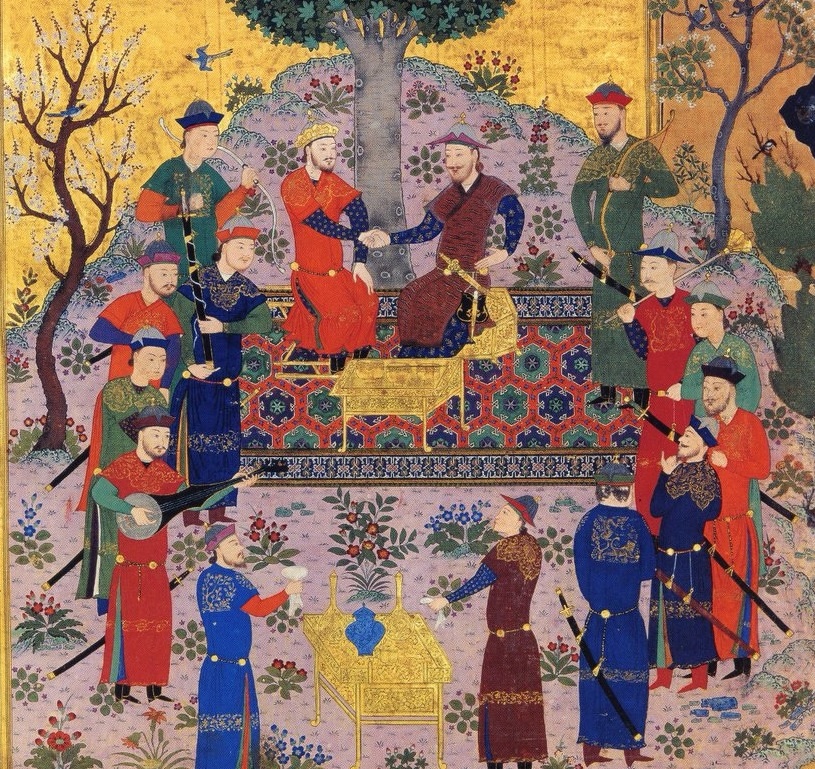
The History and Politics service of the Iran Book News Agency (IBNA) reports: “The Introduction to the Shahnameh of Abu Mansuri” (written in Muharram 346 AH), corrected and researched by Seyyed Ali Mahmoudi Lahijani, has been published by the Miras-e Maktub Research Institute. The Shahnameh of Abu Mansuri was compiled between the years 340 and 346 AH under the command of Abu Mansur Muhammad ibn Abd al-Razzaq, ruler of Tus, and supervised by his minister Abu Mansur al-Ma’mari.
The only remaining part of this book is an introduction that shows the efforts of a group of Khorasani dehgans (landowners/nobles) and scholars to compile ancient narratives of the history of Iranian kings, from the beginning of Kiumars’ reign to the end of the Sasanian period. This introduction is considered one of the oldest examples of Persian prose, holds special value linguistically, grammatically, and literarily, and demonstrates the continuation of historiographical traditions in the Islamic period.
In this book, a new correction of the introduction to the Shahnameh of Abu Mansuri is presented, based on eleven ancient and authentic manuscripts of Ferdowsi’s Shahnameh. The research section of the book also analyzes the political and historical life of Abu Mansur Muhammad ibn Abd al-Razzaq, potential sources of the Shahnameh of Abu Mansuri, and its compilation and narration method.
Mahmoudi Lahijani, the text corrector, wrote about the necessity of this correction: “What remains today of the Shahnameh of Abu Mansuri is only an introduction, which Allameh Qazvini corrected about a century ago by collecting and comparing existing manuscripts. This introduction is still considered one of the oldest dated prose texts in the Persian language; however, after a century since his correction and with the discovery of numerous manuscripts of Ferdowsi’s Shahnameh, a re-examination, correction, and revision of this ancient text will be beneficial.”
The book’s corrector wrote at the beginning of his hundred-page introduction: “Scribes and writers translated many works from Pahlavi to Arabic during the Umayyad and Abbasid caliphates, some of which were dedicated to the history of pre-Islamic Iran. The translation of these books was an effort to familiarize Muslims with the culture and civilization of a land that the Arabs had recently dominated and whose people they considered clients (Mawali) and slaves.”
Lahijani, while mentioning and briefly introducing works of individuals such as Jabalah ibn Salim (a translator during the reign of Hisham ibn Abd al-Malik ibn Marwan 105-125 AH) and Abdullah ibn Muqaffa (104-142 AH) and discussing the influence of Ibn Muqaffa’s works on the translation movement, names Zoroastrian priests (mobads), dehgans, and noble Iranian families as those who played a significant role in preserving and rewriting mythological-epic stories and historical narratives of ancient Iran.
In introducing an example of their works, he refers to a statement by one of these mobads, whose name Hamzeh Isfahani records as Bahram son of Mardanshah, mobad of the Shapur province in Fars. Bahram wrote: “I obtained twenty copies of the book ‘Khodaynameh’ and corrected the historical chronology of the kings of Iran, from Kiumars, the father of humanity, until their final days and the fall of their rule to the Arabs.”
The corrector also describes the Shahnameh of Abu Mansuri as an example of cooperation between Zoroastrian priests and one of the noble Iranian families, writing: “In the introduction to this book [= Shahnameh of Abu Mansuri], the mobads and dehgans are called ‘Khodavandan-e Kotob’ or ‘owners of books,’ who were summoned to Tus at the request of Abu Mansur al-Ma’mari, minister of Muhammad ibn Abd al-Razzaq, to compile a book on the history of Iranian kings.”
Lahijani writes about the status of this book: “After its completion, the Shahnameh of Abu Mansuri attracted the attention of Iranian writers and poets, such that Abu Rayhan Biruni referenced parts of this book regarding the chronology of Iranian kings in his work ‘Al-Athar al-Baqiyah an al-Qurun al-Khaliyah.’ Furthermore, many Shahnameh researchers believe that the Shahnameh of Abu Mansuri was the sole source for Daqiqi and Ferdowsi, or at least one of their main sources for composing the Shahnameh.”
He continues: “This point can be inferred from evidence found in the introductions of both the Shahnameh of Abu Mansuri and Ferdowsi’s Shahnameh. One piece of evidence is the inclusion of the Shahnameh of Abu Mansuri’s introduction at the beginning of some manuscripts of Ferdowsi’s Shahnameh, indicating that the scribe or scribes who added this section viewed the two books as related. Also, the mention of three mobads and dehgans in Ferdowsi’s Shahnameh who played a role in compiling the Shahnameh of Abu Mansuri is further evidence that Ferdowsi used this book to compose his Shahnameh.”
“The Introduction to the Shahnameh of Abu Mansuri” (written in Muharram 346 AH), corrected and researched by Seyyed Ali Mahmoudi Lahijani, has been published by the Miras-e Maktub Research Institute in 228 pages at a price of 410,000 tomans.





