Breathing with the Printing Press
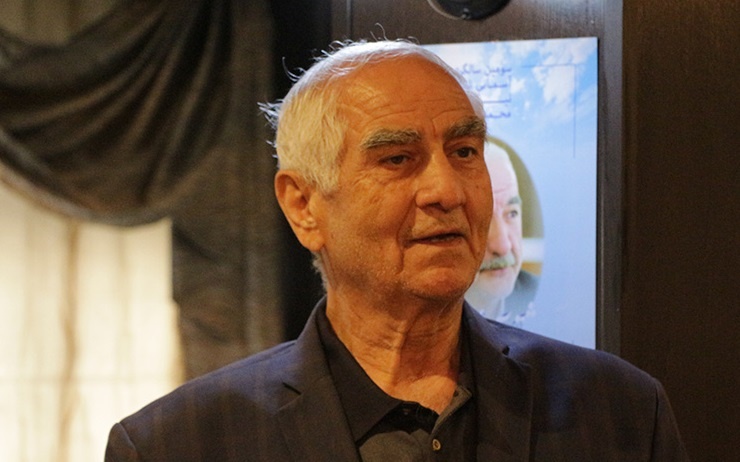
The sky, full of sorrow on the noon of Tuesday, January 7, 2026, with black and miserly clouds, only needed someone to say, “It’s over now”; the great technical man of Iran’s printing industry breathes with the help of a ventilator, without any hope of recovery. He who himself gave motion and life to printing presses for over 60 years and gave hope to their owners and reassured their hearts, now….I turn the pages of my heart looking for a name that “he”… looking for him, where is he?
In that dark noon, I painfully cried instead of the sky until time passed and night, with its cold tongue, drew in the remnants of the past day. I read Forough (Farrokhzad). I, who long ago believed in the beginning of the cold season.
He came from Iran Street. As if he had come to spend his life for the children of Iran. In 1962, he stepped into the Offset Company, and the last time, in the winter of 2024, he preferred to stay home. Which home? Isn’t home the same place where he spent sixty years of his life, day and night, in cold and heat, on holidays and non-holidays, on feast days and mourning days?
Isn’t home the same place where he had the most friends and companions around him? I wish there was a labor law that prevented anyone from being separated from their home. He watched over the home so that the wheel of no printing machine would stop turning, so that no student’s home would remain without a book. And more than that, so that no worker’s table in any printing house would remain without livelihood due to machine breakdowns and inactivity.
Read in the name of those who played a large role in our literacy and kept the printing presses for textbooks running. Read in the name of his name, who was more familiar with the sound of the printing press than the sound of his heart. It was winter 2001.
It was the first time I saw Master Shayesteh Kheslat. I was responsible for pre-press at the Iran Textbook Printing and Publishing Company, and he was a high-ranking member of the board of directors. I was looking for a man in a suit in the meeting room when I saw him in blue overalls, stained with oil, in the middle of the lithography hall. A broad-shouldered man, with presence and thick eyebrows, next to whom two or three German technicians from Roland company looked small, despite their genetic size!
In those days, the Germans were installing the Uniset 70 rotary machine under his supervision. He seemed to have known me for years, talking warmly and easily, translating the German technicians’ words with particular meticulousness and teaching us how to copy the plates for this specific machine. As if he had been a teacher for years, he was excited by his students’ learning.
The second time, in 2002 at Ipax exhibition in Birmingham, as soon as he saw me, he asked without introduction: “Did you just buy these shoes?” Three or four hours later, when I was unable to walk and keep up with him, I finally understood why he asked that question. As I limped along accompanying him from one booth to another, I thought to myself, am I thirty years older than him, or is he older than me? Where did he get all this energy and enthusiasm to hear explanations and explain what we were seeing at the exhibition?
The last time I saw him, that stable mountain had given way to a sea of humility. He was still “teaching,” no longer with chapter headings of printing, ink, and paper. He taught life, uniqueness, humility, manliness, and kindness. No longer with that rough voice and “loutish” tone; now, one only needed to look into his eyes and learn. Eyes with thick eyebrows.
“We must send a condolence notice to the newspaper before you even think something happens.”