Revisiting a Historical Gap; The Edge of the Abyss and the Real Story After the October War
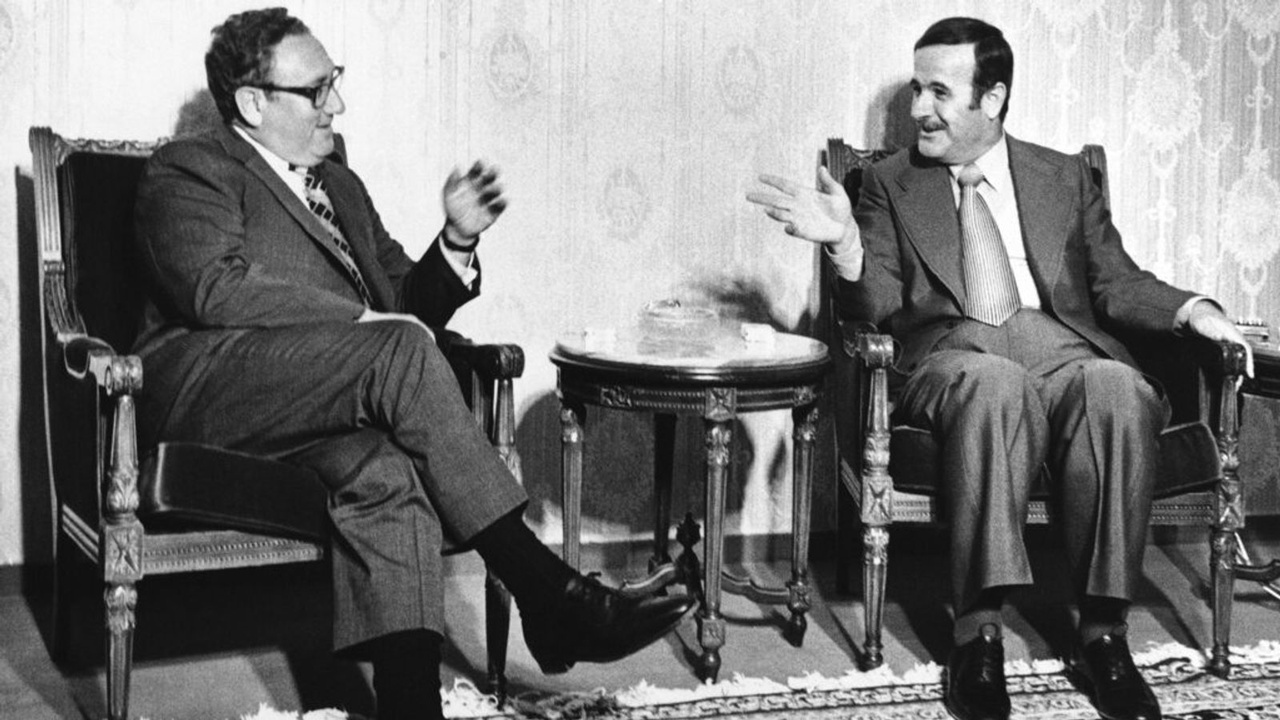
According to the Iran Book News Agency (IBNA) reporter, the book “Edge of the Abyss” written by Buthaina Shaaban and translated by Ramin Hossein Abadian has been published by Iran Institute Publications.
Based on documents in the Syrian Presidential Archives, which have not been previously published, this book fundamentally examines the relationship between Assad and Kissinger. The content of bilateral meetings between these individuals and their correspondence, both through the US ambassador in Damascus and through diplomatic messages, are analyzed. Furthermore, other very important documents are used, notably including the content of President Assad’s meetings with Lebanese leaders during the early stages of the Lebanese Civil War. US State Department documents from that period are also referenced.
When History Reached the Edge of the Abyss
This approach allows for a comparison between US and Syrian documents on the subject. The book also accessed documents from Syrian state television, the Syrian official news agency (SANA), and the Ministry of Defense. “Edge of the Abyss” provides a precise and authentic account of the historical events following the October War in 1973 for the first time, thereby covering one of the most significant gaps in Middle Eastern history. The book utilized documents that many historians and ordinary citizens considered impossible to access or even believed did not exist. However, the documents presented in this book are now available as a crucial reference for historians, researchers, and all those interested in Syrian history and the history of the Arab-Israeli conflict. Additionally, those interested in US policies in the Middle East, inter-Arab relations—particularly between Syria and Egypt—Syria’s tense relations with the Palestine Liberation Organization (PLO), and the history of the Lebanese Civil War can use the documents provided in this book as a highly valuable resource.
Chapter one of “Edge of the Abyss” examines the 1973 October War and its direct consequences. Chapter two discusses diplomatic activities after the war, especially the extensive efforts to hold the Geneva Peace Conference, as well as the resumption of contacts between Syria and the United States after a long gap lasting for years. The third chapter examines relations between Syria and Egypt after 1970, addressing Sadat’s move to separate the Syrian and Egyptian fronts and turn towards negotiations with Israel. This chapter also analyzes the Arab oil embargo against Western industrial countries during and after the October War. The Arab embargo against Western industrial countries is considered one of the most controversial issues in contemporary history, and chapter three details how this embargo ended. Furthermore, chapter four covers Henry Kissinger’s initial shuttle diplomacy trips to Damascus and Tel Aviv in early 1974 and analyzes their results.
The next three chapters—five, six, and seven—contain the long and arduous series of negotiations that led to the signing of the Separation of Forces Agreement between Syria and Israel in May 1974. These chapters provide precise and unprecedented details of the fourteen meetings between Hafez al-Assad and Henry Kissinger during this fateful month of May. Indeed, these negotiations are considered one of the longest continuous series of shuttle diplomacy negotiations in contemporary history.
Chapter eight of the book covers the meeting between President Hafez al-Assad and former US President Richard Nixon. Nixon was the first American president to visit Damascus, the capital of Syria. Research has been conducted on this topic.
Chapter nine details the emergence of tension in relations between Assad and Kissinger. This tension arose because Kissinger tried to complete a separate agreement between Egypt and Israel, which ultimately led to the signing of the Sinai II Agreement between the two parties.
In chapter ten, “Edge of the Abyss” focuses on the developments during the first two years of the Lebanese Civil War and presents a narrative of that decisive period. It also refers to what is known as the “Red Lines Agreement.” The chapter further discusses the roles of Assad and Kissinger in Lebanon and their impact on the course of events.
Furthermore, based on the Syrian Presidential Archives, this book provides new and reliable evidence regarding Syria’s role in Lebanon. This is the first time such evidence has been published since the establishment of the Syrian Presidential Archives over the past five decades. This evidence refutes all common claims about Syria’s involvement in Lebanese developments.





