Poetry associations miss Reza Borusan and his poet wife
Service literary news agency of Iran (IBNA) – Marzieh Negahban Marvi: Today, December 13, marks the birthday of Gholamreza Borusan; a poet who, in his 38 years of life, portrayed a world of pain, love, loneliness, and hope on the pages of Persian poetry. Borusan was born in Mashhad in 1973 and began writing poetry at the age of 18. His efforts and experiences in literature led to the publication of poetry collections “Probability confuses the bird” (1999) and “One pack of cigarettes in exile” (2005), which won the Reporters’ Poetry Award and the Nima Poetry Award, respectively.
In addition to these works, he compiled and published a selection of Mashhad poetry named “Towards Stock River,” “Soma Extract,” a selection from Rigveda, and also a selection of Shamloo’s poetry and a collection of Khorasan poetry called “Horses Don’t Wear Scarves.” His last poetry collection, “A Door Opened in the Waters,” included poems written in the late 2000s and was published posthumously by his family. “Elegy for a Tree Fallen Sideways” is another one of his poetic works.
Borusan’s life ended in tragedy: he, along with his poet wife, Elham Eslami, and their young daughter, Leila, died in a car accident on the Quchan road. His young son, Mojtaba, who was twelve at the time, was the sole survivor of the accident and is now married; if Borusan and Elham Eslami were alive, they would now have a sweet grandchild.
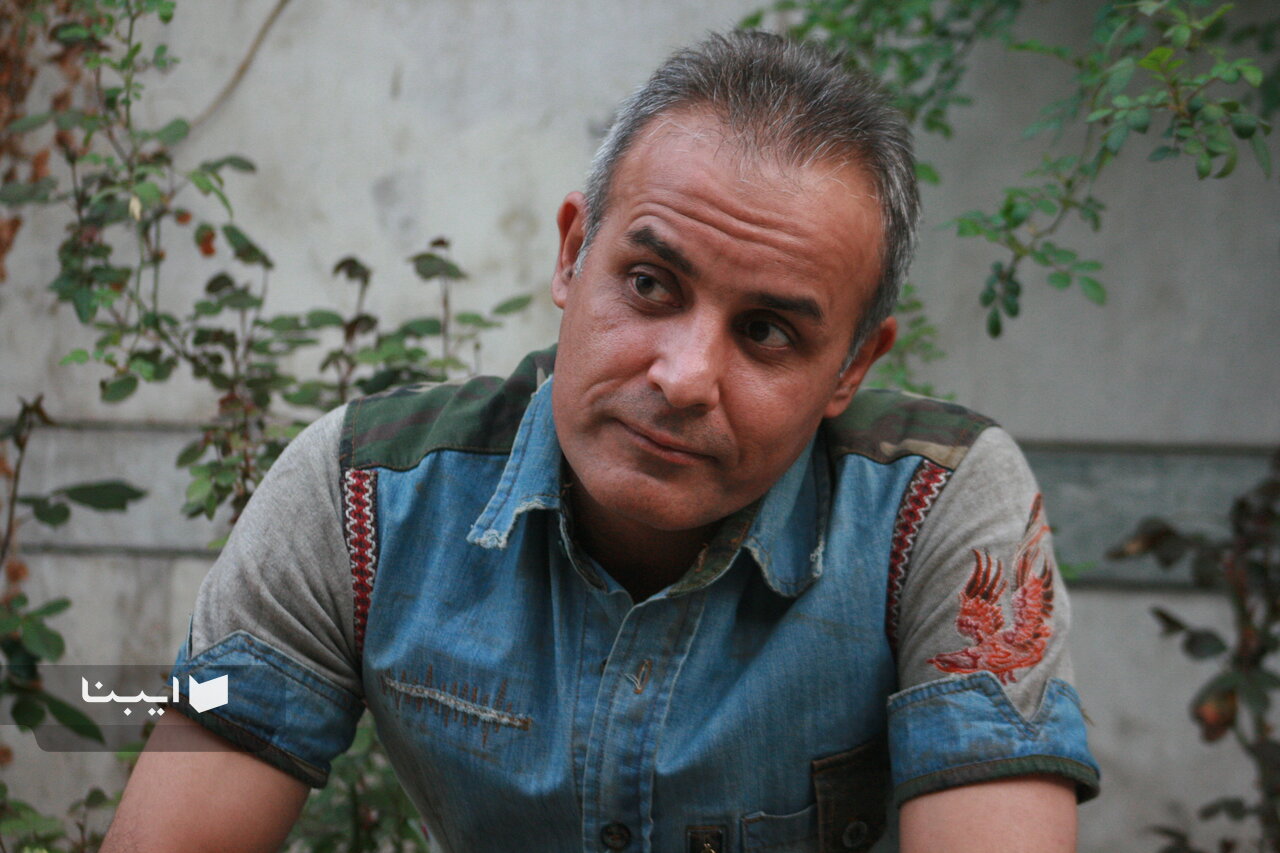
To mark Borusan’s fifty-second birthday and keep his memory alive, and to examine his literary career, we interviewed Mohammadreza Sarsalari, a friend of Gholamreza Borusan. Sarsalari holds a Ph.D. in Persian language and literature and is the founder of Siavash and Siavash Rastin associations and several other independent literary associations in Mashhad, and has numerous publications in poetry. He spent years with Borusan in associations and literary circles, including “Poetry and Music Mondays,” witnessing and accompanying Borusan’s literary path, and can offer a fresh perspective for understanding the depth and scope of his work. Join us in this interview.
Dr. Sarsalari, how did Borusan see the world in his poetry? If you wanted to summarize his view of life and humanity in one image or metaphor, what would that image be?
Borusan was very indigenous and reliant on his momentary experiences. Because he had a poet wife and her worldview was similar to Reza Borusan’s, he had a beautiful poetic life. I had visited his house; his workplace was near mine, and sometimes when he passed by, we would talk, and he frequented an association I ran. Reza Borusan’s perspective on poetry stemmed from his own pains. And if I were to offer a metaphor for him, I might go further: he had archetypes in his poetry, and perhaps he was very close to the archetype of “pain.” We can truly relate his poetry to the archetype of pain.
What was “inimitable” about Borusan’s poetry? If a poet wants to approach his style, which parts deliberately resist imitation?
Reza Borusan’s poetry, in my opinion, is poetry of emotion. More than prioritizing “word” over “meaning,” he prioritized “speech” (kalam); and this speech came from a poetic emotion stemming from the deprivations, pains, and sometimes naive life he led, which Borusan transferred into poetry. Perhaps the inimitable part of Borusan’s poetry was this specific feeling of pain and love. Many poets in Mashhad wrote poetry similar to Reza Borusan’s at one point; whether Reza’s poetry resembled theirs or theirs resembled Reza’s is not something we want to discuss, and fundamentally, I don’t know the answer. But those whose poetry resembled Reza Borusan’s could not imitate or be like him exactly at this point, meaning in the specific feelings that Reza had in his poetry. And as you ask what his inimitable part is, in my opinion, it was his unique feelings and singular life; a life that was fundamentally different from many others, even many close friends. It was natural that for those who tried to write poetry like him, or even accidentally had similar poetry, this part—that unique life and feeling—remained inimitable.
Borusan created what kind of aesthetics from nature, humanity, and loss? In your opinion, what is the secret to the intense emotional impact of his poems?
From this loss you mention, he created an element in his poetry that perhaps caused a greater impact and created a feeling that can be traced in his other poems as well.
In my opinion, these pains and losses gave him a boldness in poetry that was perfectly evident in his poetic language; a boldness in introducing certain words and specific linguistic spaces. Many poets lacked that boldness and courage to employ and utilize these spaces in poetry: “Tell me what to do with the pepper that tastes of separation… with the blood that doesn’t stop.”
If I were to use a word like “pepper” in a book and attach it to separation and derive a kind of similarity and image from it, it might be very difficult for me; or for many other poets. But he had the type of boldness I mentioned, stemming from exactly this: the boldness to employ such a space in poetry.
And perhaps what you say, that he reached the underlying layers of the audience’s feelings while being simple, is for this reason: because of those polite boldnesses he had in his poetry. In my opinion, these created a very sweet paradox in his poetry.
Look, I have criticisms of Reza Borusan’s poetry; it’s not like I wholeheartedly love all of his poetry. But when we are going to write or say something in commemoration of someone, my preference is to state his strengths; points that I think are high and sublime truths that must be stated. Otherwise, it is natural that I have had a critical view of Reza Borusan’s poetry both when he was alive and sometimes we talked, and later on. I remember writing critiques of his poetry when I wrote for a newspaper and expressed my critical view. But that’s another discussion.
Among Borusan’s books, from “One Pack of Cigarettes in Exile” to “Elegy for a Tree Fallen Sideways” and others, which do you consider the peak of Borusan’s poetic experience and why?
The book “One Pack of Cigarettes in Exile” created a lot of uproar because it won the Reporters’ award, but in any case, it represented Reza Borusan’s initial poetic experiences and, in my opinion, was a type of trial and error in language for him. But I think “Elegy for a Tree Fallen Sideways” had more mature works and could be a more successful book from a literary and expert perspective.
He also released an audio collection of his works, which I remember being recorded on old format CDs in a studio. And of course, he has other successful works in the field of compilation. Essentially, as long as he was alive, his life was truly dedicated to poetry, and we could recognize him as a professional poet.
How did Borusan appear in literary gatherings? What individual characteristic do you remember about him that would complete our understanding of the poet behind the poems?
How Reza Borusan appeared in different associations, and how he interacted with associations and critiquing others’ poetry or interacting with other poets in the association environment, in my opinion, no longer has much connection with his poetic world. This relates more to his social character and social life. He was a simple person, but in dealing with book reviews, poetry critiques, and other poets, especially in the association environment, my impression is that he was a strict person; without formality, without caution, and without observing considerations. Many times I saw that he expressed very blunt, direct, and firm opinions about a poem or a poet, and many times this caused offense to other poets.
But I truly testify that when we left the literary space and entered his social life, he was actually a very good friend; he was warm with everyone. In parties that were held, in group travels, in picnics that sometimes happened where poet friends were present, he was an extremely cheerful and excellent person.
But as I said, when the topic of literature, poetry, and critique came up, he had a lion’s hide. I had seen the debates, challenges, and events between him and other poets regarding other poets’ poetry many times in various associations. His presence in poetry associations was such that he did not tolerate bad poetry or poetry that he considered bad. He did not tolerate mediocre and superficial books either. And I had seen this constant challenge from him several times in various associations.
If on his birthday today you wanted to give a message, a sentence, or even a couplet in his memory, what would you say?
On his birthday, I must say, and I really mean this as someone who has breathed in the atmosphere of Mashhad poetry for 30 years and has run not one or two, but several poetry associations for about 25 years and serves dear ones even now, I want to say that today’s poetry associations really lack people like Borusan. People like Borusan used to create a poetic fervor and excitement in the associations.
And I myself really, and I emphasize really, if I want to speak on behalf of the poetry associations—which I think I have the right to do after 25 years of founding three or four associations, working in them, serving many poets in the city, writing, writing books, and compiling them—I want to say that the associations in Mashhad miss Reza Borusan and his dear poet wife.
May God have mercy on his soul, his esteemed wife, and his innocent child, who were lost in that bitter accident, and place them in the best positions in heaven.
As a contemporary poet, what is the greatest lesson one can learn from Borusan? What aspect of his character or work method is inspiring for today’s generation?
The thing I am saying now, I did not learn from Reza Borusan; this statement I am making is my own words, but it seems to me that Reza Borusan and people like him can be the exemplars of this statement. Look, our problem is that we all want to be extraordinary people. Well, there’s no problem with everyone being special, but if everyone is special, that specialness is no longer extraordinary.
It seems to me that the simpler and more ordinary people are, the more chances they have to become extraordinary. People essentially need to be ordinary people; meaning you must be an ordinary person to reach extraordinariness. All those who initially pursued being special did not become extraordinary. But if you were simple, lived a simple life, and had a simple existence, the world and the universe guide you towards extraordinariness, and people will see you as a special person.