The legacy of Iran’s modern education architect in the dust of oblivion / ‘Rushdieh’ has become estranged among writers and teachers
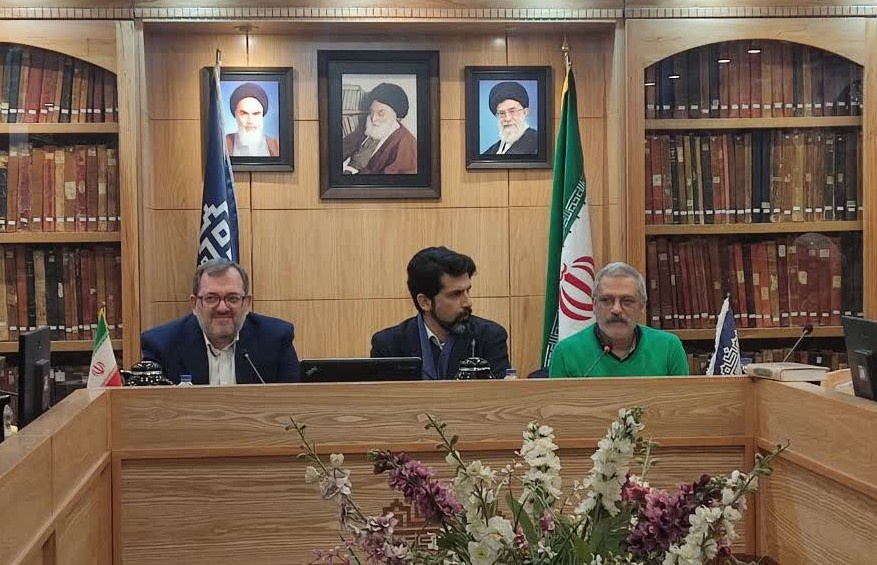
According to the Iran Book News Agency (IBNA) correspondent in Qom, Seyed Reza Bagherian Movahed, author of the collection ‘Nomenclature and Rules of Iran’s Schools and Universities,’ who has spent seven years collecting these works, attended the cultural meeting of children’s and young adult book enthusiasts titled ‘Mirza Hassan Rushdieh and the formation of children’s literature in Iran,’ organized by the Association of Children and Young Adult Writers in cooperation with Ayatollah Boroujerdi Library (RA) and Makta (Assembly of Specialized Libraries of the Province) in the Grand Mosque of Qom. Criticizing the neglect of this cultural heritage, he called this negligence an incorrect global standard and a severe crisis in Iran’s education system, saying: After years of teaching, at age 40, I realized that I should know the history of my own profession.
He stated: When I asked about Rushdieh from about 100 literature teachers with bachelor’s and doctoral degrees in Qom, only 10 people knew him. This statistic was heavy and indicated a catastrophe.
Bagherian Movahed considered the goal of his seven years of continuous work as paying tribute to Rushdieh and feeling relief after publishing the book. Criticizing exaggerated titles, he stated: We Iranians specialize in idol-making and idol-breaking. Rushdieh himself never claimed to be ‘the founder of modern education in Iran,’ and until the end of his life, he only introduced himself with the signature ‘The Old Man of Education.’
He continued: Rushdieh’s main task was to make widespread what others had limited; he insisted on his work for 70 years and remained a first-grade elementary school teacher until he was 90. This shows Rushdieh’s understanding of the importance of first grade as the main pillar of education and upbringing.
Rushdieh’s Regulations; Justice in Subsidies and Practical Ethics of the Teacher
Also, Majid Jaliseh, while reminding that Ayatollah Boroujerdi Library has a rich collection of close to four thousand volumes of ancient printed books (lithographs and letterpress), including Iran’s first textbooks, said: Rushdieh’s regulations emphasized the necessity of justice in receiving subsidies. Reading a part of the regulations, he continued: ‘I, as the school manager, must be fair in receiving subsidies. I should take more from the rich and ask less from the weak, and accept poor children for free and even provide for their expenses and education, make the income and expenditure account public every year, and in determining the financial rights of the school members, respect the level of their service for the public benefit, not the importance of their service to myself.’
Jaliseh read another important part of the regulations that emphasized the importance of action and service in selecting teachers: ‘Ignoring their apparent virtues. Only looking at the correctness of actions and the result of service, and if I do not do so, I would be a traitor to the public.’
Memories of Grandchildren: From Family Name Change to Pioneering Braille
Kazem Nakhai (son of Fatemeh Rushdieh), Rushdieh’s grandson, who himself had 50 years of teaching experience, quoted his mother and said: Rushdieh considered ‘belief’ higher than ‘opinion’ (which is subject to repentance).
Nakhai also spoke about Rushdieh’s extreme poverty in the last years of his life and pointed to a quote from Rushdieh: ‘All I have throughout my life is the clothes on my body, and I have nothing else.’
He referred to Rushdieh’s will and said: Rushdieh had requested to be buried in the school corridor so that the movement of children over his grave would polish his soul.
Abolfazl Arabzadeh, one of the oldest residents of Qom’s book community who had seen Rushdieh closely, confirmed the support of the contemporary religious authorities (like the late Haj Mahmoud Rouhani) for him and stated: Rushdieh taught a form of Braille using perforated cardboard to a blind person (Mr. Akbar Akbari) in his home, so that he could learn literacy; this shows that his attention was focused not only on classes and lessons but also on educating people with disabilities.
The Role of Clergy in the History of Children’s Literature in Iran
Seyed Ali Kashefi Khansari, one of the directors of the Association of Children and Young Adult Writers, emphasizing the pioneering role of the seminary in children’s literature, recalled: Historically, this topic has been the work area of clerics for hundreds of years, and this is not specific to Islam.
Pointing to the role of Ayatollah Boroujerdi in correctly identifying the importance of focusing on children and commissioning a group of clerics for this task and holding writing workshops, he stated: Any fair historian who wants to write the history of children’s literature cannot ignore the names of great cleric writers, including Naser Makarem Shirazi (born 1926 and author of several children’s and young adult books) and contemporary Qomi writers.
Mohammadi from Qom University also confirmed this issue, mentioning Shahid Motahari and the late Mohammad Hassan Rastgoo as influential professors in this field, and announced the establishment of a master’s program in children’s literature and the publication of a specialized journal in this area at Qom University.
He also proposed establishing a branch of the Children and Young Adult Association in Qom and holding a scientific conference on Mirza Hassan Rushdieh next year.





