“My Mother Vine” Underwent Critical Review!
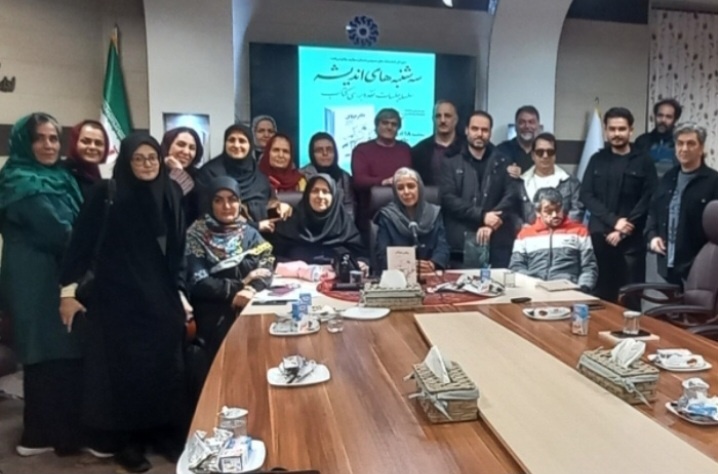
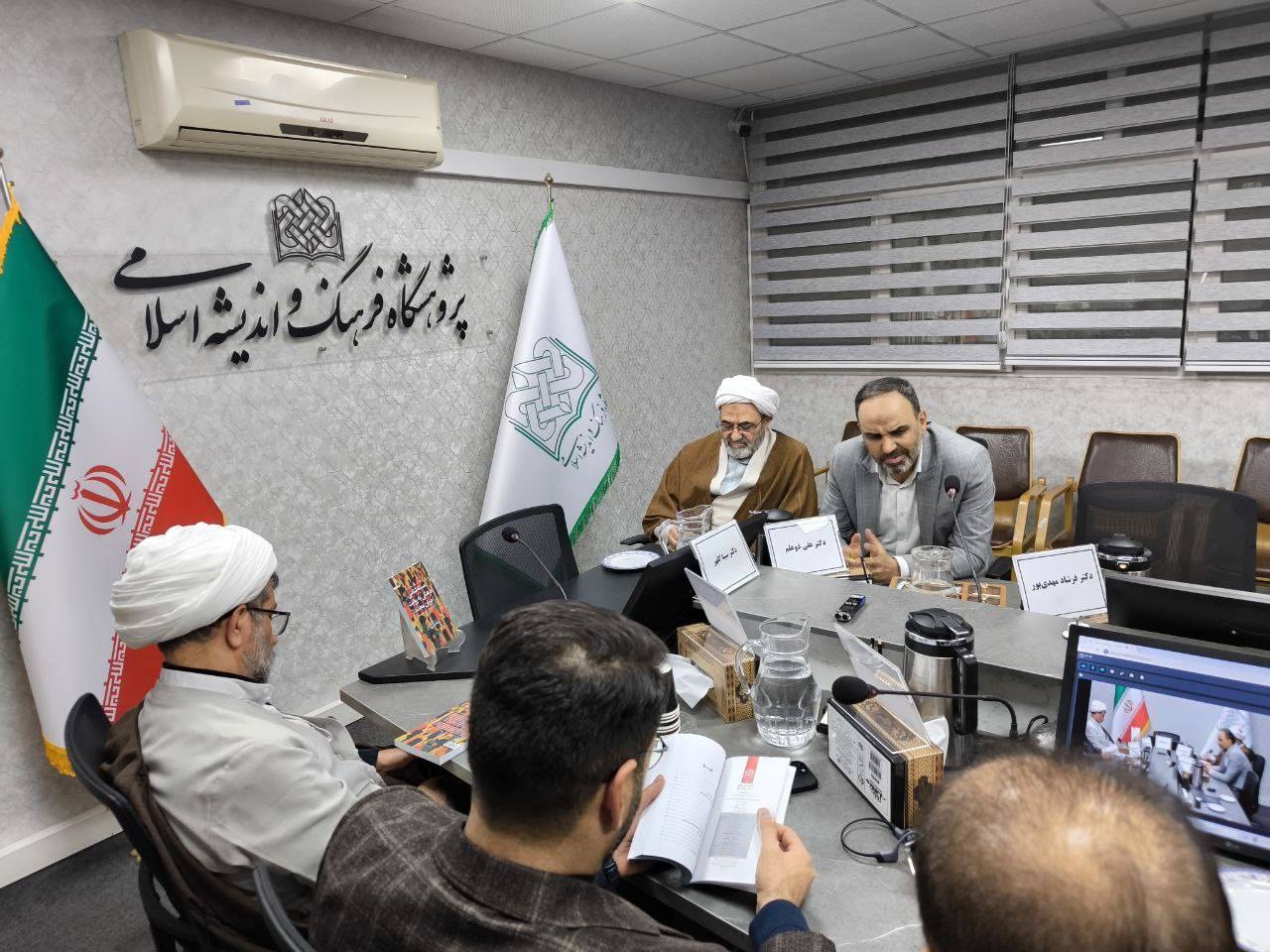
According to the reporter of the Iran Book News Agency (IBNA) in Arak, Maryam Talebi, the expert responsible for the literary program “Tuesdays of Thought,” stated that the purpose of holding these sessions is to review and read the published works of authors and poets from Markazi province. She said: “In this literary session, the poetry collection ‘My Mother Vine’ by Arak-based poet Marzieh Rostami was critiqued and read.”
She added, referring to the possibility for enthusiasts to submit works for review in these sessions: “This is the second specialized critique session that began with the poetry collection ‘My Mother Vine,’ a book that many readers have purchased and read. Reading this work has been enjoyable and is worth reading multiple times.”
Mythological and Linguistic Analysis of the Work
Following this, Asadollah Abbasian, a poet from Markazi province, said: “The title and content of the book indicate that a deep understanding of texts, especially in the Persian language, requires understanding cultural and mythological layers.”
He added: “For example, a word like ‘vine’ (tak) refers both to the concrete instance (the plant) and gains a symbolic meaning in a cultural context like ‘My Mother Vine’s message.’”
Abbasian considered Rostami’s artistic use of image-creating combinations as one of the work’s strengths and said: “Combinations such as ‘fledgling heart,’ ‘anxiety bottle,’ ‘child’s soul,’ ‘throwing stones,’ ‘Shamsol Emareh’ and others each evoke a specific time, place, society, and culture, and in addition to superficial interpretation, play a role in creating new concepts, unity of expression, transferring feeling, and creating poetic focal points.”
Technical and Content Critique from a Critic Poet’s Perspective
In this literary session, Faramarz Ahmari, poet and critic, pointed out the strengths of the work, saying: “Despite the many strengths that friends rightly noted, I have a few different perspectives.”
Regarding historical and social elements, he added: “Some descriptions of the past atmosphere (such as life in the 1960s and 1970s) may require more detailed imagery for the current generation who haven’t experienced those conditions to create a more complete sense of identification.”
Discussion on the Word “Modern”
Ahmari continued: “I do not agree with applying the word ‘modern’ to some poems. Modernism has a specific definition, and in these works, more of an intelligent fusion of ancient and new elements is seen; similar to what poets like Hooshang Ebtehaj did in modern ghazal.”
Aesthetics and Strong Structure of the Poem
Regarding the strengths of the collection, he noted: “The aesthetics of language, the masterful arrangement of words, and the harmony between content and form are brilliant features of this work. An example such as the couplet:
I entrust it to your blade of radiance / The three peaks of the snowy queen’s pinnacle
demonstrates the poet’s skill in imagery and creating layers of meaning.”
Regarding the proximity of the poems to nature, Ahmari said: “One of the outstanding features of these poems is the deep blend with nature and objects, which reflects the internalization of life experiences.”
He added: “The structure’s integrity and the arrangement of words are so strong and precise that, in Shamlu’s words, it is like stable brickwork, and changing a single word could disrupt the structure of the poem.”
Motivation for Printing the First Book and Concern for the Second Collection
Marzieh Rostami, the poet of the collection “My Mother Vine,” stated that this book is her first published experience, with most poems written between 2021 and 2024. Regarding the motivation for publishing the work, she said: “The reality is that we don’t write poetry to keep in a drawer; the audience and their feedback are always important. After some time passes since writing a work, the poet’s emotional connection to some of their works may fade, making selection more difficult. I thought I should present the poems of the last two or three years to the audience before they gather dust in my mind like the works from years past.”
About the Second Book
Regarding the publication of the second book, she explained: “I am not sure if it will be possible so soon, because in the first collection, the poet’s work is compared to others, but in the second collection, the poet is measured against themselves. This requires study, growth, and development, and I hope it happens.”
Choosing the Title; The Mythological Link between “Mother” and “Vine”
Rostami explained the selection of the book title: “It was important for me that the name of the book referred to femininity and motherhood. In Persian literature and many wine-related poems, when the vine appears, it speaks directly of pregnancy and birth.”
She referred to poems by Manuchehri Damghani where the vine is attributed to birth and fertility.
She continued: “Mother in Iranian culture symbolizes birth, nurturing, shelter, generational continuity, and unconditional love, while vine in Persian literature and world myths symbolizes life, intoxication, and growth. The connection between these two is multilayered, interpretable, and carries mythological, emotional, and nostalgic weight.”
Femininity in Poetry; Natural and Unforced Reflection
The poet discussed the presence of feminine elements in her poems: “My book contains many feminine elements, but all of them formed naturally during the writing process, and I made no insistence on highlighting them. The manifestation of femininity in poetry is not dependent on superficial signs; if the female poet is sincere in her emotion, the feminine tone and emotional flow naturally appear in the work.”
In this specialized literary critique session, other poets present, including Maryam Talebi, Alireza Momeni, Maryam Sadat Hosseini, Farhad Soleimani, and Shahrouz Kakavand, also offered critiques of the poetry collection “My Mother Vine.”