Why Sacred Defense Propaganda Still Remains ‘Ownerless’? Sardar Asoudi’s Strong Complaint at the Unveiling Ceremony
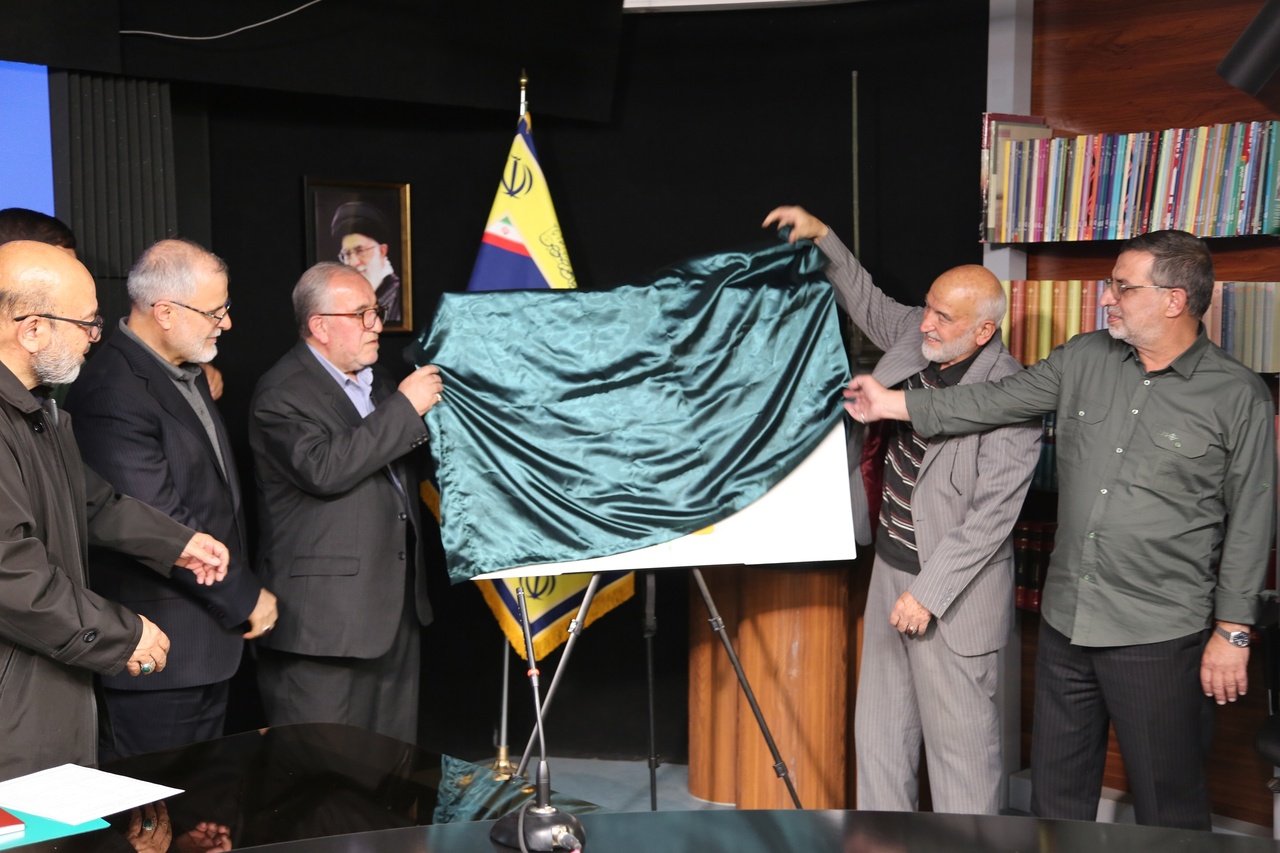
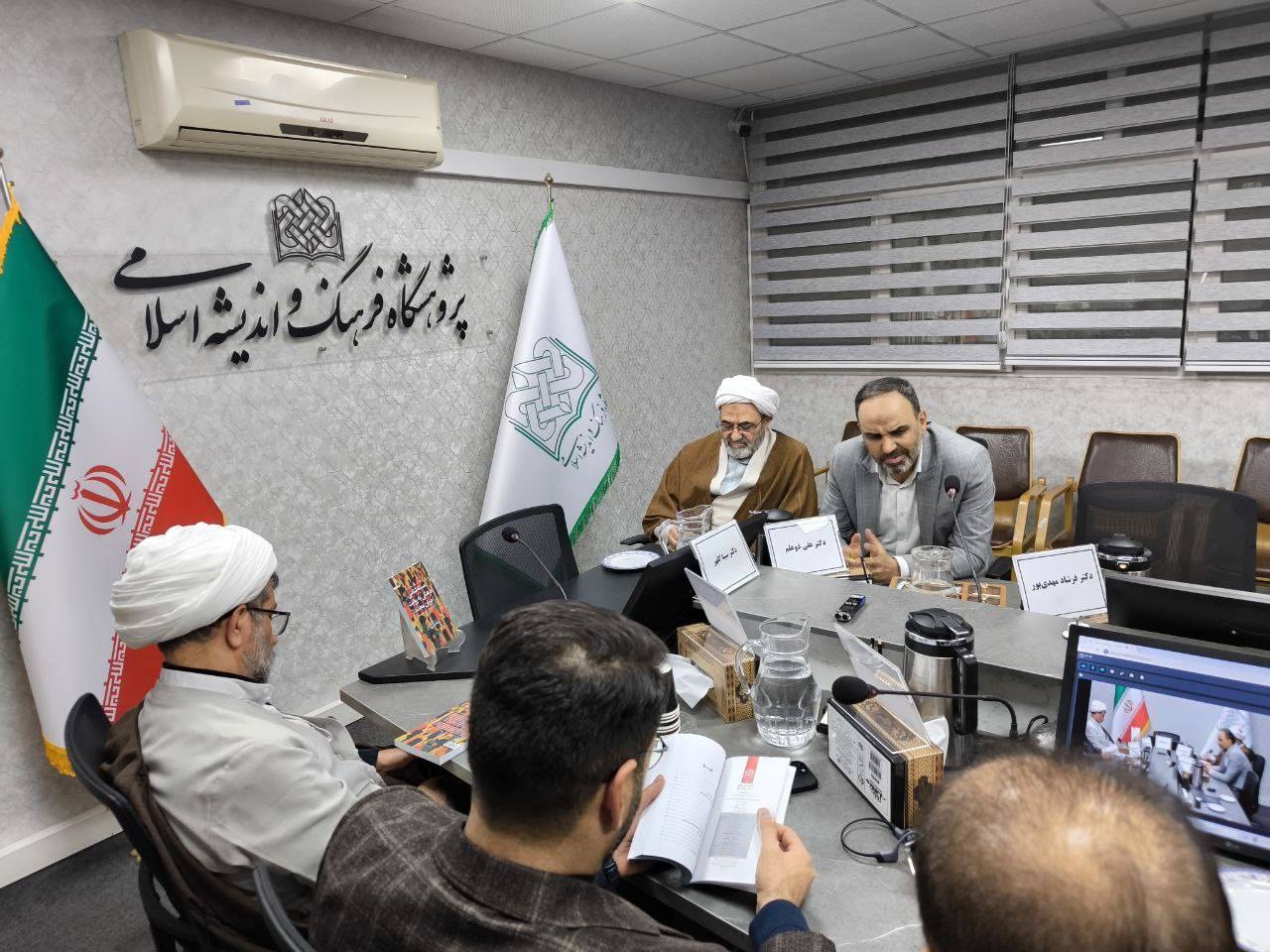
According to the Iran Book News Agency (IBNA), the unveiling ceremony for the book ‘Oral History of Sacred Defense; The Narration of Sardar Mohammad Ali Asoudi’ titled ‘The Art of Propaganda in War,’ was held on Sunday, December 1st, 2025 (9th of Azar 1404), with the presence of military figures such as Ali Akbar Pourjamshidian, Deputy Security Minister of Interior, Sardar Naeini, Spokesperson and Deputy Public Relations of the IRGC, Sardar Esbati, Sardar Asoudi (the book’s narrator), Sardar Ramazan Sharif, Head of the Center for Documents, Research, and Publication of Sacred Defense Knowledge and IRGC Endeavors, Sardar Foroutan, Sardar Rajabi Memar, and a group of veterans and researchers of Sacred Defense, at the conference hall of the Center for Documents, Research, and Publication of Sacred Defense Knowledge and IRGC Endeavors.
Ali Akbar Pourjamshidian, referring to the content written and completed under the guidance of Sardar Asoudi, said: ‘I wrote the materials systematically, but his guidance was effective in documenting and articulating them.’
He stated that these works will be highly valuable in the future, saying: ‘I am sure that these will be among Asoudi’s good works in the future, and I hope, God willing, they will be utilized.’
The Deputy Security Minister of Interior, paying tribute to the great family of Sacred Defense propaganda and culture, emphasized: ‘I pay my respects to all martyrs of propaganda and all propaganda luminaries, propaganda veterans, those great figures who are here and those who are not.’
Pourjamshidian, emphasizing Sardar Asoudi’s perseverance and tireless spirit, added: ‘Especially Professor Asoudi himself, who is still busy even now, and even now, despite his illness, he is still working.’
He remarked that Asoudi is a dedicated personality, stating: ‘Meaning, not a moment of his life has been wasted.’
The Idea of Consolidating Military Facilities and Simulating Space
Sardar Majid Rajabi Memar, referring to the dissatisfaction and complaints previously raised by Martyr Avini, said: ‘The personnel dispatched to the region admitted that having a suitable location and facilities to easily make films there was becoming more difficult day by day.’
He stated that the idea of consolidating military facilities and simulating space required a large Sacred Defense game and recreational town, adding: ‘This town should also be usable for teenagers and young people.’
Sardar Rajabi Memar emphasized that to operationalize this idea, the presence of a field operator and a ‘bulldozer’ in the cultural sphere was essential, adding: ‘After extensive investigations, no one better than Mr. Asoudi was found for this matter.’
He stated that Mr. Asoudi’s actions are not ordinary, emphasizing: ‘600 to 700 hectares of land located on the main highway of the country, after years of legal disputes, conflict, and court cases, and with the cooperation of thousands of institutions, efforts were made to liberate it.’
Sardar Rajabi Memar, referring to the rapid start of the work after he accepted responsibility, emphasized: ‘He made an effort; that is, from the time he accepted the responsibility, this complex was launched in less than a year.’
He noted that this complex has now come to fruition, stating: ‘This is a very massive complex and an incredibly valuable asset for Sacred Defense.’
Sardar Rajabi Memar, referring to Mr. Asoudi’s efforts at the Foundation for the Preservation of Sacred Defense Works and Values, said: ‘He participated in the Foundation for the Preservation of Sacred Defense Works and Values and undertook many endeavors.’
He stated that a new book is being authored, saying: ‘Through the efforts of Mr. Asoudi, another book is being prepared at Imam Hussein University (AS). This book is in the field of collecting experiences, memories, and practical experiences that will in fact turn into lectures in the field of visual arts of Sacred Defense.’
He emphasized the difficulties of completing this work, stating: ‘Certainly, and without any hesitation, if it weren’t for Mr. Asoudi’s diligent follow-up, this book would not have been completed.’
National Harmony and Criticism of the Distortion of IRGC Families’ Image
Sardar Ramazan Sharif, Advisor to the IRGC Commander-in-Chief, recalled at the ceremony: ‘One of the blessings of the Sacred Defense was the harmony and brotherhood formed at the peak of self-sacrifice, which was a field for demonstrating sincerity and inner purity.’
He criticized the enemy’s false narrative, stating: ‘The enemies of the IRGC and the Revolution have always tried to portray an image of IRGC families that bears no relation to the realities of their lives.’
The Head of the Center for Documents, Research, and Publication of Sacred Defense Knowledge and IRGC Endeavors added: ‘Because we were not professional enough to properly articulate the true narrative of the commanders’ lives and growth, unfortunately, this false image has been portrayed.’
He noted: ‘The publication of some videos to tarnish the image of devoted individuals is calculated and planned by the enemy.’
Sardar Sharif referred to the enemy’s fear of the IRGC’s human assets and said: ‘The fact that the Zionists simultaneously assassinated nearly 20 IRGC commanders in the 12-day war shows the fear the enemy has of these human assets breathing.’ He concluded by emphasizing the necessity of promoting the culture of Sacred Defense following the recent war.
Emphasis on the Importance of Propaganda Documents
Continuing, Amir Mohammad Hekmatian, Head of the Center’s Oral History Group, referring to Sardar Asoudi’s oral history book, stated: ‘Documenting specialized experiences in areas such as propaganda will contribute to a more comprehensive understanding of war management.’
He noted: ‘This book is the 22nd work in the field of oral history of IRGC propaganda units and strives to document the role of propaganda units.’
10 Years of Committed Narration
Continuing, Sardar Mohammad Ali Asoudi, the book’s narrator, referred to his long period of writing and said: ‘From 1979 to 1989, I wrote down all important memories and events every day without exception. These writings also included meetings with ‘Agha Mohsen, Agha Aziz, and Agha Rahim.’
While appreciating the efforts of colleagues in documentation, he stated: ‘If it weren’t for the propaganda personnel, there would be no Sacred Defense works.’
Asoudi Was an Artist and a Pioneering Documentarian
Continuing, Sardar Behrouz Esbati, the book’s author, in his speech described the work of writing about Sardar Asoudi’s life as ‘simple yet impossible’ and said: ‘The secrets of war propaganda have not been discussed or elucidated at all.’
Sardar Esbati emphasized: ‘Sardar Asoudi was a personality who was present wherever he felt the Revolution needed him.’
He stressed the artistic dimension of Sardar Asoudi, pointing out: ‘Asoudi is an artist while being capable in management, and this is very unusual.’
He referred to Sardar Asoudi’s documentation characteristic and stated: ‘Mr. Asoudi is one of the few individuals who documented test writings, meeting locations, times, attendees, and methods; meaning, he could organize documentation as a pioneer in the early years of the Revolution.’
Sardar Esbati noted: ‘In writing this work, the pen moved forward on its own, and it was guided by itself, and this is one of the characteristics of work in the field of Sacred Defense.’
Sardar Mohammad Ali Asoudi, commander and veteran of the front and war propaganda, while appreciating the sacrifices of the wives and families of combatants, referred to his family’s sacrifice and stated: ‘In the early days of the Revolution, I left my heroic wife with one child and went to Kurdistan. There, news related to threats against my family was distressing, and it was very difficult to bear. During the Sacred Defense, I also went to the front for long periods and stayed there for two or three months.’
He referred to the experience of living in war zones and recalled: ‘I took my wife to the region for a year and a half; we were in the Allahu Akbar camp in the west for several months, which saw very heavy bombardments.’
Efforts of the Documentation Center and Registration of Martyrs’ Works
Referring to the efforts of individuals like Sardar Naeini and Sardar Rajabi Memar in supporting documentation work, he stated: ‘Colleagues, especially Sardar Naeini, encouraged me greatly to narrate my account of the Sacred Defense era. This book is the result of the efforts undertaken by the center and Mr. Esbati.’
This commander and veteran of the front’s propaganda sphere referred to his long period of writing and added: ‘From 1979 to 1989, I wrote down all important memories and events every day without exception. These writings pertain not only to propaganda meetings but also to meetings with Agha Mohsen, Agha Aziz, and Agha Rahim. These writings, alongside documents and photos, have provided a strong source for research. I donated all documents and records to the Center for Documents, Research, and Publication of Sacred Defense Knowledge and IRGC Endeavors.’
Referring to the role of the Foundation for the Preservation of Works, he emphasized the importance of supporting relics and documents: ‘Everything that is visible, photos and films, and everything that is readable, all of these are the work of the propaganda personnel.’
Sardar Asoudi, referring to the importance of archival documents collected by the Documentation Center and Mr. Esbati, noted: ‘God willing, this book, which is our document, must continue.’
Emphasizing that if it weren’t for the propaganda personnel, there would be no Sacred Defense works, he spoke about the efforts made to collect cultural documents and said: ‘Friends, let’s try to collect all photos, films, and notes we have regarding cultural propaganda. We have so far arranged all scattered manuscripts and Sacred Defense works with the help of colleagues.’
This commander and veteran of the front’s propaganda sphere complained about the organization of propaganda activities and stated: ‘I complain about myself, not about you. Unfortunately, the field of Sacred Defense propaganda still lacks a leader. In every other branch and deputy of the war, we see one or two founders, but the propaganda personnel have not taken action.’
The Heavy Duty of Promoting Culture and Transferring Concepts to the Young Generation
Referring to the enemy’s sensitivity towards this field, he raised an important warning: ‘The enemy has analyzed us well. In the Soviet Union, there were 3000 academic researches in the field of Sacred Defense, and in America, doctoral research is being conducted on the concept of ‘martyr’. ‘
Sardar Asoudi, referring to the importance of propaganda’s role, stated: ‘Today, we have concluded that we must talk about propaganda, promote its fundamentals, discuss it, because every sentence you dear ones write has buyers outside Iran. Revolutionaries have their eyes on you, especially in the field of war.’
Referring to the impact of recent developments, he stated: ‘The 12-day war, in my opinion, once again drew attention to the issue of Sacred Defense, self-sacrifice, resistance, and national solidarity. I hope we can transfer our duty, which is to promote the culture of Sacred Defense, that main source of dynamism, to our young generation.’
Sardar Behrouz Esbati, the author of this work, at the unveiling ceremony, described the work of compiling Sardar Asoudi’s oral history as an ‘experience both simple and impossible,’ and further criticized the lack of serious research in indirect war fields, saying: ‘The secrets of war propaganda have not been discussed or elucidated at all, and the key role of cultural, propaganda, and artistic activities in the Sacred Defense and its impact on international environments have not been examined so far.’
By depicting the youthful image of Sardar Asoudi in Semnan, he introduced him as a revolutionary leader and stated: ‘Sardar Asoudi brought his entire value system into the Revolution and was present wherever he felt the Revolution needed him.’
Asoudi’s Artistic Dimension and Documentation Power
The author of the book ‘The Art of Propaganda in War’ considered Sardar Asoudi’s artistic ability as one of his unique characteristics that made research difficult for him and stated: ‘Sardar Asoudi’s ability in management, while being an artist, is very unusual. I remember in a village, we staged a play where the father of a martyr decides to use the only weapon he has on his son, in fact, to narrate his son’s martyrdom, and this play was one of the influential phenomena behind the front and within the front.’
Sardar Esbati referred to Sardar Asoudi’s precise documentation method and said: ‘Mr. Asoudi is one of the few individuals who has documented meeting details, time, and attendees in writing, and this strong documentation is a valuable resource for research.’
Necessity of Producing Cultural Content
He referred to the enemy’s precise analyses of the Sacred Defense structure and noted: ‘The enemy has analyzed us well; in the Soviet Union, there were 3000 academic researches in the field of Sacred Defense, and in America, doctoral research on the concept of ‘martyr’ is underway.’
The author of the book ‘The Art of Propaganda in War,’ referring to the two dimensions of human existence, objective and virtual reality, warned: ‘Today’s virtual world needs us to talk about propaganda more than our objective world. Every sentence you dear ones write has buyers outside Iran.’
Amir Mohammad Hekmatian, Head of the Center’s Oral History Group, in his speech emphasized the value of this project in completing the puzzle of Sacred Defense historiography and stated: ‘Documenting specialized experiences in areas such as propaganda will contribute to a more comprehensive understanding of war management.’
Referring to the details of producing this valuable work in the field of propaganda, he stated: ‘This book, after 45 interview sessions with Sardar Asoudi, with precise editing and specialized design, has been finalized in 13 conversations.’
The Head of the Center’s Oral History Group noted that Sardar Asoudi’s oral history book specifically focuses on the vital role of propaganda, public relations, and psychological warfare during the Sacred Defense era and is considered the 22nd volume in the series of oral history of IRGC propaganda units. He emphasized: ‘This book strives to document and showcase the contribution of propaganda units to victories and maintaining the morale of combatants.’
He added: ‘The publication of ‘The Art of Propaganda in War’ is considered an important step towards the commitment of the Sacred Defense Documentation Center to recording and disseminating war knowledge, especially in its cultural and psychological dimensions.’