Re-examining Urban Authenticity and Identity in the ‘People of Isfahan’ Meeting
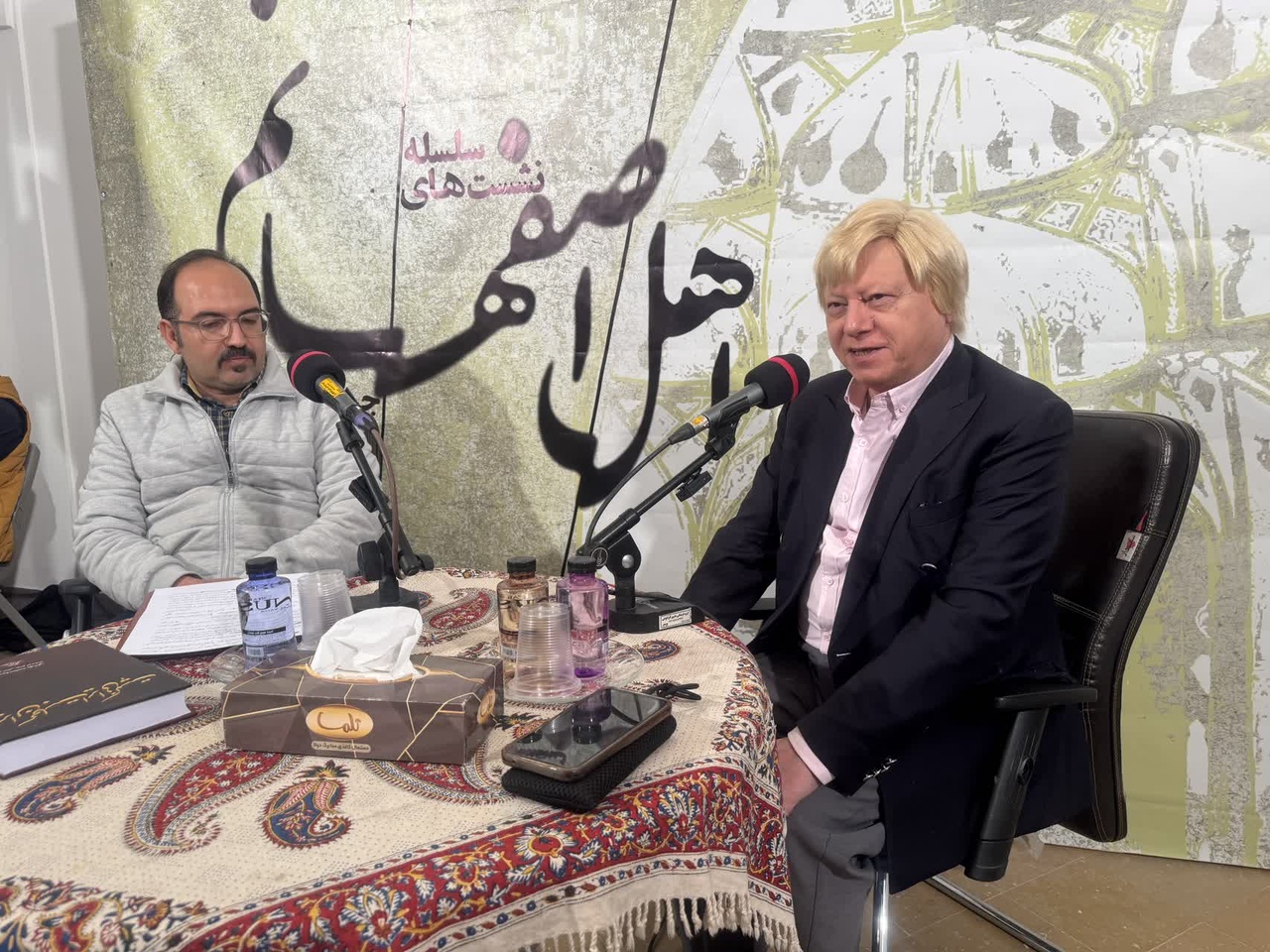
According to the reporter of Iran Book News Agency (IBNA) in Isfahan, Isfahan, a city that has long been a center of Iranian culture and art, faces a fundamental question today; a question that has drawn the attention of researchers, architects, and cultural figures: How can the authenticity and identity of this historic city be recognized and protected from a decline in cultural and social quality? The first meeting of the ‘People of Isfahan’ series of programs was held by the Isfahan Art Center to provide a clear picture of Isfahan’s current situation through research analysis and the study of historical and cultural documents. Hadi Emami, an architect and architectural researcher, and Seyed Mohammad Beheshti Shirazi, a member of the Supreme Council of Cultural Heritage and Tourism, shared their research insights with the audience at this meeting.
Re-reading Isfahan’s History from the Perspective of Written Sources
Hadi Emami, at the beginning of his speech, emphasized, by referring to historical sources and written treatises, that a deep understanding of the city’s background is the first step to comprehending its authenticity.
He reminded: The writings of Farrokhi Sani and the studies of Mohammad Mehryar show that Isfahan has long been a prosperous and habitable city due to access to water and provisions, and these characteristics have played an effective role in shaping the city’s identity.
Emami added: Historical documents from the Sasanian to the Safavid periods bear witness to the continuity of architecture and settlement in Isfahan, and the city’s status as a capital in various periods of Iran has cemented its importance in the country’s cultural history.
Isfahan in the Texts of Travelers and Historians
This researcher, referring to the travelogues and historical reports of travelers, described Isfahan as a city that has always been praised. Naser Khosrow, in the year 444 AH, described Isfahan as the most comprehensive and prosperous city among Persian-speaking cities. Also, the establishment of 12 wide gates by Hassan Rokn al-Dawla and the construction of the Nizam al-Mulk and Taj al-Mulk domes on the Jameh Mosque are examples of the continuity of architecture and urban planning in the history of this city.
He added: These written evidences show that Isfahan has always possessed authenticity and cultural cohesion and has been able to rebuild itself through time and crises.
Research Analysis of Contemporary Isfahan’s Development
Emami, using a research approach, criticized contemporary developments in Isfahan and stated: Many historical textures and houses have fallen victim to road construction and building projects in recent decades.
He added: Urban research shows that imitative development, without a deep understanding of the city’s culture and history, like wearing clothes or a tie unsuited to one’s personality, gives false credibility to the city, and this situation prevents the reproduction of authenticity.
This architect emphasized: Isfahan is currently at risk, and only by re-examining historical sources, gaining a precise understanding of cultural structures, and returning to the comprehension of authenticity can the path to saving the city be paved.
Authenticity; A Key Concept in Cultural Research
Seyed Mohammad Beheshti Shirazi, continuing the meeting, introduced the concept of authenticity as the core of his cultural research, defining it as a form of experiential knowledge that emerges through direct contact with cultural manifestations and differs fundamentally from mere intellectual knowing.
He demonstrated, by citing tangible examples from daily life, that authenticity involves understanding and skill in acting at the right time and place, and without it, no society will be capable of producing beauty, wisdom, and foresight.
Beheshti, referring to the Iranian kitchen, introduced this domain as a prime example of Iranian authenticity whose essence is still preserved. In cultural research, the Iranian kitchen shows that harmony, patience, anticipation, and understanding of time are inseparable parts of authenticity and are transmitted through informal education across generations.
Aesthetics and the Role of Authenticity in Iranian Art
The member of the Supreme Council of Cultural Heritage added: In the past, authenticity did not allow Iranians to produce disharmonious and undesirable works. This unconscious mechanism, across all domains from architecture and handicrafts to music and urban arts, ensured quality and beauty.
He clarified: Historical and cultural research shows that this cultural order and harmony provided the groundwork for a prosperous and high-quality city, and today, it can be restored by re-establishing cultural contact.
Methods of Transmitting Authenticity in Iranian Society
Regarding the method of transmitting authenticity, Beheshti said: This process results from direct engagement with culture and its manifestations, and formal education plays only a complementary role. Similar to children learning a language, an individual first encounters realities and the environment and then learns their names and concepts. This process indicates that authenticity transcends individual will and is based on experience and daily life.
The Importance of Research and Study for Rebuilding Isfahan’s Authenticity
This researcher, emphasizing the importance of research and historical studies, noted: Rebuilding Isfahan’s authenticity requires the study of written documents, field surveys, and scientific analysis of cultural and architectural structures.
He added: Authenticity is not only a cultural element but also a basis for foresight, urban planning, and sustainable development. Researchers, by using historical sources, can identify the weaknesses and harms of today’s city and provide scientific solutions for restoring cultural glory.
Isfahan; A Research Experience in Urbanism and Urban Culture
Beheshti, by reviewing historical works, introduced Naqsh-e Jahan Square and Chaharbagh Street as examples of the complete realization of Islamic and Iranian urban planning, whose study and research provide extensive insight into the interaction of architecture, culture, and collective life.
He added: Research analysis of these spaces shows how thoroughfares and squares have not only functional but also semantic and aesthetic roles, shaping the structure of the Iranian mind and culture.
The member of the Academy of Arts, by citing the evolution of the Iranian mosque, showed: Historical review and study can clarify the continuous process of cultural and architectural transformation and provide a basis for the reproduction of urban authenticity. Beheshti emphasized that the city’s potential capacities, without continuous care and study, revert to their original state, examples being abandoned villages and salinized lands.
Researchers’ Warning about Isfahan’s Current Situation
Beheshti, presenting research analyses, warned that Isfahan, which once conquered the peaks of art and urbanism, is now at risk. A disruption in authenticity has led to the structural overturning of the city and a decrease in the quality of cultural life. Field research shows that reduced foresight and attention to short-term interests are the greatest threats to the continuity of the city’s historical and cultural identity.
Return to Authenticity; A Research Mission to Save Isfahan
He emphasized: The return to authenticity requires continuous research, study of historical sources, field surveys, and direct contact of people with cultural manifestations.
This researcher concluded: If researchers, cultural figures, and people reconnect with cultural and historical sources, authenticity will be embedded in the collective unconscious, and the city’s future path will be corrected. A return to authenticity, based on historical and cultural research, is the only way to save Isfahan and rebuild its identity and glory.





