Review of the book ‘A Girl to Korea, A Boy to Hell’
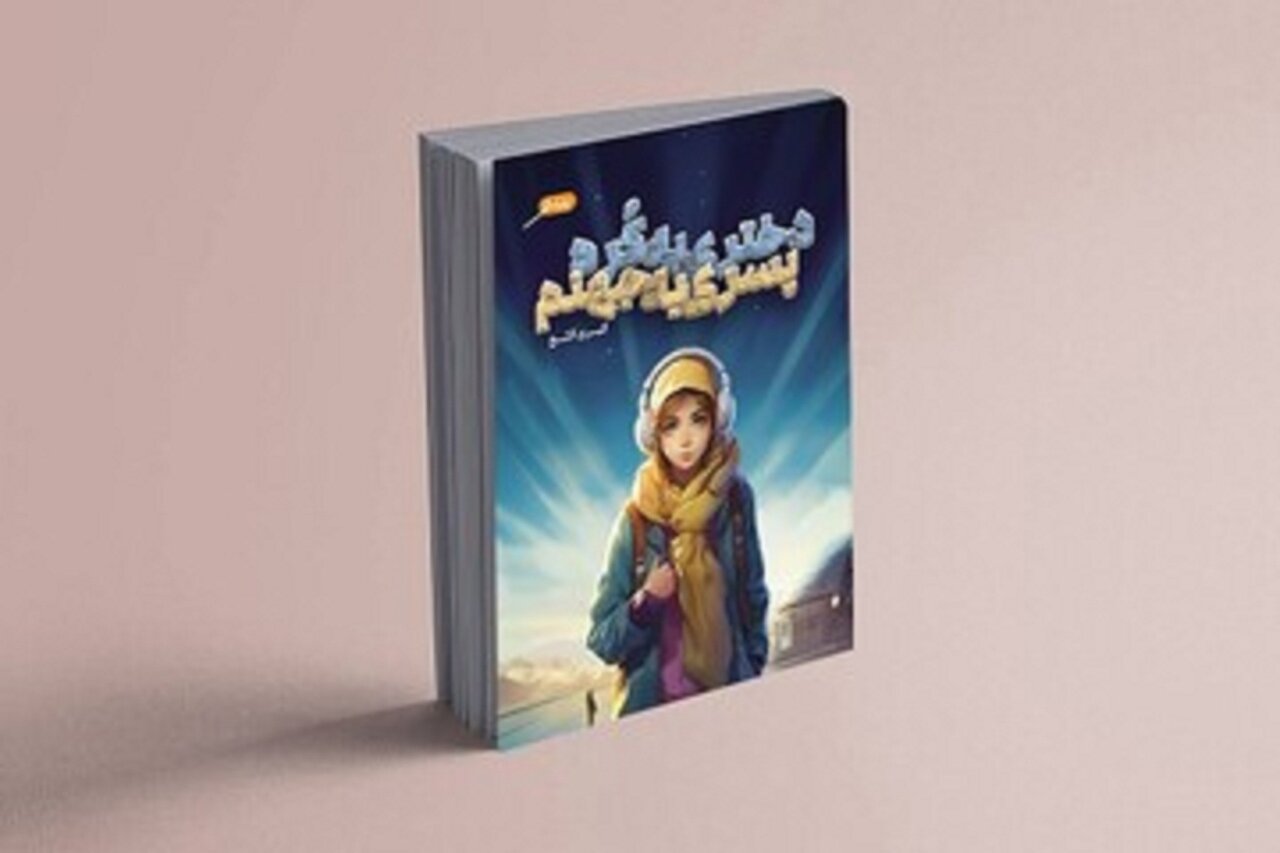
According to the Mabalagh thought and culture website, the first ‘Abketab’ session (review of children’s and young adult theological books) in 1404 was held yesterday at Majara Cafe-Book with the presence of Dr. Mehdi Ferdowsi Mashhadi, a researcher and critic of religious children’s and young adult literature and the innovator of the educational-research program ‘Abk’ (Theology for Children), and the book’s author, Ms. Kobra Al-Tij, attended by a number of creators and students of religious children’s and young adult literature.
According to Din Online, Dr. Ferdowsi Mashhadi pointed out that the book ‘A Girl to Korea, A Boy to Hell’ was published last year by Pino Publications, emphasizing that based on his research, this book is the first fictional work in the form of a young adult novel addressing the spread of the Korean Wave (Hallyu) in Iran. Various studies and surveys (at least 10 investigations) from 1388 to 1403 have been conducted in Persian on this matter, but it seems this book is the first fictional work in this regard.
He provided detailed explanations about the nature of the ‘Korean Wave’ and how it spread in Iran, citing four factors: ‘managerial,’ ‘economic,’ ‘cultural,’ and ‘media,’ which led to its emergence and expansion into other cultural domains.
He also noted that the Islamic Republic of Iran Broadcasting (IRIB) aired over 1344 episodes of Korean series from 1380 to 1400, presenting a table showing a thousand hours of Korean content broadcast on national television. According to him, Korean cinema (K-Drama), alongside Korean music (K-Pop) and Korean literature, forms the ‘soft power’ triangle of South Korea, which, through visual attractions and intelligent interaction with fans, has led teenagers to gravitate towards that country’s cultural products.
Ferdowsi Mashhadi, after reviewing the book’s background, critically analyzed it along two axes: ‘structural’ and ‘content-related,’ raising twelve points about the work. A summary of some of these points is presented as follows:
- Point of View Selection
Choosing a first-person point of view (Rafa, a girl indifferent and neutral to K-Pop) has prevented the affection and fascination of music group fans from being conveyed to the reader, leading to what is called an ’emotional gap’ between the reader and the character. - Redundancy
According to ‘Chekhov’s Gun’ rule, some elements, such as the concept of ‘musical reverse’ or the role of ‘brotherhood’ (Artin, Rafa’s brother), have been left inactive and without impact on the story’s progression, and their narrative potential has not been utilized. - Conflict Development
The central conflict of the story—the character’s dilemma between ‘revenge’ or ‘forgiveness’—is unrelated to the book’s theme. - Directness
The repeated use of the ‘saltwater and freshwater’ dichotomy to deter the reader from aligning with Korean culture and subculture is an example of the book’s sloganizing and stereotyping, which is inconsistent with modern storytelling principles. The author defended directness in an interview, stating: ‘Today’s teenager needs to hear facts directly,’ but this approach diminishes the ‘depth of artistic impact’ of the fictional work. - Invention-Centric
If a reader is a K-Pop fan, to engage with the story’s world, they would need to track Korean music stars in historical reality. However, the book’s author has fabricated the popular music group and its stars, and this fabrication severs the connection, at least between the fan reader and the book’s narrative. - Illogic
Some descriptions in the book do not seem logical; for instance, the ‘phosphorescent’ organizational color of the students’ favorite music group, because ‘phosphorescent’ is a characteristic of color (luminosity), not the color itself. Or the sudden deletion of videos is inconsistent with the technical mechanisms of mobile phones. - Theme Selection
The dichotomy of ‘sweet water and salt water’ was chosen based on the thirtieth verse of Surah Al-Mulk, which refers to ‘Ma’a Ma’in’ (flowing water). At the level of interpretation and application, its purpose is the Hidden Imam of Twelver Shiites, but ‘Ma’a Ma’in,’ even in that interpretation, means clear and flowing water, not ‘sweet.’ In other words, ‘Ma’a Ma’in’ is not opposed to mirage, but to dryness and lack of water. - Implausibility
The author’s failure to address the individual and collective harms of the widespread Korean Wave and teenagers’ imitative engagement with the fan community has reduced the work’s plausibility.
The author of the book, also present at the session, thanked the points raised, stating that the selection of each of these items was based on the audience’s conditions and aligned with the work’s objective. She clarified: ‘By understanding the teenagers’ sensibilities and valuing their interests, this work has tried to avoid any bias or judgment.’
‘Abketab’ sessions, with the participation of creators and researchers of religious children’s and young adult literature, are organized bi-weekly by the ‘Club for Enhancing Knowledge and Productivity in Religious Children’s and Young Adult Literature’ (Badbadak) in cooperation with Majara Cafe-Book, in ‘book-centric’ or ‘topic-centric’ formats.





