Ketabnooshan: From a Branch on Payambar Azam Boulevard in Qom to 20 Branches Across the Country

The Provinces Service of Iran Book News Agency (IBNA): On the path leading to Jamkaran Mosque, which hosts thousands of pilgrims on Tuesdays, numerous hospitality موکب (stations) are providing services. Amidst this, a void was felt for a cultural movement focused on books for children.
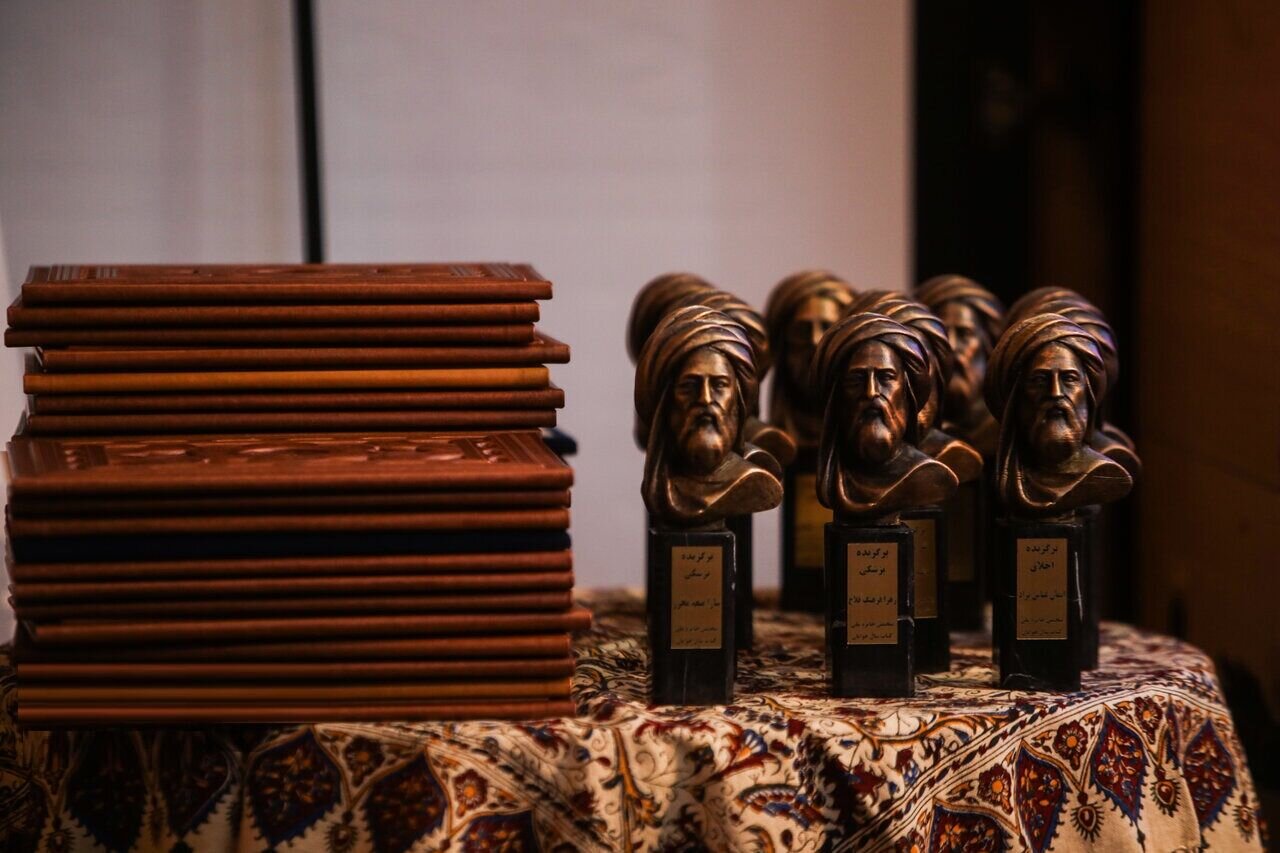
Parvaneh Ramian, a seminary student residing in Qom and a mother of three daughters, became the founder of the “Ketabnooshan” موکب with an idea inspired by her youngest daughter. This movement has now transformed from a simple table at عمود 81 (post 81) into a network with 20 branches across Iran.
Ramian spoke to an IBNA reporter about the challenges and joys of this path; from small gifts on the boulevard to the spark of a cultural movement, a spark that ignited in 1401 (Solar Hijri calendar, roughly 2022-2023 CE) just a few weeks after her family settled in Qom.
She stated: One day, with my daughters, we decided to experience the Mahdavi Tuesdays walk. Along the way, many موکب were giving gifts to children; one gave balloons, another toys and snacks. Naturally, the children were very happy. Towards the end of the path, my younger daughter said: «Mom, it was so good, let’s come again next time and bring something to give as a gift here».
This cultural activist added: My daughter’s remark became a motivation, while my own mind was also occupied with doing cultural work. I thought to myself that for a seminary student, doing cultural work is more appropriate than tasks ordinary people can do. The expectation I had of myself as a seminary student was to do cultural work.
From Instagram Filtering to the Birth of “Ketabnooshan” on Eitaa
Ramian considered the idea of the book موکب a continuation of her previous activities in cyberspace and said: Since 1399 (Solar Hijri calendar, roughly 2020-2021 CE), I had started promoting books and reading on my personal Instagram page. I remember that year on Students’ Day (8th of Aban), with a cost of 100,000 Tomans, I bought three books like «Tintin and Sindbad» and «Monster Hunter» and gifted them. Gradually, with the help of friends who became patrons, we gifted five to six books every month, and on occasions like Eid al-Ghadir, we gifted up to 30 books.
She continued: This activity continued from 1399 until Shahrivar 1401 (Solar Hijri calendar, roughly September 2022), until Instagram was filtered and that activity ceased. I then decided to create the «Ketabnooshan» channel on Eitaa. Given this two-year background in promoting books, it seemed appropriate to launch this book-gifting initiative on the Jamkaran path as well.
Securing Funding Through Personal Endeavor; Why Do We Gift Books?
Ramian, referring to the initial challenges, focused her efforts on child and adolescent audiences and Mahdavi books. She says: I decided to make the work exclusive to children and teenagers, preferably Mahdavi books, so that a child coming to Jamkaran Mosque would at least know what the story of this mosque is. But this work required a lot of budget. I am currently a housewife because of the children and had no income.
The founder of the «Ketabnooshan» موکب speaks of initial unsuccessful attempts to attract support: I spent a full day visiting every cultural institution and complex in Qom I could think of, but everyone refused, saying such work was not defined for them. Publishers naturally gave the same answer.
This cultural activist continued: I was forced to seek help from friends and acquaintances with much persistence and insistence. (She laughs) For example, I firmly told my friend whose husband was a bank employee, or my aunt who was a pensioner, that “you must give this amount for cultural work.” This is how I raised money and bought books from publishers at a discount.
In response to the question of why she does not lend or sell the books, Ramian explained: Some suggested selling the books or lending them out and getting them back the next week. But selling is not permitted on this path. Lending was also not practical; because many pilgrims are not residents of Qom, or even if they are, it’s not clear if they will come next week. Someone would say, “I came from Zanjan or Semnan; when will this person come back to return the book to me?” So these options were ruled out.
From “Book Summary” to “Ketabnooshan Ambassadors”
The founder of the Ketabnooshan موکب designed an interesting mechanism to ensure the books were read: We told the children, “Once you’ve read this book, bring me its summary next week, and I’ll gift you another book.” I saw, for example, a 10-year-old boy who had really read the book and would come and give a summary or answer my questions. This meant the book was not wasted.
She referred to the networking model of this project and said: We told these children, “Next time you come, bring another friend, or introduce the book in your class.” This book would then be introduced to 25 to 30 people in a class. We gave these children «Ketabnooshan Ambassador Cards».
Ramian recounts one interesting feedback: One of the children, who was also a foreign national, came and took books every week to the point where his reading became excellent, and his teacher made him responsible for the class library. Every night, he would read parts of a book in the class group, and by the end of the week, the entire class had heard a storybook.
A موکب that Did Not Close in Cold or Heat, With 20 Branches
This active cultural seminary student emphasizes that she started from scratch: «At first, there was no money and no table. We talked and laughed with a friend that with minimal facilities, even if it meant using a cardboard box instead of a table, we would start the work. We’d put a tablecloth on it and arrange the books. That’s how much we were willing to do the work».
She continued: Until, by chance, in a gathering, a doctor who was there said, “I will provide two tables and six children’s chairs,” and they brought these to the first موکب, and the work began. Gradually, other patrons joined the effort; more chairs, and after heavy rainfall when children’s coats were pulled over the books to keep them from getting wet, with the help of a patron and officials of the Jamkaran Mosque path, a gazebo was provided.
Ramian said: Our work never stopped under any weather conditions; in Qom’s strong wind that would carry the books away, in rain, in heat, and even during the holy month of Ramadan, we would go while fasting. Because our work also had media coverage and I would post reports on the Eitaa channel, the work gained visibility.
She added: This visibility led to the expansion of activities across the country: A patron whom I didn’t know at all, and who messaged through the موکب banner in Esfand 1401 (Solar Hijri calendar, roughly February-March 2023), began depositing significant amounts, and these contributions started from 1,300,000 Tomans and reached 8 to 10 million Tomans per month. When they saw the reports on the channel, applicants from other cities emerged. With the help of this same patron, we helped individuals in Naqadeh, Zahedan, Hadishahr, Jolfa, Marand, Garmdareh, Kohgiluyeh and Boyer-Ahmad, and so on, to start this work themselves.
She stated: Now we have about 20 branches in different parts of the country that lend books in mosques, schools, and cultural centers and send weekly reports. Also, for the «Ketabnooshan Ambassadors» in Qom, we have organized cultural excursion programs and taken them to the Grand Ayatollah Mar’ashi Najafi Library and the Jamkaran Mosque in order to further immerse them in this atmosphere.