Entezami: Transformation in Governance Is Not Possible Without a Transformation in Managers’ Mindsets

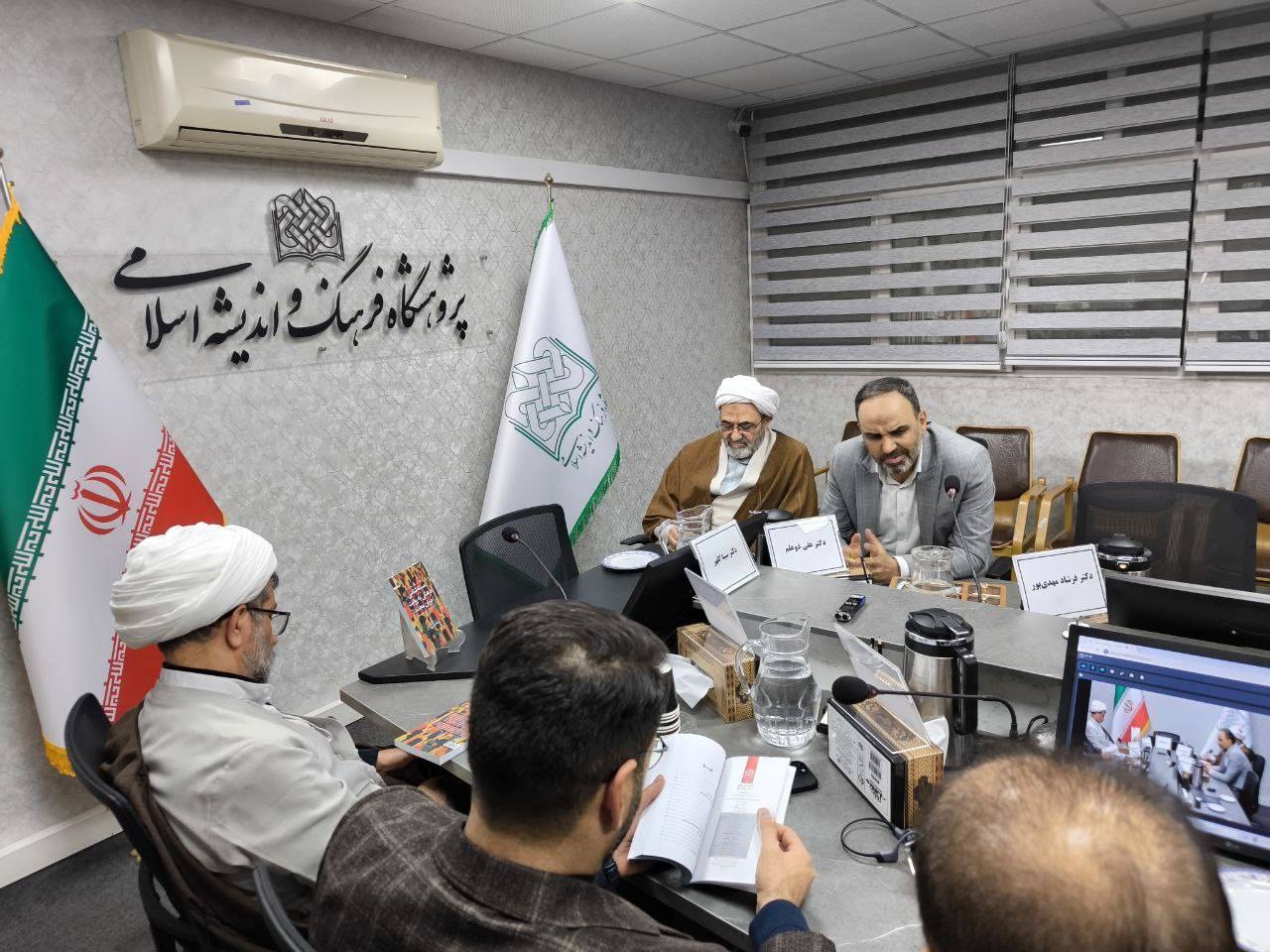
According to Iran Book News Agency (IBNA), quoting from the Public Relations and International Affairs Center of the Administrative and Recruitment Organization of the country, a specialized meeting to introduce and review the book ‘Development; How?! Horizons in the New Governance of Iran’s Administrative System’ was held on November 17th (26 Aban) on the occasion of Book and Reading Week, with the presence of Hossein Entezami, Deputy Minister for Management and Resources Development at the Ministry of Culture and Islamic Guidance, and the author of this book, at the Administrative and Recruitment Organization of the country.
At this meeting, Entezami, while elaborating on the characteristics of development-oriented governments, considered the transformation in the country’s administration method an unavoidable necessity and emphasized: The government is no longer the sole commander; we have undergone a paradigm shift, and if we govern with the logic and commands of the past, we will not achieve results.
He added: Progressive governments have abandoned the monopoly of decision-making and have transformed into a network of institutions, people, and technologies. Real governance is built upon public participation and trust, and data, like blood in the veins of decision-making, must flow integrally.
He pointed out that possessing modern tools is not a sufficient condition for development, emphasizing that the training of development-seeking managers is the most important pillar for reforming administrative institutions. He added: If all modern technologies are at your disposal, but mindsets do not become modern, development will not be realized; development, before tools, requires a transformation in the thought and perspective of managers.
Entezami, while emphasizing the importance of national data in the country’s spatial planning policymaking, stated: Sustainable development is achieved when territorial planning relies on transparency and reliable data. Our main challenge is not a shortage of resources, but rather overlapping information and the absence of a data-driven system. Future spatial planning should be a map of knowledge, not merely a map for resource distribution.
He also, referring to the role of culture in advancing development programs, stated that development is nothing but cultural development and said: Iran is one of the most law-abiding countries; there are enough laws and theories; but what needs strengthening is the ground for the correct and systematic implementation of these laws.
The meeting continued with the presentation of expert viewpoints and specialized Q&A, emphasizing the continuation of scientific collaborations and intellectual endeavors in the field of new governance and the transformation of the administrative system.