Artificial Intelligence Creates Quasi-Poets

According to the correspondent of Iran Book News Agency (IBNA) in Ahvaz, Mahmoud Akrami-Far stated on Monday evening at the ‘Literature Education in Artificial Intelligence’ workshop held in the conference hall of the Nayshkar Development Hotel in Ahvaz, referring to the question ‘What good is poetry in the future?’: In today’s fast-paced society, poetry gives peace to humans and bestows feeling and emotion upon the world.
He added, referring to the role of media: In a world moving towards globalization, those who are proficient in media literacy are seen faster.
Akrami-Far said: Artificial intelligence cannot eliminate a real poet, but it can create quasi-poets.
He identified three stages of AI technology evolution as ‘SIM cards, machines, and superhumans,’ emphasizing that in these conditions and the absence of media literacy, the phenomenon of self-proclaimed poets has been strengthened in society.
He added: Today’s era is not the era of literary giants because the vast volume of information does not allow for their emergence, so artificial intelligence cannot behave like literary giants.
He emphasized: The poet of the future must have at least two dimensions: human authenticity and lived experience, and media literacy and understanding.
Akrami-Far defined media literacy as ‘the ability to not accept every media message, analyze messages, challenge, and be familiar with message engineering,’ adding: A media poet must produce, gatekeep, distribute, and collect feedback for messages.
He added: We are no longer mere citizens and are moving towards global citizenship, because the poet of tomorrow must produce multimedia content and transform from a passive individual into a social activist.
Akrami-Far said: A poet who understands media is empowered, self-sufficient, possesses social balance, and can play an effective role in society.
Referring to the role of artificial intelligence in producing poetry, he said: AI sometimes writes poetry better than a human poet, but humans must maintain their analytical power and awareness by studying historical, political, economic, philosophical, and human sciences topics.
In the workshop ‘Storytelling in Artificial Intelligence,’ Hossein Barati, Director General of the Department of Culture and Islamic Guidance of Khuzestan Province, also stated that Khuzestan needs a collective will for cultural flourishing. He said: Nayshkar, alongside the media, has implemented effective programs and created positive energy in the cultural sphere. The field of books is one of the important areas of identity formation, and this cultural status encourages us to plan more effectively for production, study, and reading.
He added: The revival of the Southern School of literature is a cultural necessity and requires re-reading and reconstruction. If a collective will is formed, we can hold more magnificent exhibitions and exquisite literary programs in Khuzestan.
He added: This gathering is an opportunity to express respect and gratitude to cultural activists. We thank and appreciate the efforts of all these dear individuals who are sincerely active in this field.
Artificial Intelligence is a complex phenomenon but does not take the place of Southern literature.
Al-Bounaser, Public Relations Manager of Nayshkar Development Hotel, described AI in this workshop as ‘a very complex phenomenon throughout history,’ and said: Initially, many did not want to join this caravan, but today AI has become an important part of the content production process.
He described the Nayshkar harvest as ‘the largest agricultural event’ and added: In 2021 (1400 solar year), the Nayshkar Harvest Festival was nationally registered for the first time, and this year the festival was held with literary, painting, and artistic themes in both Arabic and English.
Al-Bounaser emphasized the necessity of ‘reviving the Southern School’ and said: This action should be carried out within the framework of corporate social responsibility. Every active company in society has a duty to support cultural activities.
He explained about the activities of Nayshkar Development Company: This company was established after the revolution and now has 35 years of experience, comprising 18 companies and ancillary industries. 80% of the medical alcohol needed by the country is produced in this complex, which prevents the cutting of one million trees.
Referring to sugarcane harvesting methods, he said: Sugarcane is harvested by two methods, black and green, and currently all harvests are green and take place over a hundred-day period from Aban (October/November) to Esfand (February/March).
He also announced: So far, about 1200 works have been received for Nayshkar cultural festivals and programs, and there is full readiness to hold workshops.
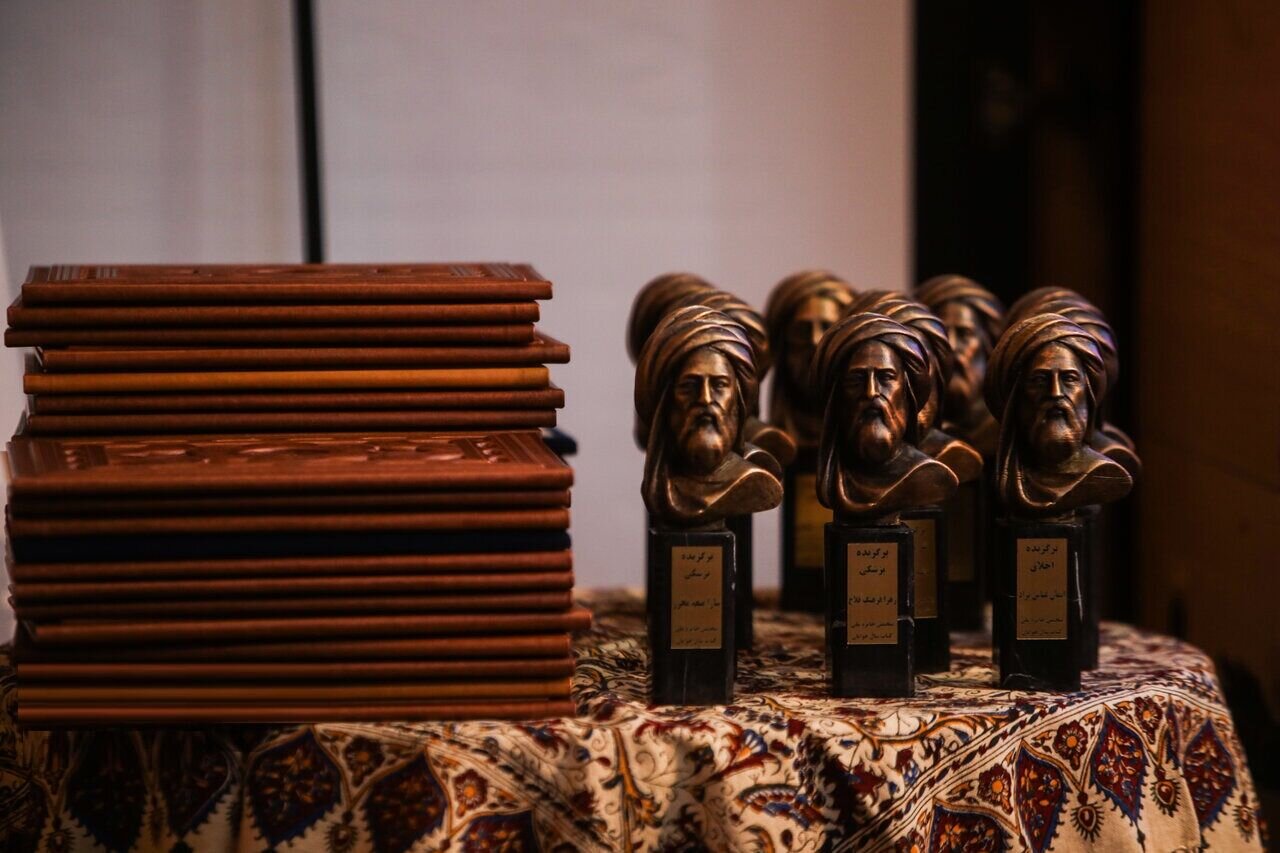
Following the ceremony, the book ‘An Examination of Pure Wave Poetry in the Collection of Poems “Narges of Tomorrow and the Whiteness of Hormoz Ali Pour’s World”‘, a newly published research work by Mina Ansari, one of the winners of the Nayshkar Festival, was unveiled.