Revisiting the Role of Combat Engineering in Operations with the Publication of Three New Books

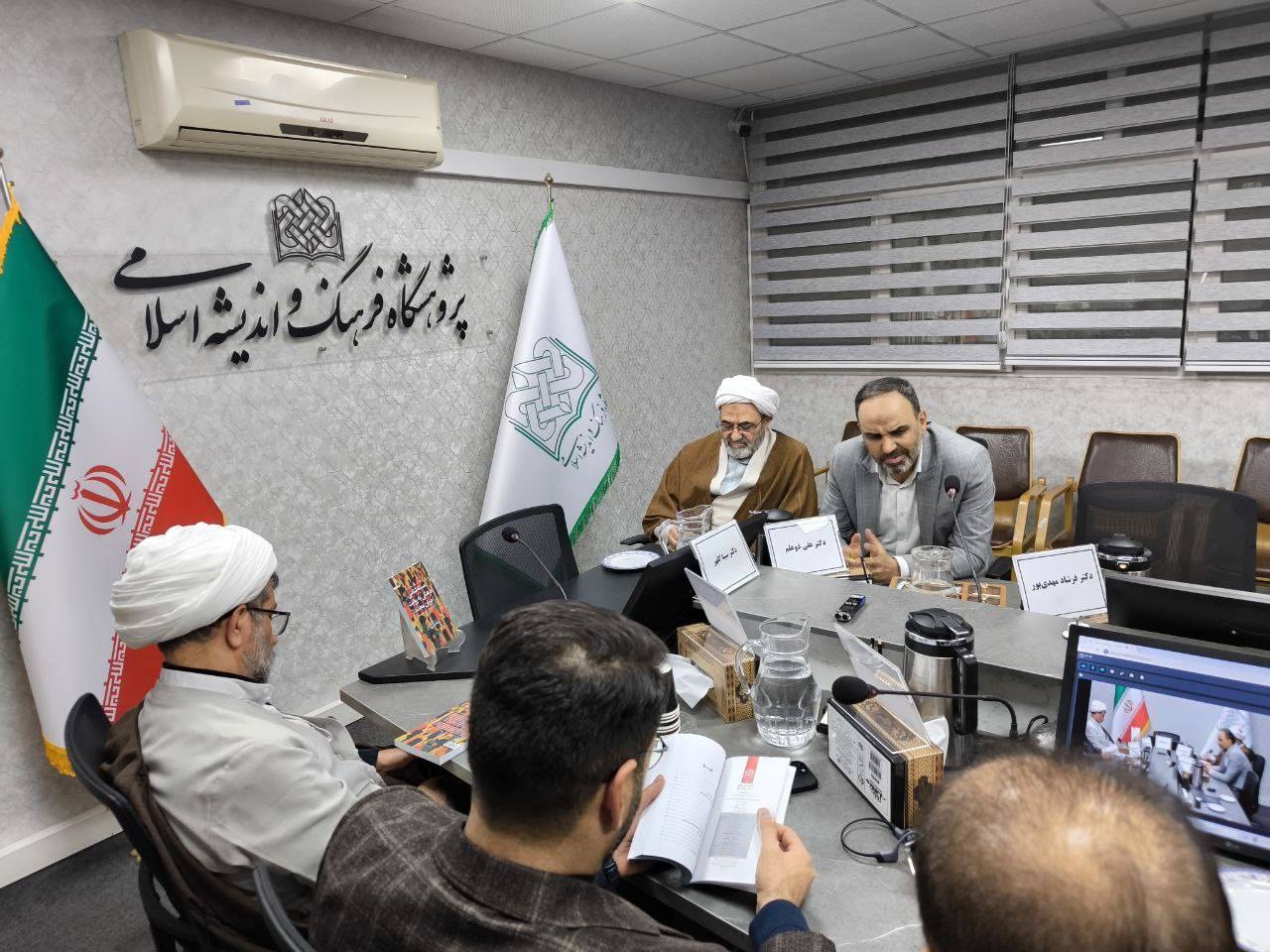
According to the Iran Book News Agency (IBNA), quoting the Public Relations and International Affairs of the National Museum of the Islamic Revolution and Sacred Defense, the unveiling ceremony of three books, “Geometry of Battle,” “Water War,” and “Earth Engineers,” from the Oral History of Combat Engineering of the Sacred Defense collection, was held in the Hoveyzeh Hall of the National Museum of the Islamic Revolution and Sacred Defense, with the presence of Brigadier General Mehdi Amirian, CEO of the National Museum of the Islamic Revolution and Sacred Defense; Brigadier General Abbas Bayrami, Head of the Sacred Defense Documents Organization; and commanders and veterans of combat engineering from the IRGC, Army, and Construction Jihad.
At the beginning of the ceremony, Brigadier General Mehdi Amirian, CEO of the National Museum of the Islamic Revolution and Sacred Defense, stated that the combat engineering oral history project began in 2012 (year 91 in Persian calendar). He said: “The result of this work is the publication of narratives that can change the life path of the new generation.” Referring to the fact that many Sacred Defense operations were the product of precise engineering work, he added: “We must speak of your memories, veterans, so that the youth know what you did on the field, not just who you were.”
He also reviewed his personal experience of the impact of Rahian-e Noor (Light Travelers tours) and emphasized that the practical narratives of the fighters can be exemplary and path-making. Amirian pointed out that combat engineering is not an arena for slogans, and the actions of jihadists and fighters must be published with documentation.
Subsequently, Mohammad Reza Moshfeghi Khameneh, secretary of the working group and one of the interviewers of the collection, presented a report on the book production process and said: “From 2012 to 2014, 90 formal oral history sessions were recorded, with more than 60 veterans from the IRGC, Army, and Jihad present.” He explained that over 1,300 person-hours of interviews have been recorded, and the compilation of this massive volume of work has continued to this day. According to him, some individuals participated in only one session, while others attended up to 41 sessions.
Furthermore, Abbas Heidari-Moghadam Arani, a veteran of combat engineering and editor of the books, stated that operations like Valfajr 8 would not have been possible without precise engineering calculations. He said: “The Sacred Defense war was completely engineered and based on precise calculations. Contrary to some claims, commanders considered the lives of the forces as an asset.”
He emphasized that there are distortions about the performance of combat engineering, and the only way to counter them is to record memories and publish oral history.
In another part of the ceremony, Brigadier General Hossein Hemmati, Deputy for Combat Engineering of the Islamic Revolutionary Guard Corps (IRGC), noting that during the war he was just a simple soldier in the 42nd Ghadir Division, said that he had been responsible for initiating the oral history project since 2012. Emphasizing that combat engineering should be recognized as a combat force, he added: “Just as the demolition unit is considered a combat force today, combat engineering should also be officially placed within the framework of combat.”
Brigadier General Hemmati also referred to the extensive current engineering activities in the construction of tunnels, underground cities, border lines, and passive defense, and said that a significant portion of the country’s engineering capabilities was also evident in the recent 12-day war. He announced the production of forty episodes of a television documentary about combat engineering and declared the full support of the IRGC Engineering Deputy for the continuation of the project.
Then, Brigadier General Gholamreza Jangodaz, a veteran of combat engineering from the Army of the Islamic Republic of Iran, referring to distortions in foreign sources, said: “A French book has been written about the Iran-Iraq war which shows the utmost unfairness towards Iran’s combat engineering, and I am currently translating and correcting it.”
He, citing examples of massive combat engineering operations—including extensive mine-laying and mine-clearing, construction of large underground headquarters, and the erection of the 380-meter PMP bridge over the Karun—emphasized that combat engineering has created masterpieces in many operations that will be forgotten in the future if not recorded.
Jangodaz also provided precise accounts regarding the extent of Iraqi minefields, the costs of mine-laying, the condition of mines after the war, and the role of the Army’s combat engineering in clearance operations.
At the end of the ceremony, honoring veterans and commanders of combat engineering, the three-volume collection “Oral History of Combat Engineering,” including the books “Earth Engineers,” “Water War,” and “Geometry of Battle,” was unveiled as new publications of Sarv and the National Museum of the Islamic Revolution and Sacred Defense.