Fayyazi is a writer before being an actor

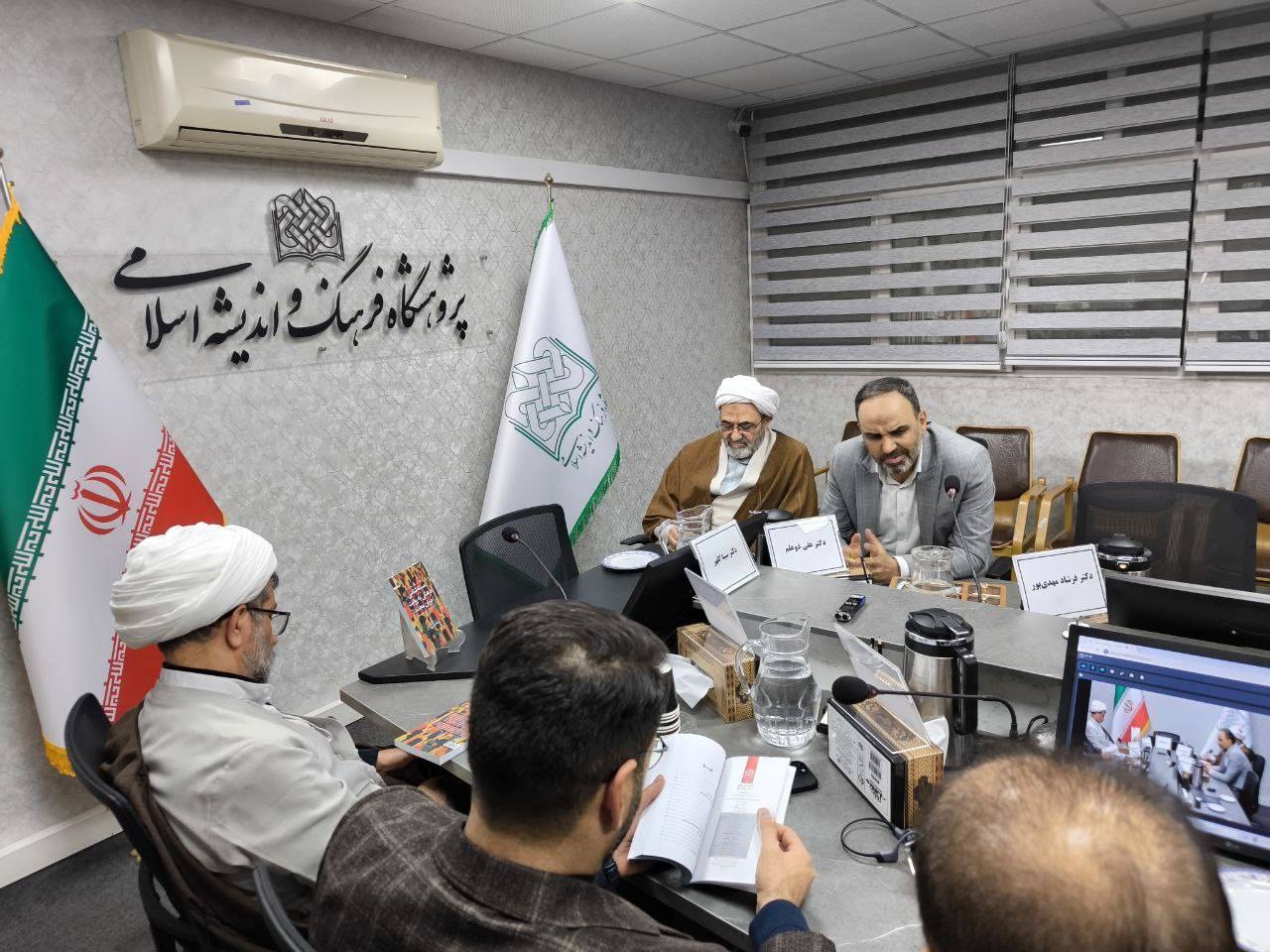
According to a reporter from the Iran Book News Agency (IBNA), Saideh Asadollahi, one of the managing directors of Nashravi Publications, stated at the ceremony: In these times when books sometimes face neglect, some publishers, like Nashravi, work without special privileges and strive to support literature, dedicating time to it. As the state of translation these days is heading in directions we don’t approve of, Nashravi Publications insists on authorship rather than translation, continuing with meager resources, and endeavors to back writers and support works in the humanities and social sciences.
Manouchehr Akbarlou, a theater expert and critic, said: I was surprisingly introduced to the characters in Reza Fayyazi’s play. It is sufficient praise for this work that its writing finished in February 2025 and it was published in 2025. Fayyazi for us is like an iceberg; we see his half in acting, and his deeper half in writing. He was a student of Dr. Hossein-Ali Tabatabaei, the father of Ahvaz theater, studied at the Fine Arts University, and this play is an extension of Fayyazi’s playwriting journey, which was a cut above his previous works. I hope this play will also be well-received.
He added: Reza Fayyazi has been working for 40 years, but many only know him as an actor. In my opinion, the publisher’s job does not end with printing the book; they must work in the space of book production and advertising. If someone wants to get to know Reza Fayyazi, they should first read his book ‘Asiabad’, and then they won’t be surprised that he can write such a play. He is a first-rate novelist whose acting career has overshadowed his other aspects.
Reading Fayyazi’s plays reminds me of the late Akbar Radi
Akbarlou continued: Fayyazi is first and foremost a writer, even before he started acting and came to Tehran. In a society where there is less talk of books and pens, and propaganda books fill bookstore shelves, we see fewer books of the quality of Reza Fayyazi’s writing.
This critic said about the play ‘Nightmares of M. Soraya’: In most of his plays and novels, women and girls are the main characters or have influential roles. Women are central in his works, and my interpretation is that he grew up in a family with six sisters and a charismatic mother. A mother who played an important role in family management. All his novels are social and address damages and characters; his characters are distressed and usually have a bitter end, contrary to his own cheerful, witty, sociable, and public-spirited demeanor. Everyone expects him to write happy plays and at least have a happy ending. But some stories end with suicide or death, which shows that the issue is serious for the author and has reached an impasse. He looks at the roots of the crisis and his understanding is that it won’t be easily resolved; something we see less often in Iranian novels. He also has two good adaptations, like ‘Lear Nashah,’ in which he has completely Iranianized the characters. He also has several readable poetry collections.
He continued: This book is polished and edited without errors and with meticulous care, so much so that it reminded me of the plays of the late Radi. My criterion is whether I can change the dialogues in a play and see what alternative I can put in, but I saw that this could not be done with this work. Because everything is in its place.
Women in Reza Fayyazi’s works are artistically feminine
In another part of the ceremony, Shahram Zargar, a theater lecturer and critic, said: I have witnessed firsthand that Fayyazi puts all his effort into acting; he discusses the role with the director and checks points with him. These actions certainly come from someone with a background in writing and dialogue writing. He is a good dialogue writer and avoids the pitfalls of dishonest and inappropriate dialogue.
Zargar, referring to Fayyazi’s play ‘Lear Nashah,’ said: In my opinion, the character Shayda in the play ‘Nightmares of M. Soraya’ is somewhat like Cordelia in ‘King Lear.’ The tragic mistake is not from Soraya but from the right person in the wrong place. The main character herself has poetic qualities and uses modern poetry for some dialogues.
He added: A point in this work is that despite all the differences between husband and wife, the husband uses the wife’s name for his artistic pseudonym. If Fayyazi writes children’s plays, he writes in a fantasy setting, but in adult works, he usually works in the social genre and deals with crises.
He further added: This work might be the concern of a naturalist writer, but the work itself is not naturalist; rather, it is a poetic and artistic piece. It is among the merits of those who have experienced the stage themselves. An actor, unlike other artists who use tools, puts themselves forward, must transform themselves, and take on another form; in fact, acting is inherent to the artist. The character development is within the vibrant anima of Reza Fayyazi’s own personality. Women in his works are artistically feminine, even though the author is a man.
Books are the most neglected cultural commodity
In another part of the ceremony, Elham Ashrafi, the editor of this book, said: I am happy that today we have gathered for a cultural event and the unveiling of a book and a play. Books these days are the most neglected cultural commodity. I am glad that Nashravi Publications focuses on original works and, more importantly, takes the time to evaluate these works.
She added: These days, some books are published due to connections with publishers, but at Nashravi Publications, connections have no effect, and the work itself speaks. When you are an editor and, incidentally, a book reader, editing a play is a mandatory success, and seeing the play from the audience’s perspective is very beautiful, and I enjoy reading it.
Ashrafi continued: The play ‘Nightmares of M. Soraya’ depicts the dark aspect of a writer’s social decline. In it, the character dreams, wakes up from the dream, indicating social collapse. Reza Fayyazi addresses the theme of social decline, and portraying it requires courage.