Truth, Knowledge, and Faith in Defense of Fatimid Ranks
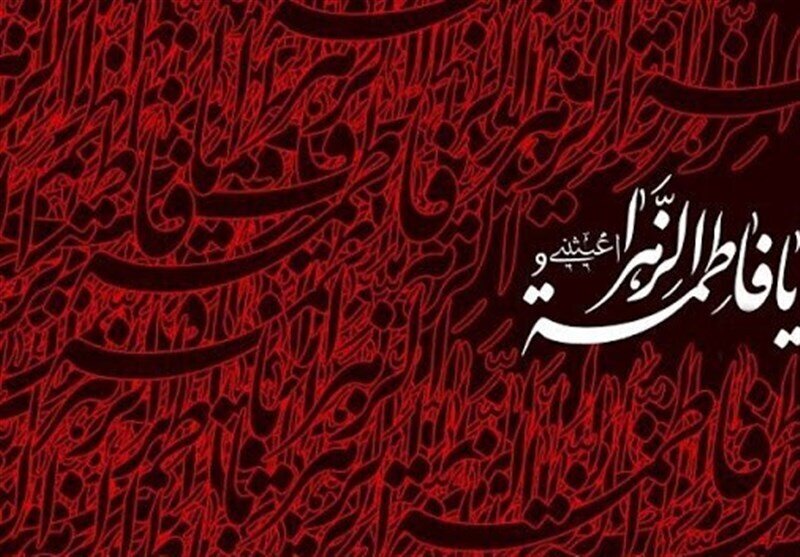
According to Moballeq Thought and Culture Foundation, the book “Defense of Fatimid Ranks” by the distinguished researcher and scholar, Ayatollah Seyyed Hashem Hashemi, is a documented and scientific response to doubts raised about the exalted status of Lady Fatimah Zahra (PBUH) by certain intellectual currents in the Islamic world. This work, relying on credible Shiite and Sunni sources, explains the spiritual and epistemological position of Lady Zahra (PBUH) and defends it against distortion and doubt.
According to IQNA, Seyyed Mahdi Mojtahed Sistani undertook the translation and abridgment of this valuable work. With a fluent and scientific prose, he translated parts of the book into Persian so that Persian-speaking readers can benefit from its content. In this interview, he speaks about the book’s content, its background, and its intellectual and epistemological importance.
In your opinion, what new and different image of Lady Zahra (PBUH) does the author of the book “Defense of Fatimid Ranks” present?
In fact, the main goal of this book is not to present a new image of Lady Fatimah Zahra (PBUH), but rather to respond to the doubts raised by Seyyed Mohammad Hossein Fadlallah, a Lebanese cleric claiming religious authority, regarding her status and position.
Fadlallah, in some of his speeches and works, cast doubt on some of the virtues of Lady Zahra (PBUH) and even the issue of her martyrdom. These views sparked a widespread reaction among scholars in Iran and other Shiite countries.
Ayatollah Seyyed Hashem Hashemi from Kuwait, by compiling Fadlallah’s speeches and writings, critically responded to them in a documented and well-reasoned manner, based on Quranic verses and reliable narrations. The result of this effort is a book in two parts: the first part addresses the denial of Lady Zahra’s virtues (PBUH), and the second part is dedicated to examining Fadlallah’s view on her martyrdom.
In the Persian translation of this work, only the first part has been selected and presented in an abridged form; this is because more comprehensive sources and research were available regarding the martyrdom of the Lady. The ultimate goal of the book is to defend the truth and safeguard authentic Shiite beliefs, not to propose a new or different viewpoint.
What is the most important intellectual or methodological innovation of the book in defending Fatimid ranks?
The outstanding feature of this book is its rational, coherent, and well-reasoned responses to doubts. Mr. Hashemi meticulously examined all the arguments and statements of opponents and provided a logical, documented, and unemotional response to each doubt.
By focusing on rational and transmitted arguments, he sought to convince the reader’s mind, not merely to stir their emotions. For this reason, any fair and thoughtful person, after studying this work, will find the responses logical, clear, and convincing.
How does the author of the book establish a link between the historical dimension of Lady Zahra’s (PBUH) life and her celestial and spiritual dimension?
In response to Fadlallah’s doubt, who asked: “What concern is it of ours what status Lady Zahra (PBUH) had or if she was martyred?”, Ayatollah Hashemi emphasizes that understanding the ranks of the Ahl al-Bayt (AS) is not merely a historical matter, but directly relates to the degrees of human faith and knowledge.
He demonstrates, by citing narrations, that the deeper a believer’s understanding of the Ahl al-Bayt (AS), the more complete their faith will become. Therefore, examining the ranks of Lady Zahra (PBUH) is actually considered part of the path of human spiritual growth.
In my own translation, I have also reminded that if this matter were insignificant, why would dozens of Hadiths emphasize the “Sovereignty of Lady Zahra (PBUH)”? This point itself indicates the inseparable link between knowledge and faith.
What doubts or misconceptions about the personality of Lady Fatimah (PBUH) does the book “Defense of Fatimid Ranks” address?
Fadlallah had expressed views rooted in Wahhabi ideology, but he presented these ideas from the position of a Shiite Marja’ (religious authority). These views spread in Lebanon, Iraq, and Kuwait, causing confusion among believers.
His doubts included denying Lady Zahra (PBUH) as “Sayyidat al-Nisa” (Leader of Women), questioning her being “Batool” (chaste virgin) and “Tahira” (pure), denying the Mus’haf of Fatimah (PBUH), and criticizing her weeping.
Ayatollah Hashemi, with strong and documented arguments based on both Shiite and Sunni sources, answered all these doubts and showed that Fadlallah had practically reiterated Wahhabi statements. This book, in fact, acts as a scientific barrier against the distortion of Shiite beliefs.
In this work, the defense of Fatimid ranks is not merely emotional but based on rational and Quranic arguments. What is the importance of this approach?
The importance of this method lies in establishing a suitable balance between reason (`aql`) and transmitted texts (`naql`). If one relies solely on reason, they drift away from the guidance of the Ahl al-Bayt (AS), and if one suffices only with transmitted texts, they will face two harms: first, accepting weak or fabricated narrations, and second, inability to correctly understand authentic narrations.
Mr. Hashemi, by integrating reason and transmitted texts, chose the middle, scientific path. In contrast, Fadlallah relied solely on reason and ignored Hadiths, but Hashemi with a Quranic and narrative approach, showed that the ranks of Lady Zahra (PBUH) are clearly proven based on both sources.
How is the position of knowledge, science, and divine proof in the personality of Lady Zahra (PBUH) explained in this book?
The aim of this book is not a comprehensive examination of Lady Zahra’s (PBUH) personality, but rather its focus is on responding to doubts. At the time of its writing, Fadlallah’s followers in Lebanon and Iraq were confused by his views and needed a scientific and well-reasoned response.
Ayatollah Hashemi’s book “Al-Hiwar ma’a Fadlallah” – whose Persian translation was published as “Defense of Fatimid Ranks” – was able to prevent the spread of these intellectual deviations at that time.
Although the book does not directly elaborate on Lady Zahra’s (PBUH) scientific status, it inherently reveals her position of knowledge, science, and divine proof. For the defense of Fatimid ranks is, in essence, a defense of the truth of knowledge and divine proof in her being.
Is the relationship between Fatimid status and emotional guardianship also discussed in this book?
This topic is briefly touched upon in only one section. The author, continuing the discussion about Lady Zahra (PBUH) being a sovereign, explains that when the superiority of Imam Ali (AS) after the Prophet (PBUH) is established, it is natural that Lady Zahra (PBUH), who is introduced as his equal and counterpart, would be the greatest person in the world after him.
This argument was presented as a marginal point and was not the main focus of the book, as the work’s subject is responding to doubts, not a detailed analysis of the relationship between Fatimid status and emotional guardianship.
What new understanding of Lady Zahra (PBUH) does today’s audience, especially the young generation, gain from studying this book?
This work does not aim to offer a new perspective on Lady Zahra’s (PBUH) personality, but rather focuses on resolving doubts. However, among the arguments and documentations in the book, there are lesser-known narrations and points that will be new to the young generation and provide them with a deeper understanding of her status.
In fact, the book is written from the perspective of “scientific defense,” but within its pages, the reader also encounters precious content and new epistemological teachings.
In your opinion, among contemporary works about Lady Fatimah (PBUH), what special place does the book “Defense of Fatimid Ranks” hold?
This book was an influential and trend-setting work in its time. At a time when a wave of doubts against Fatimid ranks was rising, this work was able to provide a strong and well-reasoned response and establish its place in academic circles.
After that movement subsided and Fadlallah passed away, it was natural that the book would be less discussed among the general public. However, its academic value remains; because no more complete and logical response to doubts concerning Lady Zahra (PBUH) has been offered in any period. In other words, the time for raising doubts has passed, but the book’s academic credibility remains alive and impactful.
If you were to state the final message of the book “Defense of Fatimid Ranks” in one sentence for readers, what would that sentence be?
Undoubtedly, compressing the message of this book into one sentence is difficult, but if we were to summarize: The deeper and more realistic our understanding of Lady Fatimah Zahra (PBUH), the closer we will be to the truth of faith and the path to happiness.





