Hormozgan Takes Steps Towards Smart and Digital Libraries / Children, Flag-Bearers of the Future of Reading in the Province
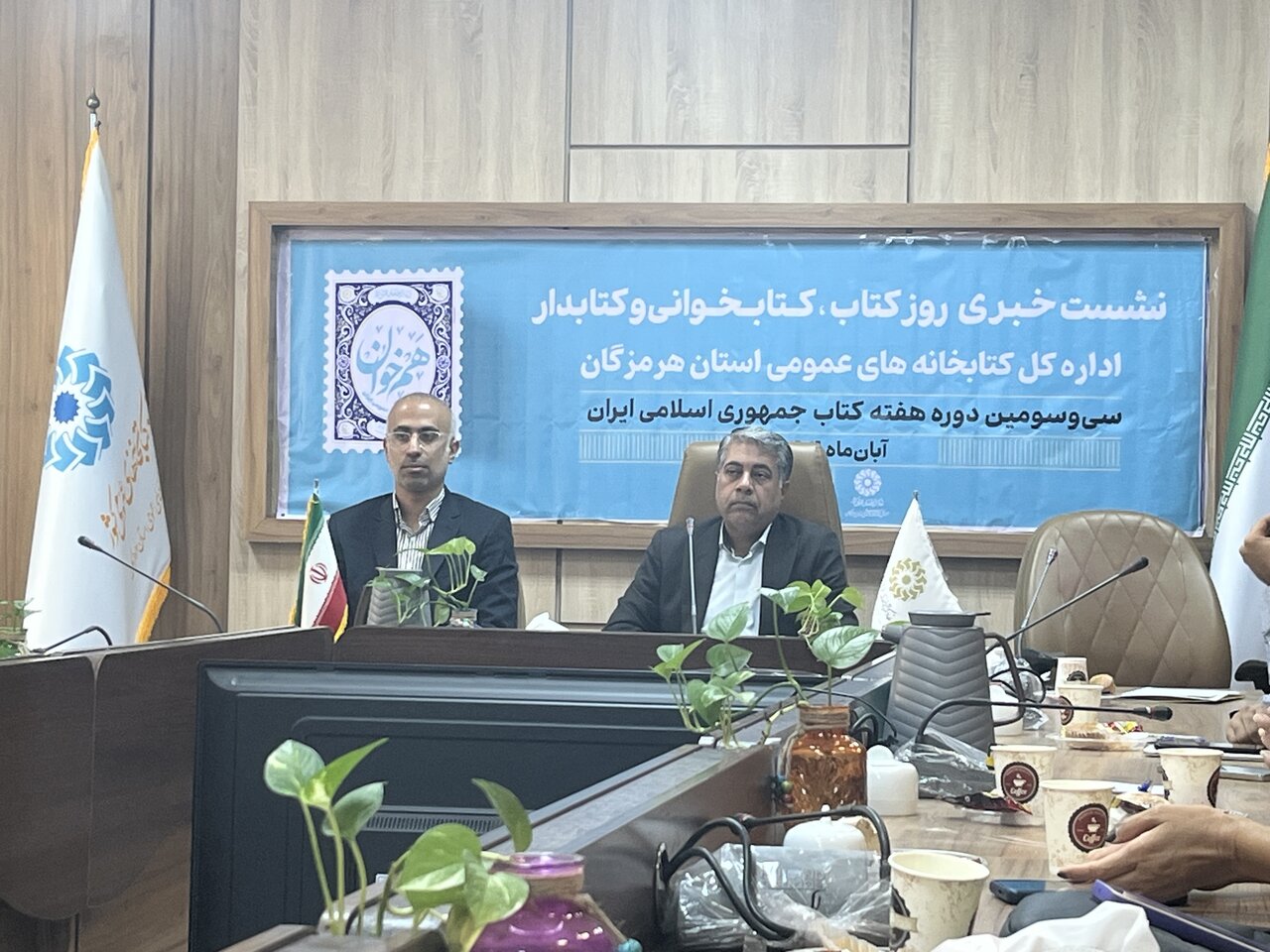
According to Khabar Online, Anoushirvan Pishdar, the Director General of Public Libraries of Hormozgan Province, stated at the press conference marking the start of Book, Reading, and Librarian Week, while commemorating the arrival of the 33rd Book, Reading, and Librarian Week of the Islamic Republic of Iran: ‘Every year in Aban (October/November), Book, Reading, and Librarian Week is an opportunity to evaluate the year-long cultural and promotional activities of the country’s public libraries. In Hormozgan Province, programs have also started from November 9th, with a focus on Hormuz Island.’
Pishdar, referring to the importance of Hormuz Island in the fields of culture and art, added: ‘Given the emphasis of the Supreme Leader and the cultural outlook of the provincial officials, we held the first programs of Book, Reading, and Librarian Week on this island; including a meeting of the Public Libraries Association and a book celebration, where decisions were made to expand cultural activities on the island.’
He considered books and reading one of the main indicators of cultural development in any society and said: ‘In our country, too, with the policies of the Ministry of Culture and Islamic Guidance and the Institute of Public Libraries, various programs are being implemented to strengthen the culture of reading.’
The Director General of Public Libraries of Hormozgan mentioned the completion of the Bandar Abbas Central Library as the most important cultural project in the province and added: ‘With the follow-up of the respected Governor, the construction of this project will be completed by the end of the year, and in 2026 (1405 SH) we will witness the inauguration of the first modern library in the province.’
Pishdar announced plans for redesigning and renovating the physical spaces of libraries and stated: ‘Our libraries must meet today’s needs; therefore, redefining the traditional role of libraries and moving towards digital libraries is on the agenda.’
Emphasizing the role of children and adolescents in developing a reading culture, he said: ‘The children’s and young adult sections in libraries will be strengthened to nurture a future generation of readers and creative individuals. Today, most of our visitors are from this age group.’
Pishdar, referring to the economic limitations of families and the increasing price of books, added: ‘Public libraries must compensate for this gap so that people can easily borrow and read contemporary books.’
The Director General of Public Libraries of Hormozgan also announced the cultural justice plan and the expansion of mobile libraries in areas without libraries, stating: ‘Currently, more than 20 cities and 30 villages in the province lack libraries. In coordination with the Institute of Libraries and the Governor’s Office, six mobile library vehicles will be purchased and equipped to provide cultural services to 60 points in the province.’
According to Pishdar, Hormozgan Province currently has 73 institutional libraries with an area of more than 30,000 square meters and 874,000 volumes of books.
He added: ‘With the operation of the Bandar Abbas Central Library, the total area of libraries will reach approximately 37,000 square meters. Also, two new libraries will be inaugurated during Book Week in Goruk city, Sirik, and Kameshok village, Bastak.’
Pishdar appreciated the role of philanthropists and municipalities in developing cultural spaces and said: ‘Bandar Abbas Municipality has started paying half a percent of its revenue to library accounts, and the cooperation of municipalities has been more significant this year compared to previous years.’
He announced the holding of nearly 500 cultural and literary programs during Book Week and explained: ‘These programs include the Caravan of Knowledge in underprivileged schools, the Reading Family Workshop, a gathering of veteran writers, the inauguration of study dormitories, and literary circles across the province.’
Pishdar concluded by referring to the national award “Hamkhaan Badge” (Companion Reader Badge), designed by the country’s Institute of Public Libraries, and said: ‘This award is granted with the aim of motivating innovation in library services, promoting successful experiences, and appreciating cultural activists. We invite journalists and media professionals to contribute to promoting a culture of reading by producing content and constructive criticism.’
Appreciating the efforts of the media, he added: ‘Your constructive criticisms help us provide cultural services more effectively. We hope that this year’s Book, Reading, and Librarian Week will be an opportunity for greater synergy among the Institute of Libraries, the public, and the media.’





