From Light to Earth: Examining the Educational and Spiritual Connection of Zahra (PBUH) and Hussein (PBUH)
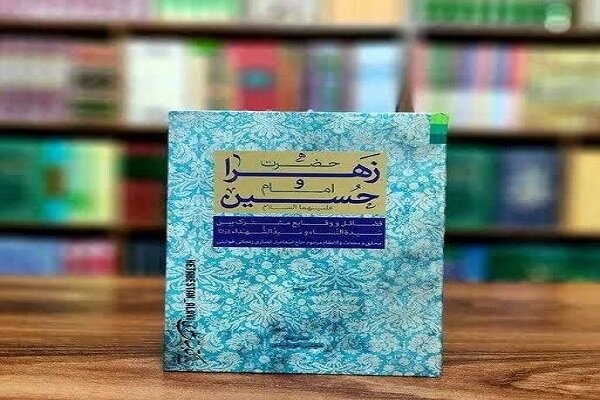
According to Moballegh Thought and Culture website, the book ‘Common Virtues and Events of Lady Fatimah Zahra (PBUH) and Imam Hussein (PBUH)’ is one of the few works that has been able to represent the cognitive, educational, and luminous bond between two great figures of religion, from before creation until Judgment Day. From historical narratives, the philosophy of dignity and the method of interaction in the Prophet’s family can be re-read; a model that reconstructs the meaning of faith and love in today’s life.
Mojtaba Khorshidi, the translator of the book ‘Common Virtues and Events of Lady Fatimah Zahra (PBUH) and Imam Hussein (PBUH)’, opens a window to a new understanding of the cognitive bond between these two holy figures. The book was written by the late Grand Ayatollah Ansari Zanjani; an Arabic work that, after years of research based on the vast collection ‘Al-Mawsu’ah al-Kubra Fatimah al-Zahra (PBUH)’, compiled common hadiths and narrations between Lady Fatimah Zahra (PBUH) and Sayyid al-Shuhada (Imam Hussein) (PBUH).
According to IQNA’s report, its Persian translation, penned by Mojtaba Khorshidi, now provides a new opportunity for Persian-speaking audiences to study the mother-child relationship system from before creation until Judgment Day, in the form of hadith, history, and conduct.
First, please tell us when you became familiar with this book and how you accepted this translation work?
A few years ago, a friend of mine, on one of his trips, went to a bookstore and came across an Arabic book that caught his attention. Although he didn’t have much command over the Arabic language, he felt from the first glance that he was encountering a different and novel work. The subject of the book was new to him, as the author had compiled narrations, events, and points common between Lady Fatimah Zahra (PBUH) and Imam Hussein (PBUH). These are two personalities, each holding a special place in Islamic history and Shiite culture, and rarely had this spiritual and historical bond between them been independently examined.
When my friend told me about this, he said: ‘If this book is translated, it could be very useful and inspiring for Persian-speaking readers.’ This simple and sincere suggestion sparked the beginning of a work that later became very valuable to me. There was no formal contract, specific order, or financial support involved; only an internal motivation and personal interest encouraged me to undertake this translation.
Relying on this motivation, I decided to begin the work. The translation process took about a year. During this time, I tried to convey the precise meaning and subtlety of the work while remaining faithful to the original text, so that the Persian reader could feel the same depth of emotion and thought that the Arabic author intended to express.
After the passing of the late Ansari, I raised the matter with his son, Mr. Bagher Ansari, and he agreed for the publication to proceed.
In compiling the hadiths, were only Shiite sources relied upon, or were Sunni sources also considered?
This book adopts a comprehensive and all-encompassing view; meaning that the author, in compiling it, referred to various sources, both from Shiite works and non-Shiite sources. The late Ansari intended to present a comprehensive and fair picture of the subject; a picture that transcends religious boundaries and specific viewpoints, allowing any reader, regardless of their intellectual or creedal inclination, to benefit from its content.
His goal was for the truth to be revealed in light of all possible evidence and sources, not solely based on the narrations of a specific denomination. Therefore, he strived to arrange the book in such a way that it would be beneficial and inspiring for Shiite audiences, and also understandable and thought-provoking for non-Shiite readers. In fact, this approach not only enriched the scientific value and credibility of the work but also served as a conclusive argument for critics and researchers, as the author had endeavored to present all viewpoints together, allowing the final judgment to be based on fairness and realism.
What is the main feature of this book? Why is the connection between Lady Fatimah Zahra (PBUH) and Imam Hussein (PBUH) of special importance?
Usually, most of our religious and historical works deal with each of the Ahl al-Bayt (PBUH) personalities independently; in such a way that they either solely bear the ‘Fatimi’ essence, with their entire focus on the personality and conduct of Lady Fatimah Zahra (PBUH), or they are entirely ‘Hussaini’, dedicated to the life and movement of Imam Hussein (PBUH). However, the distinguishing feature of this book lies in its different and fresh perspective. The author has strived to look at the subject from a new angle and to portray the internal interaction and bond among the members of the Ahl al-Bayt (PBUH) family.
In this work, when the reader studies the relationship between Lady Fatimah Zahra (PBUH) and her esteemed son Imam Hussein (PBUH), they simultaneously come to know both figures. Not only do they become familiar with the personal and spiritual dimensions of each, but they also comprehend the nature of the mother-son relationship between them in the light of faith, love, and divine knowledge. This relationship, from Imam Hussein’s (PBUH) childhood to the moment of his martyrdom and even beyond to the realm of Judgment Day, continuously carries deep meanings, messages, and teachings.
Studying this book places one before a kind of ‘spiritual lifestyle’; a style that springs from within the House of Revelation and is full of educational, ethical, and human messages. Through these narratives, the reader realizes that love, sacrifice, loyalty, and insight are not abstract concepts, but real ways of living on the path of truth.
If you want to refer to an example of the commonalities present in the book, what example would you give?
The structure of the book, from its very beginning, shows that the author has approached the subject with a precise and systematic view. The narrative of the work begins from the world of lights; from a point where the material world had not yet taken shape and the luminous creation of the Ahl al-Bayt (PBUH) is presented at a level beyond time and space. In this section, special attention is paid to the light of Lady Fatimah Zahra (PBUH) and Imam Hussein (PBUH) and the spiritual relationship and bond between them. This beginning indicates the author’s metaphysical and profound insight, seeking to examine the mother-son relationship not only in the historical arena but also in the realm of light and truth.
Then the book enters the stage of this world and earthly life; it begins with the birth of Lady Fatimah Zahra (PBUH) and proceeds to the birth of Imam Hussein (PBUH), and subsequently, it meticulously follows their childhood relationships with an educational perspective. In these sections, numerous points are expressed regarding the behavioral subtleties of a mother in raising a child; from respect and human dignity to the method of nurturing talents, shaping the child’s spiritual capacity to accept future responsibilities, and creating an environment for spiritual growth within the family.
Furthermore, relying on credible sources, the author addresses common hadiths and verses concerning the status of the Ahl al-Bayt (PBUH). Among them, he refers to the noble verse ‘Indeed, Allah intends to remove from you all impurity, O people of the household, and to purify you with [complete] purification,’ which is the central axis of the bond of purity and the sacred status of the Ahl al-Bayt (PBUH).
Then the book reaches the period of the Holy Prophet Muhammad’s (PBUH) presence and illustrates the relationships and events of that time; including moments when the presence of Lady Fatimah Zahra (PBUH) and Imam Hussein (PBUH) alongside the Prophet (PBUH) served as a manifestation of divine love and the continuation of the prophethood. Following that, the glorious yet heartbreaking section of calamities begins: first, the calamity of Lady Fatimah Zahra (PBUH) and Imam Hussein’s (PBUH) reaction during that era, and then, conversely, the event of Ashura and its reflection in the celestial realm and in the states of Lady Fatimah Zahra (PBUH), which are beautifully described in narrations.
Finally, the book lifts its gaze from earth to heaven and examines the bond of these two holy beings in the afterlife and on Judgment Day; where the truth of the mother-son relationship is revealed in its ultimate form. Thus, this work, in a single trajectory from before the creation of the world until the end of time, depicts the luminous and educational journey of Lady Fatimah Zahra (PBUH) and Imam Hussein (PBUH); a journey from eternity to perpetuity, in each stage of which a message for human life is embedded.
The Verse of Purification plays a central role in both holy beings. What explanation do you have regarding this?
Numerous narrations from both Shiite and Sunni sources have been cited regarding the Verse of Purification. All these narrations emphasize that this verse is specific to the five pure and immaculate individuals of the Ahl al-Kisa: the Holy Prophet Muhammad (PBUH), Amir al-Mu’minin Ali (PBUH), Lady Fatimah Zahra (PBUH), Imam Hassan (PBUH), and Imam Hussein (PBUH). The main theme of this verse is the purity and freedom of these revered figures from all forms of defilement and moral or doctrinal imperfection.
If we meticulously examine history, it becomes clear that the enemies of Islam and opponents of truth were precisely attempting to eliminate the axis of divine guardianship and leadership. These efforts included attacks on Amir al-Mu’minin Ali (PBUH) and the persecution of Lady Fatimah Zahra (PBUH), which are a continuation of the same sinister plot of the enemies that reached its peak in the event of Karbala with the martyrdom of Sayyid al-Shuhada (Imam Hussein) (PBUH).
In reality, both movements — the persecution and martyrdom of these revered figures — pursued a single goal: the elimination of God’s Hujjah (Proof) and the destruction of the essence of religion. The book in question beautifully demonstrates that this commonality between these events and revered personalities was not merely coincidental but rather indicative of an eternal enmity towards truth and divine guidance.
For contemporary humans, what is the meaning and ethical application of this mother-son bond?
The relationship between Lady Fatimah Zahra (PBUH) and Imam Hussein (PBUH) is not merely a blood and family tie, but a complete example of proper interaction within a family and a model for raising children. In Lady Fatimah Zahra’s (PBUH) educational style, harshness, humiliation, or shouting at a child is never observed. No credible and verifiable narration indicates that she ever even raised her voice at her child.
Her upbringing was based on human dignity, respect for the child’s personality, and preparing the ground for the acceptance of divine truths. This method demonstrates that raising children is possible not through strictness or fear, but through love, patience, and creating suitable conditions for moral and spiritual growth.
This very style of upbringing and interaction can also be operationalized as a model for us, provided it is applied in accordance with our own capacity and understanding of religious teachings. In fact, adopting patterns and understanding the spirit of the teachings is more important than merely preserving the outward form of hadiths and religious texts.
Given today’s era, how essential is it to re-examine and adapt Fatimi and Hussaini culture to contemporary conditions?
The Ahl al-Bayt (PBUH) are practical and implementable models for our lives in all eras, not merely historical or past-related figures. They have taught us how to adapt to the conditions of the time while preserving religion and divine obligations.
For example, in the past, they might have worn certain shoes or clothing that were compatible with the time and conditions of that era; but today, with changes in tools and lifestyle, the spirit and purpose of those behaviors can be preserved. The conduct of the Ahl al-Bayt (PBUH) shows that religion is not strict and inflexible, but rather adaptable to time, life conditions, and the boundaries of lawful and unlawful.
For this reason, the Ahl al-Bayt (PBUH) are the best model for our lives today; a model that both guarantees the happiness of the afterlife and establishes order and structure in our worldly affairs. Following them means living on the path of truth, without getting stuck in historical details that no longer match our time, but rather understanding their spirit and purpose in today’s life.
If you want to state the ultimate message of the book in one sentence, what would you say?
The central message of the book is for people to observe the lives of two revered oppressed figures, to see how they lived, how they faced problems and enmities, and ultimately achieved martyrdom. The purpose of this observation is not merely historical awareness, but learning and drawing lessons from their lifestyle, steadfastness, and resistance on the path of truth. The book aims to show that studying the lives of these two great personalities can be a practical and inspiring model for us in facing challenges and preserving religion in the conditions of our own time.
Finally, you mentioned that the book does not differentiate between Shiite and non-Shiite hadiths. What is your view on this?
Yes, the late Ansari believed that all historical sources, both Shiite and non-Shiite, should be compiled to preserve the comprehensiveness of the work. However, based on subsequent studies, I concluded that if our focus is solely on the hadiths of the Ahl al-Bayt (PBUH) and Shiite narrators, more accurate and clearer results can be obtained.
This approach allows biased views or distortions present in some Sunni sources to be set aside, and the history and virtues of the Ahl al-Bayt (PBUH) to be seen with greater transparency and clarity. In other words, using authentic Shiite sources provides a more real and direct image of the life, teachings, and status of the Ahl al-Bayt (PBUH) and enables the practical utilization of their conduct and model for today’s generation.





