Unveiling of the Leader’s Latest Commendation During Book Week
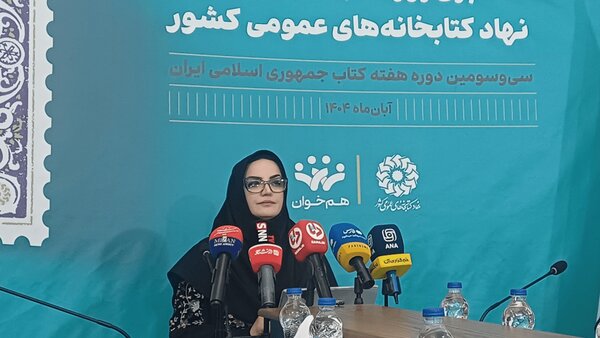
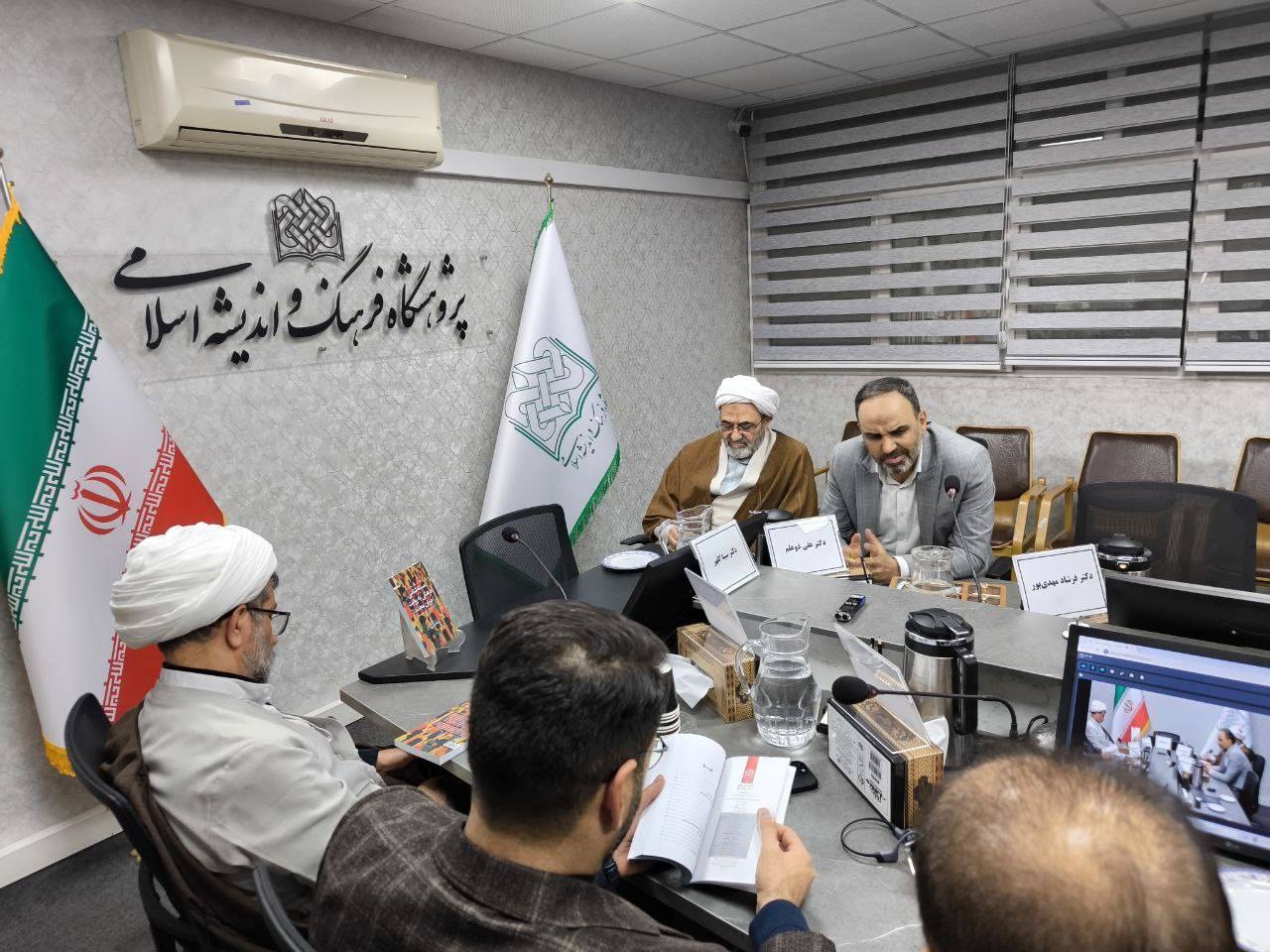
According to Fekr va Farhang Mobalegh website, the press conference of the Public Libraries Institution for Book Week was held on Sunday, November 9th, with the presence of Azadeh Nazarboland, Secretary General of the Public Libraries Institution.
According to Fars News, Azadeh Nazarboland began by stating that the Public Libraries Institution is on the verge of entering its third decade of independent activity. She added: ‘In this new decade, we have strived to define new, forward-looking approaches for the growth and transformation of public libraries nationwide. These approaches are based on two key concepts: first, enhancing the diversity of services, and second, increasing accessibility in various cultural and social dimensions.’
Reinventing the Traditional Role of Libraries
Nazarboland further emphasized: ‘One of the first fundamental steps in this direction is reinventing the traditional role of libraries. A library is no longer merely a place for membership and borrowing books, but has transformed into an active center in the cultural and social sphere. Today, in academic literature, this transformation is referred to as the fourth generation of libraries; where the library is a living environment for lifelong learning, dialogue and social participation, creativity, innovation, and cultural interaction.’ She clarified: ‘This path of transformation has begun in the country’s libraries, although we still have a long way to go. Alongside this approach, redesigning the physical spaces of libraries for more effective and efficient use is also one of the institution’s important programs.’
Referring to a new concept defined in the structure of the libraries institution, she said: ‘In order to increase efficiency, we have created the concept of expanding service points within the institution. Instead of merely focusing on the number of libraries, we now emphasize how many points across the country offer library services and how to expand the scope of these services.’
Nazarboland continued: ‘Our goal is to promote the true concept of a library; a library for all people, a place where different segments of society, regardless of age, gender, religion, education, or social class, can be present and benefit from its cultural and knowledge services.’
She also considered one of the institution’s most important approaches to be focusing on digital transformation and moving towards knowledge-based structures. She added: ‘This path is aligned with the policies and programs of the esteemed Ministry of Culture and Islamic Guidance, and we are striving to advance public libraries towards smartification and the development of digital services.’
Transforming Reading Promotion with a Focus on Children and Youth
The Secretary General of the Public Libraries Institution, at the institution’s press conference, emphasized the necessity of transforming the structure and function of libraries, saying: ‘Transformation in the field of public libraries is an undeniable necessity. One of the most important approaches we are actively pursuing is playing an effective role in public culture and promoting reading with a special focus on children and youth.’
Referring to the long-term implementation of special programs for children within the institution, she added: ‘Our current effort is to optimize these programs and focus on the needs and desires of adolescents. Our goal is to turn libraries into dynamic spaces for adolescents and families to be present so that we can be effective in attracting these groups, just as we succeeded in the area of children.’
Nazarboland then referred to the redefinition of the institution’s organizational communications and said: ‘In recent months, the Public Libraries Institution has tried to expand its interaction with publishers, cultural institutions, and policymakers. Solving the structural issues of the institution is only possible by utilizing the capacities of the government and legislators, and we will leverage all these capacities to achieve the country’s overarching cultural goals.’
She referred to the extensive services of the Public Libraries Institution and stated: ‘Currently, the institution has 4229 service points across the country, including 2741 public and urban front-desk libraries, 800 libraries in villages, about 500 mobile libraries, and 188 study halls. This extensive network is our main platform for providing cultural services to people in all parts of the country.’
The Secretary General of the Public Libraries Institution continued: ‘Currently, more than two and a half million active members are present in public libraries nationwide, and 7500 cultural personnel are active on the front lines of promoting reading. Each librarian is, in fact, a local reference and a cultural point of contact between the institution and the public.’
She also announced the expansion of services for special groups, stating: ‘In public libraries across the country, 62 sections for the visually impaired, 30 sections for the deaf and hard of hearing, and specific programs for the elderly are active. Specialized working groups have been formed in this area, and the results of their meetings will be published soon.’
Nazarboland, referring to the importance of cultural justice and equal access, added: ‘One of the institution’s missions is to deliver books and cultural services to areas lacking libraries, including border regions and nomadic communities. This is done through mobile libraries and the book delivery program to ensure cultural enrichment for all segments of society.’
She then spoke about the institution’s training programs to enhance librarians’ skills and stated: ‘Librarians are the frontline service providers, and many of them require specialized training in cultural services. Based on this, national and regional librarian training courses were held this year. In the “Teen Design Bootcamp” project, out of five thousand applicants, 100 selected librarians were trained in regional schools in Kerman and Hamedan. Also, the educational and competitive event “Library for All” and online training courses are underway across the country.’
The Secretary General of the Public Libraries Institution finally emphasized: ‘Empowering librarians can pave the way for training cultural mentors; mentors who play an effective role in promoting reading among children, youth, and families. The Public Libraries Institution, relying on its human, scientific, and social capacities, will seriously continue its path of innovation and transformation.’
Maintaining Continuity and Consistency to Resolve Library Institution Issues
Azadeh Nazarboland, Secretary General of the Public Libraries Institution, said: ‘Interaction with the cabinet, provincial governors, and specialized parliamentary commissions has been carried out to review and resolve the institution’s issues, and we hope that the long-standing problems that our colleagues have been grappling with will be resolved with logical and sustainable solutions.’
She added: ‘Issues such as human resource contracts, the model for attracting and contracting personnel, and other matters require the interaction and support of the country’s cultural policymakers, which we are diligently pursuing, and these dear ones have promised to help us continue on the path to success.’
The Secretary General continued: ‘One of the main focuses of our activities has been provincial trips, aimed at evaluating provincial management and headquarters structures, and direct communication with librarians. During these trips, over 700 librarians were able to meet with me and my deputies face-to-face for the first time and raise their issues.’
She emphasized: ‘Other goals of the provincial trips included meeting with provincial officials, inaugurating new and redesigned libraries, and visiting library projects in provincial centers and cities. During this period, we made 14 trips, and including the trips of other colleagues, we visited 20 provinces.’ She said: ‘Important international actions have also been taken; including membership in international institutions and meeting with the head of the Iraqi Cultural and Library Institute to develop cross-border cultural interactions.’
She added: ‘During this period, the development of public libraries through redesigning and completing semi-finished projects has been a key initiative. Over the past 10 months, 24 new libraries were added to the collection, and 40 libraries in 14 provinces have been redesigned and put into operation. Also, the redesign of 32 libraries in 8 other provinces is underway.’
She continued: ‘Significant progress has been made regarding central provincial libraries. The central libraries of Gilan, Mazandaran, Hormozgan, Arak, and Kermanshah have progressed by more than 80% and will soon be ready for operation. Our effort is for the libraries to be ready for service upon their inauguration.’
She said: ‘Regarding the development of mobile libraries, we currently have 67 mobile vehicles covering 500 service points. During this period, 10 new mobile libraries have been added to the collection, and 8 more units are being put into operation in the provinces.’
She added: ‘Since the beginning of this year, more than 1.2 million copies of books, valued at approximately 200 billion Tomans, have been provided for public libraries nationwide. Also, 157 titles of periodicals, totaling 87,000 copies, have been sent to libraries across the country. The bulk of new resources has been allocated to the children’s and youth section.’
She continued: ‘In the field of technology, a smart book consultation and search system, a data-driven decision-making system, and a participation-based system for managing charitable contributions have been designed to provide library services intelligently and transparently.’
She said: ‘In the human resources sector, supportive measures have also been taken; including the allocation of a 50% special allowance, implementation of a synergy plan to increase salaries for colleagues nearing retirement, allocation of housing allowance for the first time, implementation of legal shift scheduling and appropriate salary payment for two-shift librarians, additional pay for working on Thursdays, and payment of welfare assistance and special bonuses for Book Week.’
She finally emphasized: ‘All these measures, however small they may seem, are progressing slowly and steadily. Our effort is to maintain the continuity and consistency of these activities so that the problems of colleagues in the Public Libraries Institution are gradually resolved.’
26 New Libraries and 17,000 Cultural Programs
Siamak Mahboub, Deputy for Library Development and Reading Promotion, then spoke, saying: ‘Various programs have been envisioned for Book Week. Some of these programs are ongoing, and some are specific and implemented daily. Perhaps our most important event is the program on November 15th (Aban 24th), the Day of Book, Reading, and Librarian. This day has been named ‘Librarian Day’ in honor of the efforts of our dear librarians.’
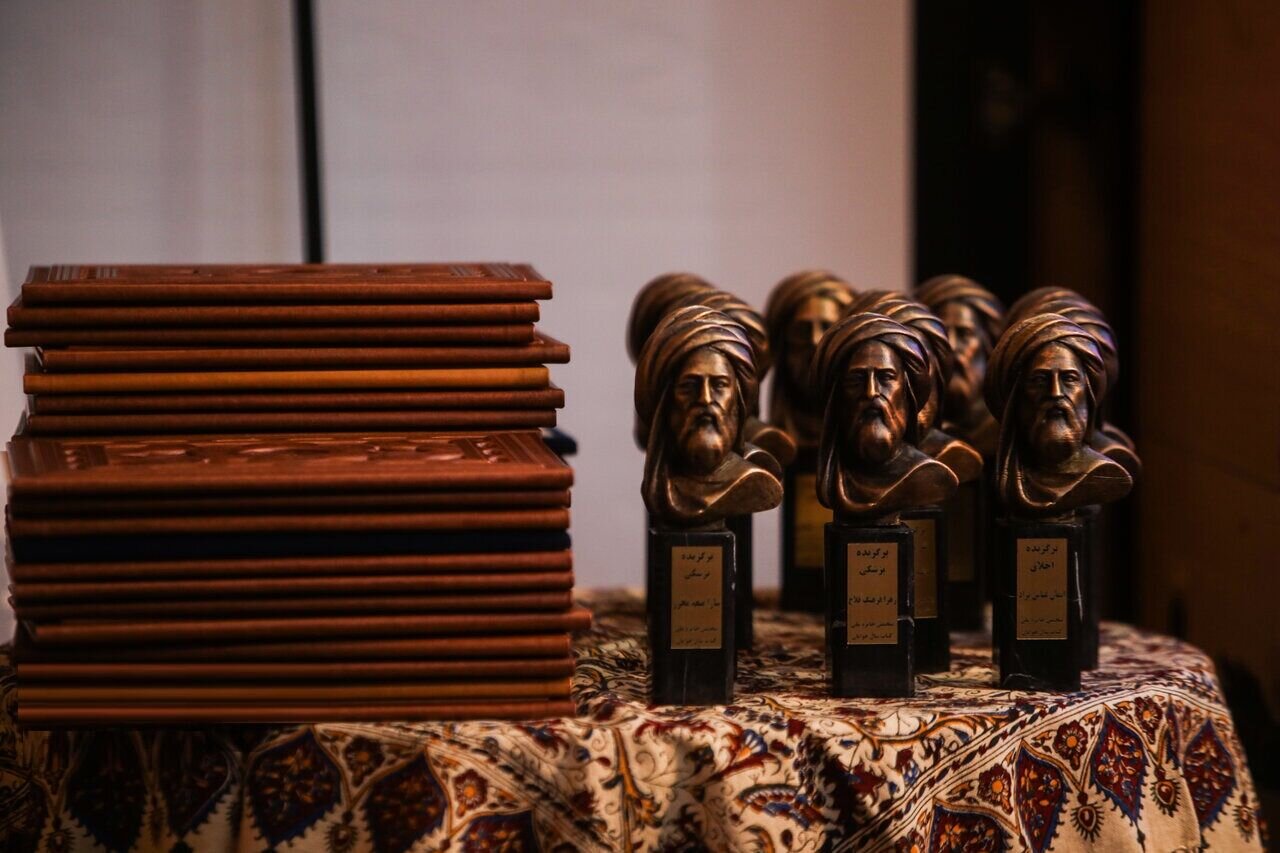
The Deputy for Library Development added: ‘Two important events will take place at this event. First, the National ‘Hamkhan’ Award and Library Mark, which includes 12 sub-marks, reflecting the manifesto, statement, and future vision of the public libraries’ movement. Our effort is to honor librarians and activists who have provided effective and useful services, both inside and outside the library, and introduce them as role models.’
He continued: ‘So far, 4236 applications for the award have been registered. Among them, 79 individuals have registered as book journalists, which is a source of pride.’ Mahboub clarified: ‘The method of appreciation has also changed. Instead of individual and independent appreciation, group and participatory activities are also considered. Appreciations will include cash prizes, a plaque installed in the library, and a sustainable incentive level that will continue monthly.’
Regarding the cultural programs for Book Week, he added: ‘During this week, three important books will be unveiled: the book ‘Ladies’, the book ‘Fellow Traveler of Fire’, and the book ‘Unfinished Fever’.’
Mahboub added: ‘Throughout Book Week, various programs for introducing and studying these books will be held in different provinces. Additionally, we will hold two scientific seminars: ‘Home for Reading; The Role of Family in Developing Reading Literacy’ and ‘Library User Experience’.’
He said: ‘Also, on November 17th (Aban 26th), the 100th anniversary of Sheikh Shahab al-Din Ahli Library in Ahar city will be celebrated in cooperation with historical libraries of East Azerbaijan province, and in Tabriz, the unveiling of the Nakhjavani collection of manuscripts will take place.’
The Deputy for Library Development added: ‘During Book Week, in addition to national programs, 26 new public libraries will be inaugurated and begin their membership services. A book donation campaign will also be held for people to donate their unused books to libraries. Also, an overdue book fee waiver will be applied on the condition of returning the book during this period.’
He said: ‘Nationwide, about 17,000 different programs will be held in libraries, most of which are specifically for children and youth, but the variety of programs will extend up to 10 different types, and each library will design and implement programs based on the needs of its local population.’