Mosque Libraries Under the Umbrella of Hamkhwan Event

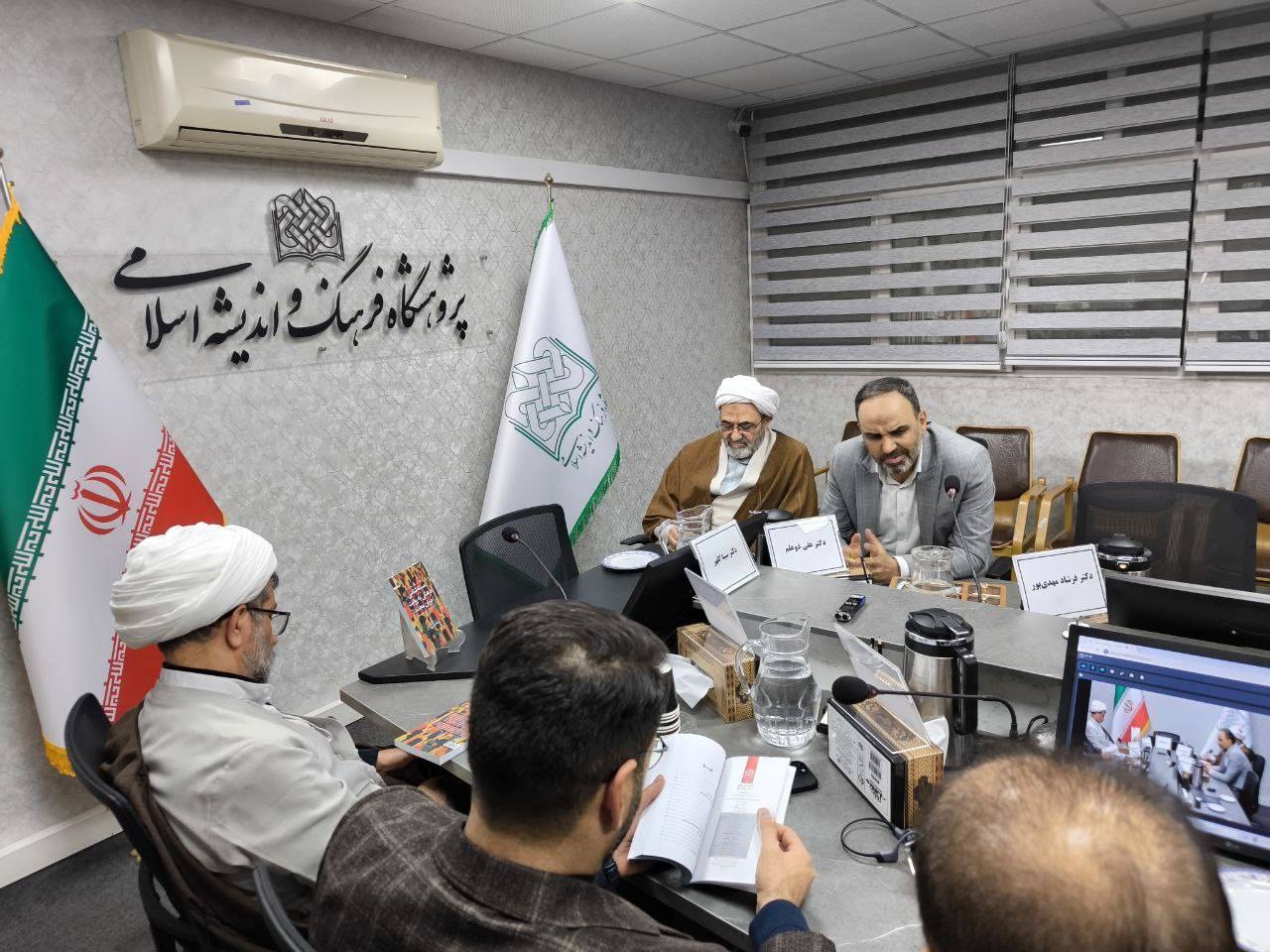
According to Mehr News Agency, a joint meeting was held between Hojjat-ul-Islam Ali Malanouri, Head of the National Coordinating Headquarters for Cultural and Artistic Centers of Mosques, and Azadeh Nazarboland, Secretary-General of the National Public Libraries Institution, with the presence of Siamak Mahboub, Deputy for Library Development and Reading Promotion, Ruhollah Manouchehri, Deputy for Planning, Research, and Information Technology, Yaser Taqavi, Head of the General Department of Provincial Affairs and Associations, and members of the Council of Deputies of the National Coordinating Headquarters for Cultural and Artistic Centers of Mosques.
Hojjat-ul-Islam Wal-Muslemin Malanouri stated in this meeting, referring to three decades of activities of the National Coordinating Headquarters for Cultural and Artistic Centers of Mosques: Over these years, various measures have been taken to serve the mosque and members of mosque centers, but some time ago, with the formation of the National Mosque Headquarters, the Ministry of Culture and Islamic Guidance joined this headquarters as the sixth pillar.
Art and Media as the Focus of Mosque Cultural and Art Centers
The Advisor to the Minister and Head of the National Coordinating Headquarters for Cultural and Artistic Centers of Mosques added: Managers of provincial headquarters of mosque centers are also members of the National Mosque Headquarters; but what is important is that in this headquarters, the duty of the National Coordinating Headquarters for Cultural and Artistic Centers of Mosques is defined in three areas: art, media, and books at the level of mosques.
He said: Of course, the main focus of mosque centers’ activities is art and media, but the Minister of Culture and Hojjat-ul-Islam Wal-Muslemin Haj Ali Akbari, considering rural and nomadic communities, also included the mission of books as one of the main missions of mosque centers in this headquarters.
Hojjat-ul-Islam Wal-Muslemin Malanouri, stating that in public institutions, the element of service is always considered, clarified: Currently, we have 28,200 centers across the country, of which 51% are rural centers and 49% are urban centers.
The Advisor to the Minister and Head of the National Coordinating Headquarters for Mosque Centers added: Currently, over 12,271 libraries are active in the country’s mosques, and within the activities related to mosque libraries in cultural and artistic centers, reading circles and the production of audiobooks are also emphasized.
He continued: At the National Coordinating Headquarters for Cultural and Artistic Centers of Mosques, we empower a public institution, which are the cultural and artistic centers themselves; on the other hand, in accordance with the President’s emphasis on the status of mosques, we strive to expand the scope of service to mosques and centers, and in this regard, we hope for the utmost interaction and cooperation with the National Public Libraries Institution in various fields.
Hojjat-ul-Islam Malanouri, while welcoming and appreciating the ‘Hamkhwan’ emblem as one of the executive policies of the National Public Libraries Institution, said: The word ‘Hamkhwan’ is a very interesting choice. I hope that mosque libraries, under the umbrella of this event, can have novel and significant events and activities in the field of promoting book and reading culture, and that we can achieve synergy with each other under the umbrella of this event while preserving identities and functions.
Holding the Saturdays of Books Event
Continuing, Hamid Nili, Deputy for Cultural and Artistic Affairs of the National Coordinating Headquarters for Cultural and Artistic Centers of Mosques, referring to the importance of developing book products, said: Joint cooperation between the National Coordinating Headquarters for Cultural and Artistic Centers of Mosques and the National Public Libraries Institution for implementing synergistic and joint activities focused on books is an approach that we can specially concentrate on, including in the fields of Nahj al-Balagha and Quranic stories, where we can focus on podcast production and define joint work.
He added: Among our programs is holding ‘Saturdays of Books’ in mosques, under which works are introduced. Joint activities can also be carried out in this area, and on the other hand, considering that these plans are implemented in mosques, the popular nature of activities, which is the demand of the Minister of Culture, will also be realized.
Nili clarified: Since the scope of activities of the National Coordinating Headquarters for Cultural and Artistic Centers of Mosques in the field of culture, especially books, is vast, we also deal with book registration software. Therefore, I request the National Public Libraries Institution to achieve synergy with us in the field of up-to-date software in this area.
New Mosque Activities Under Hamkhwan
In another part of this program, Javad Zahedi, referring to the directives of the Supreme Leader regarding reading and, on the other hand, the emphasis of the Minister of Culture on the status and importance of books and reading, stated: Considering this matter, the issue of books has always been considered a serious topic at the National Coordinating Headquarters for Cultural and Artistic Centers of Mosques, and numerous programs in this area have been put on the agenda.
The Director of the Libraries Department of the National Coordinating Headquarters for Cultural and Artistic Centers of Mosques said: We have more than 12,000 libraries in mosques across the country; however, most of our campaigns and activities at the National Coordinating Headquarters for Mosque Centers are with repository libraries, although open-access libraries also operate in the prayer halls of mosques but do not have permanent librarians. Nevertheless, in order to promote book and reading culture, we have tried to donate several bookshelves to each of these libraries.
He clarified: Strengthening mosque libraries will lead to good outcomes; at the National Coordinating Headquarters for Mosque Centers, in addition to strengthening librarians, our librarians are among those who, because they operate near the mosque, have a technical and ethical commitment based on their proximity to the mosque; in this regard, we have also focused on holding reading circles in mosques.
Zahedi said: These reading circles are registered by mentors, seminary students, and talented university students in the Bachehaye Masjed System, and subsequently, a number of mentees are covered by them, and to date, 2,800 circles have been registered in the system. These circles are considered among the main pillars of mosque libraries, although we have had various models in the field of books and reading to date.
He continued: Furthermore, according to IFLA standards, a library is not just a repository; we must provide services in the field of books. In this regard, at the National Coordinating Headquarters for Cultural and Artistic Centers of Mosques, we have defined storytelling, summarization, and essentially more than 15 reading models. Another point is that each cultural center has a profile in the Bachehaye Masjed System.
Zahedi added: Among other actions of the Cultural and Artistic Deputy of the National Coordinating Headquarters for Mosque Centers in the field of books and reading is creating a movement centered on 11 books that the Leader recently endorsed. For this purpose, we invited three artists to write plays for these works, especially emphasizing the book ‘Soldier of the Ninth Day’ within our activities so that the physical copy of this work reaches the centers.
Narges Niazi, Head of the Secretariat of the Council for Rural and Nomadic Culture and Art of the Ministry of Culture and Islamic Guidance, referring to the diversity of Iranian ethnicities and the widespread indigenous culture in rural and nomadic communities of the country, stated: The development of activities related to books and reading is an effective step towards creating a bond with books and, on the other hand, raising the level of information for villagers and nomads.
She said: The ‘Book Backpack’ initiative, implemented through the efforts of the National Public Libraries Institution, is an effective approach that can be extended and implemented on a wider scale with purposefulness.