Scientific Session for the Unveiling and Critique of the Book ‘Comparative Philosophy’

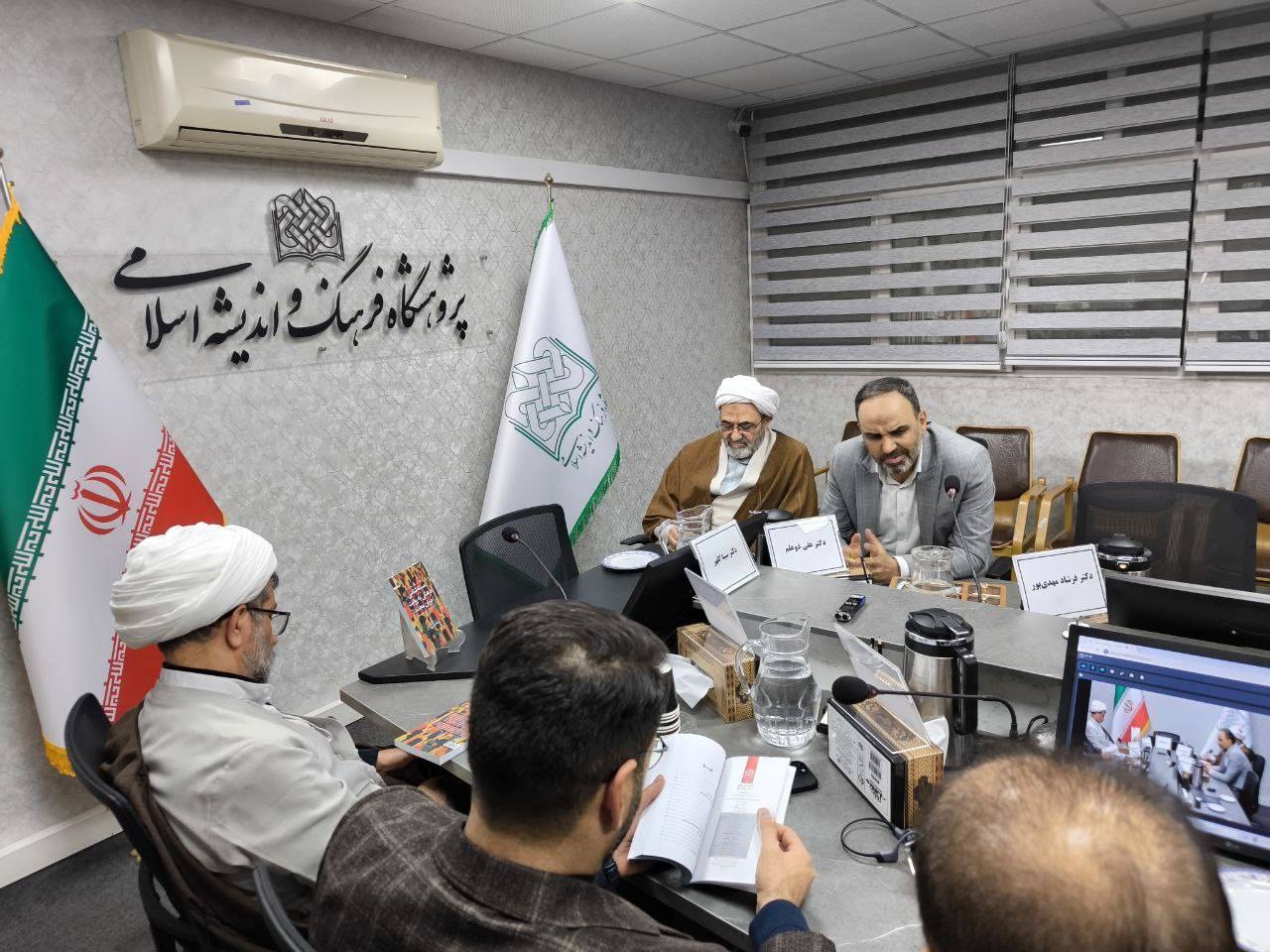
Service of Religion and Thought, Iran Book News Agency (IBNA): A scientific session for the unveiling and critique of the book “Comparative Philosophy” by Paul Masson-Oursel, a French orientalist and philosopher, titled “An Examination of the Principles and Foundations of Comparative Philosophy (with Emphasis on Oursel’s Book ‘Comparative Philosophy’)” will be held on Wednesday, November 5, 2025, from 10 AM to 12 PM at Shahid Motahari University and Higher Education School, Shahid Dehghan auditorium.
In this session, attended by researchers and translators of the work, Qassem Pourhasan, Professor of Philosophy at Allameh Tabataba’i University, and Zahra Haji Shahkaram, author and researcher, Seyyed Mostafa Mohaghegh Damad and Mohammad Hassan Yaghoubian will critique the book.
Comparative Philosophy, in this book, is a path towards understanding and interaction between philosophical traditions and cultures, a bridge for convergence, and a platform for opening a window to a correct understanding of the worlds of philosophy and humanity. Oursel’s main perspective in this book is that every philosophical tradition should be examined and evaluated in its historical, social, and cultural context based on a positivist approach, so that the differences and similarities between Eastern and Western philosophies can be better understood, and the possibility of dialogue between traditions and cultures is provided. Oursel, in this work, strives to create a dialogue between Western tradition and Eastern and spiritual philosophies.
The book answers fundamental questions about the essence of comparative philosophy, its importance, status, and value, and the foundational nature of the comparative method in enabling a better understanding of traditions and philosophies.
This work, a hundred years after its writing, has been translated into Persian for the first time, and now readers, researchers, and thinkers in the field of comparative studies can better examine and evaluate its importance or shortcomings.
In the detailed preface of the book, an effort has been made to explain the book’s position and importance, as well as its deficiencies, and to critically re-examine the reasons for Oursel’s lack of attention to other traditions (besides the West, China, and India), especially the powerful intellectual heritage of Islamic philosophy.
The first part of the book examines four important issues in four chapters and concludes with a summary. The first chapter is about positivism in philosophy; the second chapter is about the method of comparative philosophy; the third chapter is about the positivist meaning of similarity or analogy; the fourth chapter is about the positivist concept of environment. The conclusion contains a comparative study of the history of critical thought of the mind.
The second part, like the first, consists of four chapters and a conclusion. The first chapter, named “First Example,” deals with the historiography of comparative philosophy. The second chapter, or “Second Example,” is dedicated to comparative logic. The third example (third chapter) addresses comparative metaphysics, and the fourth example (fourth chapter) deals with comparative psychology. Finally, the conclusion presents the educational opportunity of comparative philosophy.
In the second part, Oursel attempts to draw a comparison between the civilizations and traditions of the East (China, India, and Iran) and the West (Greece and Europe) and strives to show how similar concepts have different meanings and functions in various intellectual traditions.
A significant point in this book is the comparative table of traditions and civilizations, spanning nearly thirty pages, which is included as an appendix at the end of this translation, detailing his numerous names and terms. In two different classifications, he has organized three regions – the West, the Middle East (Iranians and Semites), and India – based on historical order and sequence, and compared them in some way. In the second table, he compares the three regions of Tibet, China, and Japan.