Publishers and Booksellers in Sistan and Baluchestan Gathered in a Special Cultural Event
The literary and cultural landscape of Iran recently witnessed a series of significant events, developments, and discussions across various provinces, reflecting the vibrant yet challenging state of the nation’s publishing and cultural sectors.
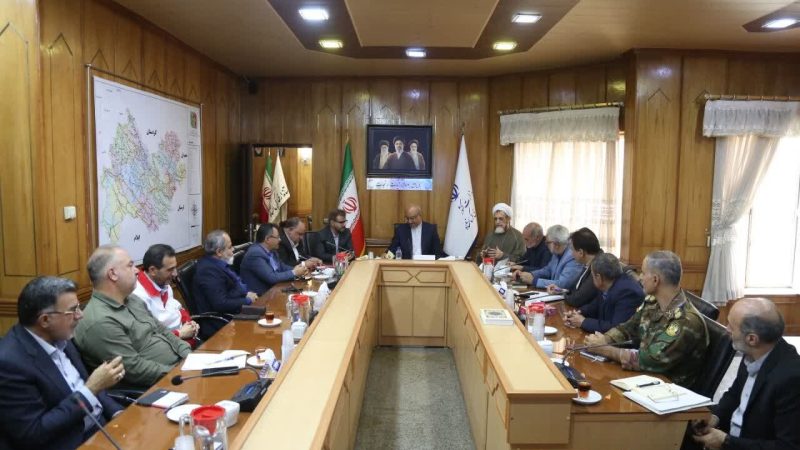
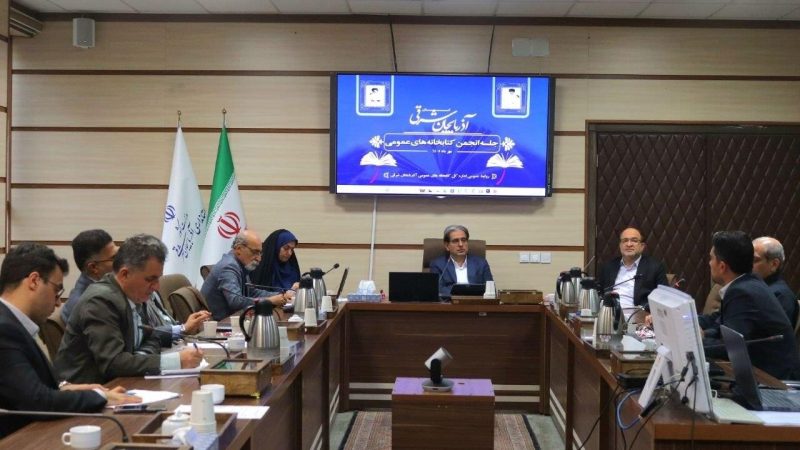
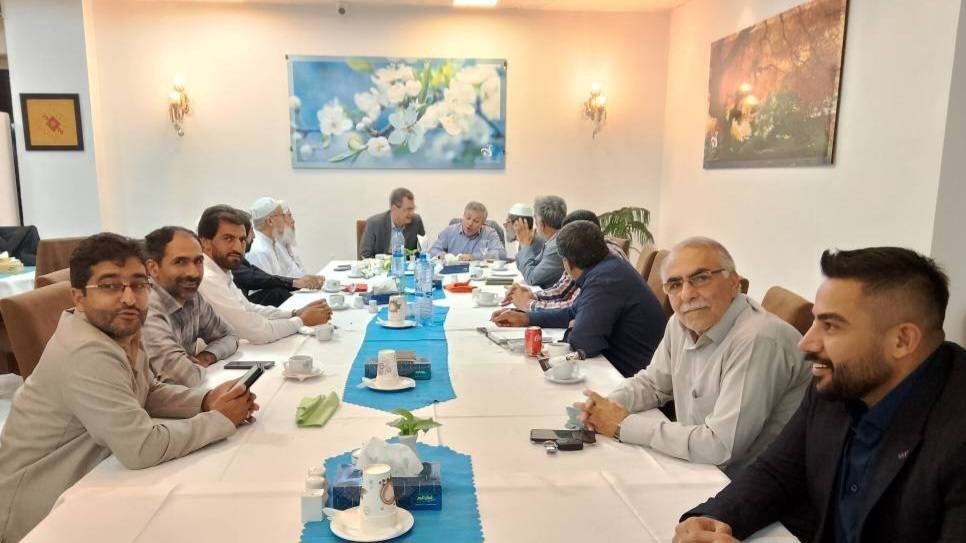
According to the Iranian Book News Agency (IBNA), at the invitation of the Iran Book and Literature House, publishers and booksellers of Sistan and Baluchestan Province gathered in a friendly banquet at the Zahedan Tourism Hotel to discuss and examine the systemic issues and problems facing the publishing and bookstore industry in this vast province of Iran with officials from the Iran Book and Literature House and the General Directorate of Culture and Islamic Guidance of the province.
Ways to ensure a more active presence of publishers and bookstores in the 22nd Sistan and Baluchestan Book Fair were among the other topics discussed at this banquet.
The 22nd Sistan and Baluchestan Book Fair will be held starting tomorrow, Sunday, October 4, at the provincial exhibition grounds in Zahedan.
Sistan and Baluchestan – Following the book fair programs, publishers and booksellers of Sistan and Baluchestan gathered in a ceremony at the invitation of the Iran Book and Literature House.
“Bacheh-Zarang and His Tiger” is a comic work for children over 7 years old, which narrates the story of “Mohsen” and his efforts to help a Caspian tiger.
The guidelines for holding the 1405 National Children’s Week have been published, outlining the approaches, goals, joint programs, and executive requirements of this event for implementation across the country.
The special section “Iran’s Story” will be held in the 19th edition of the Jalal Al-e Ahmad Literary Award.
A ceremony will be held to honor the figure and works of Tamim Barghouti, the renowned Palestinian poet who composed and recited a poem during the farewell ceremony for the martyred leader of the revolution.
Khuzestan – The 3rd edition of the Eglim-e Qalam Short Story Festival announced its winners.
Sistan and Baluchestan – The Sistan and Baluchestan Book Fair will open tomorrow, October 4, in Zahedan.
Yazd – The unveiling ceremony of the book “Arous-e Shahr-e Khorshid” (Bride of the City of the Sun), the latest work by Tahereh Elemchi Meybodi, was held with the presence of a group of officials, writers, figures of culture and art, and members of the Seray-e Ahl-e Qalam Association at the Ministry of Culture and Islamic Guidance office in Meybod County.
At the suggestion of the Ministry of Culture and Islamic Guidance, based on Article 138 of the Constitution, and following the cabinet’s approval, the Supreme Council of Art and Literature was established under the chairmanship of the First Vice President.
Pointing to the significant increase in paper prices and the decline in book print runs during the first half of the year, a publishing activist said: “I believe the full impacts of this price hike have not yet manifested themselves in the market.”
Two sessions themed “Living Hopefully in Hopeless Conditions” will be held, featuring speeches by Mostafa Malekian and Ali Jalilvand.
In this meeting, Mohammad Javad Zarif, a faculty member at the University of Tehran; Hosein Salimi, a faculty member at Allameh Tabataba’i University; and Mohammad Kazem Sajjadpour, a faculty member at the School of International Relations of the Ministry of Foreign Affairs, will deliver speeches.
Tareq Nikpour, a percussionist of the T-Tok Theater Troupe, passed away this afternoon due to a heart attack.
Reza Shah made extensive efforts to establish a modern army, but the military force he founded was shaped primarily to intimidate and suppress internal dissidents, plunder and financially pressure tribes and nomads, and consolidate the foundations of autocratic rule, holding little effectiveness against foreign forces.
The book “Oudlajan Documentation Project” is to be unveiled by Tarikh-e Iran Publishing House in collaboration with the Oudlajan Ordibehesht House.
Referring to Maggie Ferguson’s perspective on loneliness, a part of this book states: “Loneliness is the leprosy of the twenty-first century, consuming and destroying its victims piece by piece.”
Man is born alone and dies alone; yet between these two events, he ordinarily lives in society.
In modern social life, loneliness inflicts itself upon human beings in various forms.
This very issue has led some to consider loneliness as the deepest reality in the human lived world.
The deadline for submitting entries to the second edition of the Iranian Theatre Annual Research Award has been extended until October 7.
Perhaps that is why the more I read the book’s title, the more I become engaged with it: “Immigrant from the Land of the Sun”!
As though someone had come from the land of the sun, only to leave a part of her life behind in another land.
Even stranger is that this migration is not merely a relocation from Japan to Iran.
The Managing Director of the Iran Book and Literature House announced that the 22nd Sistan and Baluchestan Book Fair will open on October 4, 2026, after a hiatus of about seven years, featuring works from more than 300 publishers across the country.
Ardabil – Despite promises made by the cultural officials of Ardabil province to hold the nationwide Ardabil Book Fair in August of this year after an 8-year hiatus, the province is still longing for the establishment of this major book gathering.
Razavi Khorasan – Book-reading sessions and discussions about books titled “Bookcheh”, alongside book introductions and exhibitions at the “Havali Eco-Lodge”, are being held in the historic castle of Hoseinabad Jaldak, located in the entrance area of Mashhad from the Shandiz direction.
Ardabil – In the northwest of Ardabil, there is a mountain that holds a special status and mystery in folk culture, to the extent that it has been frequently mentioned in numerous historical books since the distant past.
Local residents have named this mountain Savalan, while some have called it Sabalan.
A place that is not merely a mountain, but a symbol of the identity and culture of a nation.
Shirin Bayani wrote in the book “Nowruz and Mehrgan”: Nowruz is the celebration of birth, and Mehrgan is the celebration of growth.
While pointing out the agriculture-dependent lifestyle of the ancestors and the ancient calendar, she addresses the importance of honoring the earth and the cultivation cycle, and demonstrates how and by what methods Iranians have preserved their traditions and celebrations across various centuries and difficult historical periods.
Masoud Behzadirad wrote in a note: To build smart destinations, we must first intelligently preserve the memory of those destinations.
Because artificial intelligence can suggest the future of travel, but it is we who must provide the content for that future.
While the future of Iran’s tourism may begin in an application, its roots will still lie in books, culture, the land, and the Iranian people.
Qazvin – Hamid Niromand, a calligraphy author and researcher, said: If we call Qazvin the capital of calligraphy, “Mir Emad” is the main pillar of this magnificent edifice.
Mir Emad caused every exquisite work written in his style to be named the Qazvin school.
Emphasizing the necessity of rethinking how religion is presented, a professor of philosophy of education at the University of Tehran said: If religion is presented in such a way as to imply that being religious requires setting aside reason, this perception can lead to a decline in the younger generation’s inclination toward religion; whereas devotion finds meaning within the context of rationality, and religiosity without rationality presents a distorted image of religion.
Zanjan – At the commemoration meeting for Hosein Monzavi, the place of the Shahnameh in Monzavi’s ghazals was examined, and it was emphasized that this Zanjan-born poet, with a fresh perspective on mythology, has infused deeper concepts into his ghazals.
Golestan – October 3rd in Gorgan’s cultural calendar marks the birthday of Parviz Rezaei, a well-known translator, painter, and cultural figure of Gorgan, which this year has taken on a special resonance with the release of two new works by him.
In this report, alongside introducing these two new books, on the occasion of his birthday we examined their content with Javad Azimi, a painter and university lecturer; works which, according to Azimi, are not only chosen with an intelligent perspective, but also serve as a guide and source of inspiration for the young generation of art students.
Esrafil Shirchi, a contemporary calligrapher, in an account of his deep bond with Ney, his birthplace, and Rumi’s poetry, speaks about the profound influence of this great poet on his artistic and intellectual path.
Printing industry activists, in a gathering to review and analyze the challenges of the supply chain and the development of the printing industry, proposed the formation of a collective purchasing mechanism with the participation of major consumers.
In conclusion, these diverse happenings across literary gatherings, provincial book fairs, artistic commemorations, and publishing discussions highlight a dynamic cultural ecosystem striving to address systemic hurdles while continually celebrating Iranian heritage, art, and literature.
Here is the consolidated and refined cultural news report.
Ilam – The Director-General of Culture and Islamic Guidance of the province announced the extension of the deadline for submitting works to the 8th edition of the Ilam Province Book of the Year Award until the end of October.
Ali Nikouei wrote: The difference between the tenth and sixteenth of Mehr is no longer a simple dispute over a number!
When a number is placed within the calendar, it turns into a day; that day can bear the name of a deity to become a ritual celebration, finding meaning in connection with the seasons, social rituals, and human perception of world order; and Mehrgan is just such a day.
West Azarbaijan – The Director General of Culture and Islamic Guidance of West Azarbaijan Province announced that 11,450 volumes of books worth 4.55 billion Tomans were sold at the 18th Urmia Book Fair.
Bahram Dabiri said: When I entered the Faculty of Fine Arts, it was the year 49 (1970).
Up to 10 years prior to that, the continuation of Kamalolmolk’s style and copying was prevalent.
It was the same Saqakhaneh movement and Iranian modernism that had become popular.
But the year I entered, Dr. Mirfenderski became the dean of the faculty, and all arts were important to him.
Mehrdad Oskouei’s latest book titled “Gender, Power, and Violence in 19th-Century Iran” will be unveiled in France in the coming hours.
Following the announcement of the shortlist for the prestigious Booker Prize, Guardian book editors Justine Jordan, Liz Burke, and Charlotte Stevens addressed clear and sometimes sharp ambiguities and questions from readers regarding the judging process, the prominent absence of women, the influence of major publishers, and the backstage of this significant literary event.
Fars – The Shiraz Student Library, holding 161,000 volumes of books across 60,000 titles and covering a wide range of scientific, educational, literary, and artistic fields, is one of the cultural centers of this city that, in addition to library services, organizes various educational and cultural programs for children, teenagers, and other age groups.
According to the author: “It is an oversimplification to bundle the entire corpus of thought that took shape during the modernization era and trickled down to us under the single label of ‘modernity,’ assuming it was identical across Iran, the Ottoman Empire, and Egypt.
Encounters with each of these elements varied across Iran, the Ottoman Empire, and Egypt, and one must recognize a ‘differentiation’ of modernities.”
Cultural Night of the Republic of Turkey, featuring the unveiling of new Turkish literature translations published by Nimaj and attended by figures from Turkish and Iranian cultural circles, was held on Wednesday (August 30, 2026) at Nimaj Publications.
The play “We Are the Puppets of Fate…” written by Masud Khayyam, is a narrative that indirectly addresses error, betrayal, hope, and the repetition of history, striving through myth and history to raise questions about contemporary humanity and society.
In summary, these diverse updates highlight the ongoing literary and artistic developments across the region and beyond.
منبع: IBNA (FA)
#printed_in_iran #international_publication #printing #publishing #books #iran #persian #Sistan #Book_Fair #Cultural_Programs