Greenblatt’s Perspective on Freedom in Shakespeare’s Works Explored by Translator
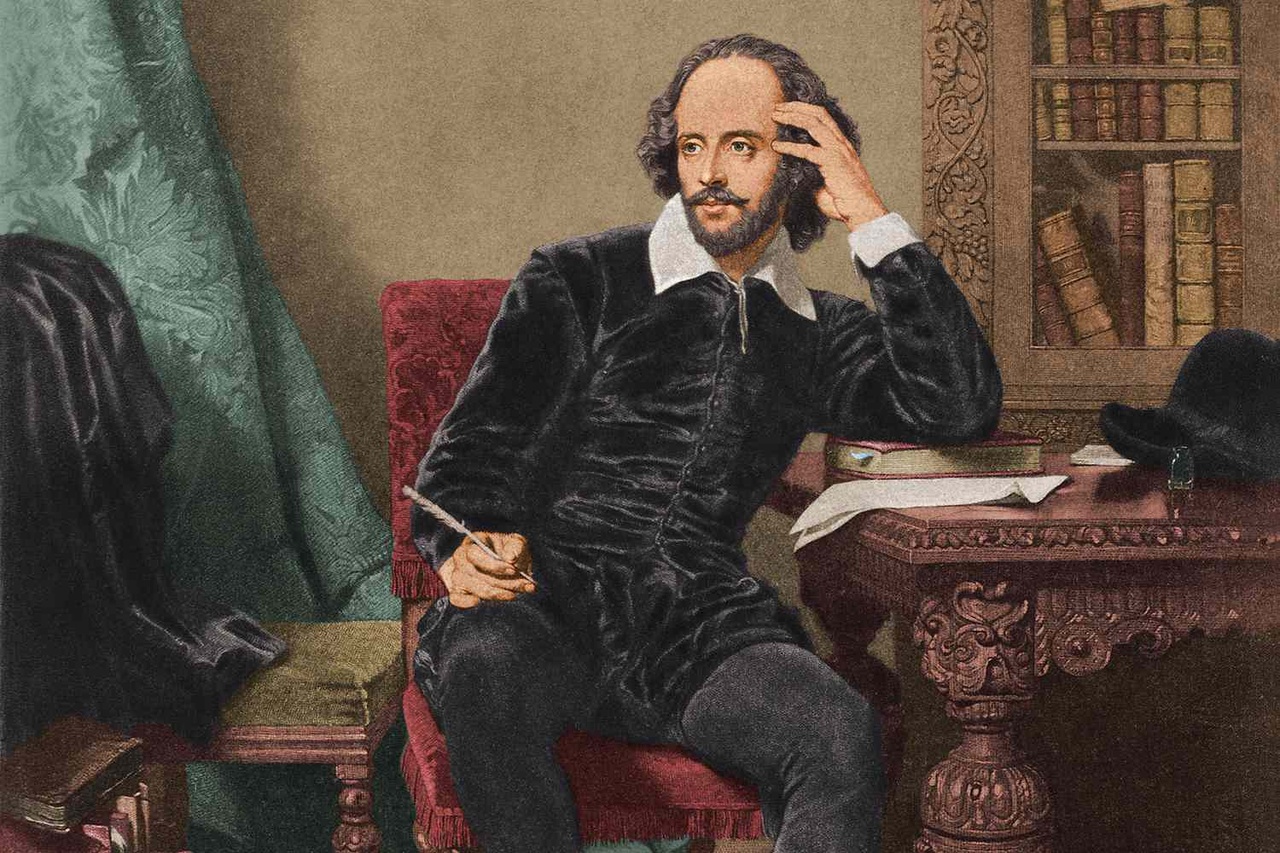
Here is an in-depth exploration of Shakespeare’s works through a contemporary critical lens, shedding light on the intricate relationships between literature, history, and human agency.
Four centuries after the creation of his plays, Shakespeare remains one of the most important writers who speaks in his works about themes such as humanity, power, freedom, and the relationship between the individual and society.
However, if we examine his works solely from a literary and aesthetic perspective, we miss a crucial part of their complexity and depth.
The book “Shakespeare and Freedom” is written by Stephen Greenblatt, an author, researcher, and professor of English and American literature who is best known for his studies on Shakespeare and Renaissance literature.
With a historical and interdisciplinary approach, he examines the concept of freedom in relation to history, politics, power, and social constraints within Shakespeare’s works.
In Greenblatt’s view, freedom does not mean complete liberation from all constraints; rather, it is a fragile and complex concept that actually finds meaning in confrontation with limitations.
With this perspective, the characters and situations in Shakespeare’s plays can be examined from a fresh angle.
The book “Shakespeare and Freedom” has been translated in Iran by Fatemeh Siahroud Kalaei and published by Pyleh Publishing.
We sat down for a conversation with Fatemeh Siahroud Kalaei about Shakespeare, this English playwright and poet, and the concept of freedom in his works.
What feature prompted you to choose “Shakespeare and Freedom” for translation?
What gap does this book fill in Shakespearean studies in Iran?
Greenblatt is a prominent Shakespearean scholar, and one cannot simply overlook such a figure.
What motivated me above all to translate this book was Greenblatt’s different perspective on the concept of freedom.
He views freedom not as a complete liberation from constraints, but as a limited, fragile, and sometimes paradoxical possibility—a possibility that emerges precisely from the heart of historical, social, political, and artistic limitations, and in relation to the structure of governance at the time.
This book is a clear and novel example of Greenblatt’s critical method; an approach in which literary criticism is read in conjunction with history, power, culture, and politics, without reducing the literary work to a mere historical document.
In Iranian Shakespearean studies as well, a sense of void compelled me to turn to this author and this work.
Shakespearean studies in Iran have mostly focused on the translation of plays, character descriptions, and thematic readings.
However, what has been accomplished in this book, and what can help fill a part of this void, is the introduction of the New Historicist approach, cultural poetics, and interdisciplinary readings of Shakespeare’s works.
From this perspective, the book can be an important step in introducing these approaches and expanding interdisciplinary Shakespearean studies in Iran.
In this book, Greenblatt considers freedom to be a limited and paradoxical experience.
How does this view differ from common interpretations of freedom in literature?
In this book, Greenblatt regards freedom as a limited and paradoxical experience.
In common understandings, freedom is often perceived as the liberation of the individual from the power of tradition or socially imposed constraints; as if humans possess an independent and free essence that merely needs to be freed from external shackles.
Greenblatt challenges this simplistic notion, arguing that freedom does not arise outside of constraints, but rather takes shape precisely in the struggle and confrontation with those very limitations.
Now, these constraints may include the law, the body, time, death, family, and society, which are not merely barriers to freedom; rather, these limitations give freedom its meaning and shape.
In comedies, accepting these boundaries deepens love, but in tragedies such as “Romeo and Juliet,” “Othello,” and others, the rejection of limits leads to death or destruction.
For this reason, freedom in Shakespeare’s works is not a final and absolute state, but an unfinished and tense process.
Even boundless freedom can lead to self-destruction, violence, or the collapse of relationships with others; something that culminates in “King Lear.”
One of the book’s key ideas is that limitation is not a hindrance to creativity, but rather the very context for its creation.
How is this idea manifested in Shakespeare’s works?
Greenblatt demonstrates in this book that Shakespeare’s creativity was not formed in a vacuum.
He wrote in a society facing censorship, class order, political restrictions, and rigid theatrical rules, yet these limitations drove him toward ambiguity, satire, disguise, play-within-a-play, historical displacement, and polyphony. In fact, Shakespeare’s literary genius and creativity became evident precisely within the heart of these very limitations, an example of which we can see in the play “Measure for Measure”; where Barnardine is a condemned prisoner who absurdly and improbably declares himself that he is unwilling to be executed, a matter that would have been impossible in the society of England at that time, because if a death sentence was issued, it had to be carried out immediately, yet Barnardine spent nine years in prison and even after that refused the sentence.
This actually also demonstrates a kind of individualism in Barnardine.
It is also explained in the core of the book that this part was among those sections which perhaps any other writer would not have seen any need at all to include the role of Barnardine.
Yet Shakespeare wanted to express that limitation which could create freedom.
One of the ways to do so was precisely this.
Shakespeare does not express many sensitive issues directly; rather, he reveals them within the structure of his play or his sonnets, in the conflict between characters.
Therefore, limitation is not merely a restrictive force; it can also make the language and form of the work more complex and creative.
Of course, this does not mean praising censorship or repression; the point is that great art can sometimes forge a new language and fresh possibilities out from the heart of pressures.
Greenblatt believes that Shakespeare’s characters forge their own identities rather than possessing a fixed identity of their own.
How does this interpretation differ from classical readings of Shakespeare’s characters?
This issue differs once again from classical readings.
Classical readings analyze Shakespeare’s characters like real human beings, with a fixed identity and a pre-formed psyche, and the critic attempts to discover the true nature of Hamlet, Macbeth, Othello, or Shylock.
Yet, from Greenblatt’s perspective, identity is not something ready-made, pre-constructed, and fixed.
Characters construct their own identities through language, action, role-playing, obedience, resistance, and confrontation with power, and here society also plays a part in shaping them.
For instance, it can be said that Shylock is not defined solely on the basis of his individual traits; rather, social humiliation due to being Jewish, the law, religion, the memory of suffering, and the gaze of Christian society are influential in shaping his character, and he possesses no isolated identity independent of the outside world—the very world that labels him as the “Other,” an other simply because of his Jewishness.
Likewise, in the play “Measure for Measure,” Barnardine proves his individuality by refusing death.
With this approach, it can be said that the characters both shape themselves and are shaped by the forces that surround them.
This very tension generates their complexity and vitality.
Throughout the book, reference is frequently made to the relationship between power and performance.
From Greenblatt’s perspective, how does Shakespeare bring the mechanisms of power onto the theatrical stage?
This is one of the complex questions that requires further reflection.
From Greenblatt’s viewpoint, Elizabethan theater was not merely for entertainment; it was not the case that people simply went to watch an entertaining show and be amused, but rather it served as a context and arena for exposing the mechanisms of power.
By bringing to the stage the full power of a government—which included its set design, rituals, and splendor—Shakespeare actually unmasks it and displays power in its naked form, part of which is theatrical.
That is, a part of this power is theatrical in nature.
He does not reduce power merely to decrees, laws, and violence; rather, in order to be recognized, this power must put itself on display.
Ultimately, this insightful volume opens new horizons for understanding how Shakespeare transformed historical constraints and institutional power into timeless artistic freedom.
The following is a comprehensive editorial exploration that weaves together diverse literary, cultural, and sociopolitical discussions, beginning with an examination of theatrical power, historical context, and contemporary literary releases. Their example can be seen once again in the play “Measure for Measure”, where the Duke attempts to step aside from the scene of power and deems himself powerless, but ultimately is forced, through a complex theatrical design, to re-establish his authority in order to impose order on society according to his own power, given that his deputy has committed a wrongful act.
Of course, another subtle point is that this does not exempt the authority of the playwright himself, namely Shakespeare, from this question; meaning that in Shakespeare’s plays, Shakespeare himself holds a power akin to the Duke.
His power is constantly visible in the creation of his work; he acts like a ruler and moves the characters in whatever way he pleases.
Here, we consequently conclude that theater and politics draw close to one another, and both depend on role-playing and plausibility.
In this way, Shakespeare demonstrates that power is not merely exercised, but constantly represented and reproduced.
Greenblatt speaks of “dark freedom”; a freedom that can lead to hatred and violence.
What is the relation of this concept to today’s world?
I must say that dark freedom emerges when freedom is severed from responsibility, limitation, and the recognition of the Other.
In this state, the individual desires no laws or relationships to restrict them, and establishes their own identity through the elimination or negation of others.
Greenblatt examines this condition in characters such as Iago.
Iago finds his freedom in controlling others, constructing narratives, and ruining their lives.
He turns others into mere tools for his own scheme, and as a result, this concept has a clear connection to today’s world, where we see it in many political and media discourses, where freedom is sometimes interpreted as the right to humiliate, eliminate, or demonize.
When an individual or a group perceives any dissent as a threat to themselves, freedom can transform into hatred and violence, serving as a reminder that autocracy and fascism arise through the abuse of freedom and democratic structures. Greenblatt’s warning is not against freedom itself, but rather against a freedom that is devoid of responsibility and the preservation of human dignity.
Can it be said that Greenblatt portrays Shakespeare more as a political thinker than merely a playwright?
Greenblatt emphasizes the political dimension of Shakespeare’s thought, but by no means reduces him to a systematic political philosopher; because Shakespeare does not write political treatises, nor does he present a coherent theory of freedom, power, or governance.
Shakespeare’s thinking takes place through character, conflict, metaphor, silence, and dramatic situation.
He brings political questions to the stage: How does power gain legitimacy?
Where does obedience turn into complicity?
Who has the right to punish or forgive?
And how does language justify violence?
Therefore, regarding Shakespeare, the playwright cannot be separated from a political thinker.
For him, the play is a mode of thinking itself.
One of Greenblatt’s characteristics is reading literary works within the context of history and politics.
Does this approach not push the aesthetic aspects of the work to the sidelines?
Here I must say that this danger exists with any historical reading.
If the text is viewed merely as a reflection of power or the conditions of the times, its literary and aesthetic features are ignored.
However, in his best works, Greenblatt distances himself from such reductionism, usually starting from the details of language, imagery, structure, and form, and then placing them in their historical context.
In Shakespearean Negotiations, history helps us understand why an image, character, or dramatic choice had a specific meaning in its own time.
Conversely, literary form also shows how a work can repeat, displace, or even disrupt the norms of the era.
Thus, in Greenblatt’s method, history and aesthetics are not opposed to each other.
History helps to deepen the understanding of form, and form also demonstrates how literature transcends its own historical context.
The author of the book “Five Journeys” said: When you go to Lebanon—a Lebanon that is about to hold the funeral procession for Sayyed Hassan Nasrallah—you cannot write the narrative of this journey like that of other trips; this journey must have its own sign and signature.
Khuzestan – The book “The Eternal Warrior” written by Ali Shoaibi, a writer from Khuzestan, has been published specifically for the teenage age group.
Mahmoud Moghaddas, a history researcher, said: The importance of Davoudi’s reading in the book “Iranian Oil” is that it does not reduce the history of Iran’s oil to the simple narrative of “British entry and the appropriation of Iranian oil,” but rather shows that the British presence was the result of the complex interaction of capital, brokerage, political relations, imperial rivalries, and strategic needs.
Assistance for the Intellectual Development of Children and Young Adults (Kanoon) will participate in the “Cultural Week of the Islamic Republic of Iran in Russia” by presenting a collection of its cultural and artistic works and productions.
Nursery picture book “We Are All Birds,” written by Mehdi Hajvani and illustrated by Ghazaleh Bigdelou, has made it to the White Ravens list, the selected books of the International Youth Library in Munich.
Bushehr – The book “Public Law Reflections,” authored by Ali Daraei, a writer and defense attorney, has entered the book market with the efforts of Shoru Publication.
Razavi Khorasan – In a photograph belonging to April 1963, six Mashhadi poets are seen in the summer resort of Hesar Golestan near Mashhad.
These poets, from right to order, are Gholamreza Seddigh Gharib, Nemat Mirzazadeh, Seyed Hosein Khadiv Jam, Mohammad Ghahraman, Mehdi Akhavan Sales, and Ali Bagherzadeh.
Farzam Karimi’s latest translated work, titled “The Battle of Words in the Attic”, featuring the first title from the American Literary Critics Recognition Series, has been published.
Hormozgan – From the series of alleys named after the martyrs of Hormozgan, the book “Alleys of Minab” has been published.
The translator of the book “Shakespeare and Freedom” stated: According to Greenblatt, freedom does not mean complete liberation from all constraints, but rather a fragile and complex concept that actually finds meaning in its encounter with limitations.
With this perspective, the characters and situations in Shakespeare’s plays can be examined from a fresh angle.
Fatemeh Khazaei, a psychologist and analytical psychotherapist, believes that the value of a book to its owner does not necessarily depend on whether they have read it.
East Azerbaijan – The monthly book critique session of “Vadi-ye Hayat” was held, reviewing José Saramago’s novel “Blindness”; a session in which the novel’s analyst and researcher of philosophy and psychology described the work as an example of the transformation of human concepts and the transition from “superficial seeing” to “inner vision”.
Fars – The Deputy of Culture and Media at the General Directorate of Culture and Islamic Guidance of Fars announced plans to hold the first National Festival of Lori Poetry and Literature in Rostam County.
Undoubtedly, in the medical world, physical and mental health are inseparable; this proposition also applies to the field of dentistry, as in fact, many oral and dental diseases are rooted in psychological disorders.
The book “Mental Illnesses for Dentists and Dental Students” has been published with the aim of covering this scientific and educational gap.
The book “The Problem of Identity” written by Azmi Bishara has been published, focusing on the concept of identity, the relationship between the individual and society, belonging, morality, and identity politics.
In its final chapter, this book also examines Arab identity and its relationship with nationalism, the state, and citizenship.
The following text is a translation of an article published on the “Arab 48” website on September 17, 2026.
According to Ragheb: “Capitalism is neither the direct cause of democracy nor necessarily its enemy.
Democracy is the product of social struggles, labor movements, popular demands, and historical developments.
Capitalism has sometimes adapted to democracy and at other times resisted it.
Therefore, the relationship between the two is a complex one, which Therborn has well described in the labyrinth-like historical narrative of democracy.”
Mohammad Baghai Makan, an Iqbal expert and researcher in the fields of literature and philosophy, stated on the occasion of the publication of his new book titled “Iqbal as He Is”: It can be said that in contemporary Persian poetry, Allama Iqbal is the only one who can be given the title of a well-rounded figure; a thinker who has a multifaceted personality and was not merely a poet or a philosopher.
In conclusion, this collection bridges deep critical analysis of literary figures and historical frameworks with contemporary cultural discourse, reflecting an enduring dialogue between art, history, and society.
“When the Tree Became a Tree” is not just the story of a plant’s growth; it is a narrative about patience, change, and the life cycle in nature.
A child who travels this path along with the tiny seed realizes that reaching a large tree is the result of passing through multiple continuous stages, each of which forms a part of this wonderful journey.
West Azerbaijan – Simultaneously with the fifth day of the 18th Urmia Book Fair, two books, “Sunay” by Alireza Nikzad and “The Resurrection of Artists” by Hamid Behjat and Somayeh Soleimani, were unveiled.
Qom – An expert from the organization department of the A’zam Mosque Library stated that “RDA” is a new and efficient method for introducing and organizing information resources, designed based on modern scientific models to effectively show the relationship between resources and simplify the work of users in libraries.
Kermanshah – Amidst the hustle and bustle of textbooks, there was a tree whose roots grew deep into the mind of a generation.
“The Two Pines” by Mohammadjavad Mohabbat, a poet from Kermanshah, is much more than just a simple lesson to read; it is a lived experience for thousands of Iranian students.
A poem that, with its simple narration of the story of two green neighbors, managed to break the boundaries of textbooks and become a symbol of empathy and resilience in contemporary literature.
On the occasion of Persian Poetry and Literature Day and the beginning of the Sacred Defense Week, Ebrahim Heidari went to visit Ghasemali Farasat, one of the prominent figures in the field of Sacred Defense literature.
Kermanshah – At the closing ceremony of the advanced training course for Shahnameh-recitation and Shahnameh-research instructors, Master Kazazi, Ghotboddin Sadeghi, and Abdolhamid Ziaei emphasized the invaluable status of Ferdowsi and the Shahnameh as a globally distinguished masterpiece, yet considered attention to its artistic and scientific dimensions as well as new productions adapted to the contemporary conditions of society to be essential for utilizing this work.
A tiger comes, eats, leaves destruction behind, and finally departs.
The house after its departure is not the same as before, but it is still a house.
This is perhaps the simplest and most humane formulation of the book’s message.
A faculty member of the National Library and Archives Organization says: Comparative study of the world’s library systems proves that 24/7 operation is not the dominant model; therefore, a sustainable response to the needs of nighttime patrons depends on the development of public study halls, rather than 24-hour shift scheduling.
From years of activity in the experience of animation production, book illustration, to painting, drawing, and poetry, one can trace the footsteps of Ali Akbar Sadeghi, an artist for whom illustration has always been one of the primary modes of expression.
Ali Nikooei wrote: Man is not placed in the cosmic battle on a pre-determined front without the possibility of choice; his position is shaped by his own moral choices; in the Zoroastrian Iranian universe, the destiny of the cosmos is not forged solely in the heavens, part of it is determined by the choice of every human being.
QAZVIN – The book “Floating in Fiction” written by Majid Rahmani, a fiction writer from Qazvin, has been published, focusing on teaching the elements of storytelling and sharing experiences gained from fiction-writing workshops and literary sessions.
GHASEM YAHOSSEINI, a researcher and historian, said: “Experience has shown me that if a work can transcend local frameworks and stereotypical viewpoints and connect with a human issue, it also has the potential to connect with a foreign audience.”
However, this requires a different perspective on narrative.
The ninetieth birth anniversary of the late Morshed Valiollah Torabi in October provides an opportunity to reexamine the standing of this artist in contemporary Iranian naqqali (traditional storytelling); an artist who, according to Morshed Mohsen Mirzaali, pursued naqqali as a way of living, thinking, and growing.
In Japan, large cities, small towns, and even villages are extremely clean.
Many times, I have spoken to my students about the crystal-clear streams and rivers of Tokyo, where schools of large fish swim, or about the wild birds in parks that play peacefully alongside children.
I believe that everything comes down to education within the family and, in particular, at school.
Hosna Mohammadzadeh, a poet and researcher, said: Monzavi, in the introduction to the second edition of “The Wounded Larynx of Lyricism”, calls love the “main identity” of his poetry and emphasizes that he passes various life experiences through the filter of lyricism. On the other hand, his love is both corporeal and more detailed and everyday than the abstract love found in many classical examples.
It is this very attention to the details of experience and the strong presence of the “individual ego” that brings it closer to a modern experience.
For this reason, in my opinion, Monzavi’s key characteristic is that he makes love individual, earthly, and psychological.
The ceremony for hoisting the flag of the Islamic Republic of Iran was held on Wednesday, September 23, 2026 (Mehr 1, 1405), in the courtyard of the Ministry of Culture and Islamic Guidance building, with the presence of Seyed Abbas Salehi, Minister of Culture and Islamic Guidance; Raed Faridzadeh, Head of the Cinema Organization; Hossein Entezami, Deputy Minister of Culture and Islamic Guidance for Management Development and Resources; Mehdi Mohammadi, Deputy Minister for Legal, Parliamentary and Provincial Affairs; and Niknam Hosseinipour, Advisor to the Minister and Head of the Public Relations and Information Center of the Ministry of Culture and Islamic Guidance.
The main hypothesis of the book, namely the precedence of the realm of social imagination over the realm of rational reasoning and argument, is explored throughout the analysis of the treatise Tanbih al-Ummah.
According to the author, Na’ini’s logical and argumentative system is the product of a narrative totality that possesses its own specific internal coherence.
QAZVIN – The book “Mastering the Art of Negotiation,” written by Niche Jackson and translated by Saeed Rahmani, has been published by Aseman-e Tak Publication and is now available to enthusiasts.
Ferdowsi’s Shahnameh is a solid and steadfast fortress that connects anxious Iranians, and from this perspective, it serves as a book of wisdom for all Iranians, despite all their cultural, ethnic, ideological, gender, religious, political, and social differences.
This means that all those living across the territory of Iran, who share common memories and aspirations, are present together—wise, respectful, proud, dignified, and without xenophobia or xenophilism.
Perhaps this is one of the reasons for the public’s recent embrace of Ferdowsi and the Shahnameh.
Shahab Mogharabin, a poet, said: Atashi possessed an extraordinary power of imagination.
He was peerless in imagery and fantasizing.
If we want to name the most prominent feature of his poetry, it is undoubtedly the prominence of his imagination.
He sometimes blended imagination and reality in such a way that the result became what you might call a surreal image, though in reality, Atashi was not a surrealist poet.
If there is a complex and illusory image in his poetry, it is the product of that very extraordinary imagination of his.
His poetry collections cannot be separated from this perspective; that is, it is not the case that he focused on this feature in one specific collection.
The “Ketab Azad” bookstore on Vessal Shirazi Street, after more than four decades of operation, continues its work with the same old identity and without selling merchandise; a bookstore that Shirin Ettehadieh founded in 1358, where books, paintings, and communication with the audience are intertwined.
“Historical and Philosophical Foundations of Psychology”, by reconstructing the path of thought from the philosophy of science and the mind-body problem to psychoanalysis, behaviorism, and cognitive sciences, demonstrates that psychological theories have not been formed in a vacuum, and each is an answer to long-standing questions about human beings, cognition, and experience.
“His Excellency the Cat”, unlike many classic novels, rather than relying on a plot, is built upon voice, dialogue, observation, and intellectual digressions.
Fictional events exist, but what drives the novel forward is not necessarily an incident.
Sometimes a long discussion about philosophy or art, or even a seemingly trivial subject, becomes the main arena of the novel.
منبع: IBNA (FA)
#printed_in_iran #international_publication #printing #publishing #books #iran #persian #Stephen_Greenblatt #Fatemeh_Siahroud_Kalaei #Pyleh_Publishing #Shakespeare_and_Freedom