China’s Online Literature Reaches Global Markets with Millions of Readers
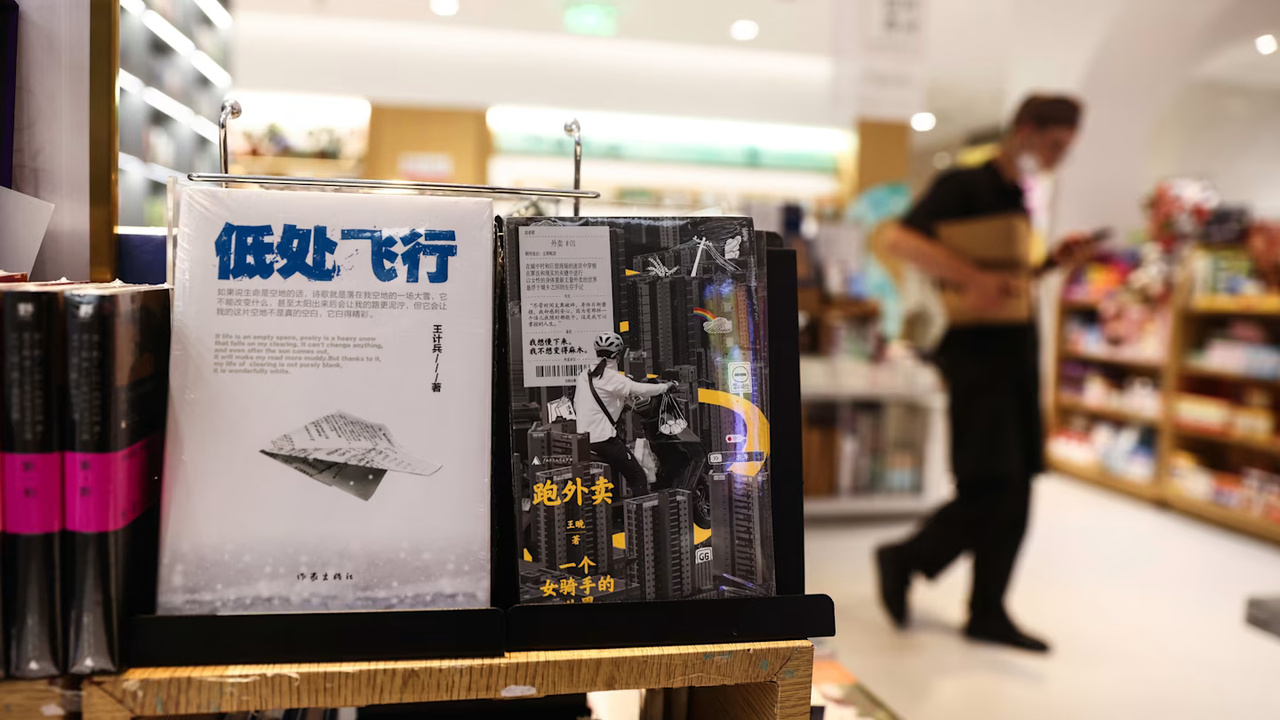
As global literary and publishing landscapes continue to evolve, recent reports highlight significant developments across various sectors of the industry, beginning with a major milestone for Chinese digital publishing. According to the Iranian Book News Agency (IBNA), citing Aival, based on the “2025 Blue Paper on China’s Online Literature,” recently released by the China Writers Association, by the end of 2025, more than 130,000 Chinese online literary works had been made available overseas, with about 250 million registered users in foreign markets for these works.
Furthermore, active users of these works are present in over 200 countries and regions.
Foreign revenue from China’s online literature has also surpassed 8 billion yuan, equivalent to about $1.2 billion—a figure that also includes revenue generated from mini-dramas produced by online literature platforms.
One of the successful examples of this trend is the Chinese web novel “Lord of Mysteries,” which has been translated into more than 10 languages on the international platform Qidian and has become one of the successful and prominent works of Chinese online literature in the global market.
The blue paper emphasizes that genres such as fantasy, wuxia, and historical fiction, by leveraging traditional Chinese cultural elements including Confucian and Taoist culture, the spirit of chivalry, and concepts of family and homeland, have gradually become symbols of Chinese civilization welcomed by audiences worldwide.
Li Wei, a professor at Nanjing University, noted: “This trend is also the result of a two-way convergence between efforts to elevate the literary quality of China’s online literature and the shifting reading expectations and tastes of the younger generation abroad.”
In addition to providing a vast collection of works for overseas readers, Chinese online literature has also created a framework for their deeper participation in this field and the creation of their own works.
Caven, a British author born in the 1990s, is among the enthusiasts of Chinese online literature.
He had previously submitted a novel to a traditional publisher for release, but his work was rejected.
Following that, he began publishing his work on a Chinese online literature platform.
Several years later, his novel—which combined common elements from Chinese web fiction with Western fantasy settings—achieved remarkable success.
Hu Xiaonan, CEO and President of Yuewen Group, stated: “The global wave of co-creation is shaping a new world of cultural products favored by the youth, where the younger generation plays a leading role and a truly global market is taking shape.”
With the rapid development of AI-driven translation technology, a growing number of Chinese internet novels can be translated into various languages with just a few clicks and made available to readers worldwide.
On the other hand, young people outside of China are also creating narratives about their own cultures and societies by adopting the model of Chinese online literature.
The Blue Book also emphasizes that the global expansion of China’s online literature is no longer merely limited to the export of text, but also encompasses cultural narratives and values.
According to the report, the production model of China’s online literature has also been successfully replicated overseas, transforming into a sustainable growth engine.
Wang Zhongjie, general manager of the overseas business department at China Literature Group, stated: “We do not just want to send China’s best stories overseas; rather, we hope to share the creative experiences, production mechanisms, and business models that China’s online literature has developed over more than two decades with the world, so that people everywhere who have the ability and passion for writing can tell their own stories.”
At the beginning of 2026, the mini-drama “Yi Pin Bu Yi”, produced by COL Group, a licensed provider of Chinese e-book content, achieved remarkable success in overseas markets.
This series, which was adapted from an internet novel, captured the attention of foreign audiences to such an extent that some of them stayed up late into the night watching its various episodes.
Even some viewers turned the information and insights presented in this series into visual guides, sparking a wave of fan-generated content on social media outside of China.
Ma Tao, strategy director of the COL Group, said, “The new wave of globalization of cultural products includes the coordinated expansion of various forms of content, including online literature, video games, and mini-dramas, with online literature serving as the largest source of intellectual property for cultural products.”
Overall, intellectual properties based on Chinese online literature have fueled a global boom in the production and development of cultural works, gradually forging a deeper integration with the global cultural industry.
Expanding further into international literary news, and simultaneously with announcing the shortlist for the 2026 Booker Prize, the Booker Prize Foundation is holding a competition to award the complete set of six shortlisted works along with a special Booker Prize tote bag.
In related discussions on the future of publishing, renowned American author and creator of dozens of bestselling novels, John Grisham, warned that financial pressures and the gradual decline in reading rates in the United States may drive publishers in the future to use artificial intelligence to write novels and discard human authors.
Reiterating the statistical impact of the digital shift, the “2025 Blue Paper on China’s Online Literature” report shows that over 130,000 Chinese online literary works had been introduced to overseas markets by the end of 2025, with the number of registered users outside of China reaching approximately 250 million.
On the retail front, a new bookstore in the English city of Oxford, focusing exclusively on the popular “romance” genre or a blend of romantic and fantasy stories, has become a hangout for enthusiasts of this literary style; a shop where customers even travel from distant English cities to buy its books.
Domestically in Iran, according to Fars, the book “No One Is in Their Right Place”, as part of a joint literary project gathering diverse poems from contemporary poets, is an effort to reflect the plurality of voices and bridge different intellectual and emotional worlds in the realm of poetry.
Meanwhile, in West Azerbaijan, emphasizing the high status of books, the pen, and science in Islamic culture, the Friday Imam of Urmia described the 18th Urmia Book Fair as an opportunity for people to get acquainted with newly published books and strengthen the reading culture, urging students and seminary scholars to visit this cultural event and benefit from its capacities.
In Markazi, emphasizing the follow-up on the completion process of the Arak Central Library, the head of the Markazi Province Representatives Assembly stated that this complex can play an effective role in realizing Arak’s vision as one of the hubs of the digital economy and the country’s cultural development.
Continuing its cultural programs in West Azerbaijan, the 18th Urmia Book Fair hosted a group of poets and writers; a place where words took on the color of narrative, and poetry and literature, alongside books, took audiences on a journey into the world of memory, culture, and thought.
In Kermanshah, at the closing ceremony of the advanced training course for Shahnameh recitation and research instructors, Mir Jalal al-Din Kazzazi, Ghotb al-Din Sadegi, and Abdolhamid Ziaei emphasized the invaluable status of Ferdowsi and the Shahnameh as an exceptional masterpiece on a global scale, while asserting that attention to artistic and scientific dimensions as well as new productions suited to the contemporary conditions of society is a prerequisite for truly benefiting from this work.
In instances where Sayyed Hassan Nasrallah refrained from disclosing certain matters due to security concerns, the author has elaborated extensively on those issues in a section titled “Afterword,” as the passage of time has rendered it unnecessary to keep them hidden.
Javad Kalateh Arabi, the author of “Operation Thirst,” stated: “We see examples of this perspective in the events of the Abu Gharib Strait as well.”
Along their route, the combatants encounter army forces that are retreating; they see vehicles and troops returning from the region.
All of these events have been heard not merely from a single combatant, but from several individuals, and these multiple accounts form part of the image they held of the army’s performance at that juncture.
Shifting to industry logistics, the market for printing and publishing raw materials has witnessed a decrease in the prices of certain types of paper and A4 paper in recent days; meanwhile, the price of cardboard has not changed noticeably, and ink, glue, and zinc are still being traded across varying price ranges.
Finally, reflecting on classical philosophical principles, Diogenes believed that humans should follow reason in their decision-making, but many people sometimes stray from the path due to the opinions of others or pleasures, concluding a diverse array of literary, cultural, and publishing updates from around the globe.
This diverse cultural roundup brings together a wide spectrum of literary analyses, historical notes, and contemporary artistic events from across the region and beyond.
The Cynics conceived of a natural life under the light of reason, “a constant struggle not to fall into the trap of foolishness and popular ways.” Antisthenes and Diogenes would constantly say, “Man either needs reason to live by, or a rope to hang himself with.”
“The Narrative of a Journey through Kurdistan and on the Tigris” (or: Claudius James Rich’s Travelogue) is a valuable work in the fields of history and anthropology.
His reports on the cholera epidemic in Shiraz and its details are considered among the important monographs in this field.
Another of Rich’s tasks, as documented in this travelogue, was copying the cuneiform inscriptions of Persepolis.
“The Master” (originally: His Lordship the Cat), contrary to many classic novels, is built more upon voice, dialogue, observation, and intellectual digressions than on plot.
Fictional events exist, but what drives the novel forward is not necessarily plot or incident.
Sometimes a long discussion about philosophy or art, or even a seemingly trivial topic, becomes the main arena of the novel.
Khuzestan—With the terrifying sound of an explosion, the children run outside, terrified and scurrying.
Librarian of the Shahid Rajaee Library in Ahvaz is barely able to calm down the teenagers who are studying.
The 90th birth anniversary of the late Morshed Valiollah Torabi in October provides an opportunity to reassess this artist’s standing in contemporary Iranian Naqqali; an artist who, according to Morshed Mohsen Mirzaali, pursued Naqqali as a way of living, thinking, and growing.
Referring to the “Iranian Cultural Days in Russia” as events to strengthen the sustainability of bilateral relations, the Minister of Culture and Islamic Guidance stated: Through cultural diplomacy, we are presenting the message of our nation’s identity and epic resistance during the recent imposed war to the world.
Qazvin – The book “Mastering the Art of Negotiation” written by Nich Jackson, translated by Saeed Rahmani, has been published by Aseman-e Tak Publication and made available to enthusiasts.
Fars – The collection “Write from Gerash”, compiled by the Gerash Story Association following the holding of the “Gerash Art Event”, has been published.
Kermanshah – Amidst the hustle and bustle of textbooks, there was a tree whose roots grew deep into the minds of a generation.
“The Two Pines”, a work by Mohammad Javad Mohabat, a poet from Kermanshah, is much more than a simple lesson to read; it is a lived experience for thousands of Iranian students.
A poem that, with its simple narrative of the story of two green neighbors, managed to break the boundaries of textbooks and become a symbol of empathy and resilience in contemporary literature.
On the occasion of Persian Poetry and Literature Day and the beginning of the Sacred Defense Week, Ebrahim Heidari went to visit Ghasemali Farasat, one of the elites in the field of Sacred Defense literature.
Kermanshah – In the closing ceremony of the advanced training course for Shahnameh recitation and research instructors, Master Kazzazi, Qotb al-Din Sadeghi, and Abdolhamid Ziaei emphasized the invaluable status of Ferdowsi and the Shahnameh as a prominent work on a global scale, yet considered attention to its artistic and scientific dimensions as well as new productions suited to contemporary societal conditions to be essential for utilizing this masterpiece.
The tiger comes, devours, leaves destruction in its wake, and finally departs.
After its departure, the house is not the same as before, but it is still a house.
This is perhaps the simplest and most human formulation of the book’s message.
A faculty member of the National Library and Archives Organization states: A comparative study of library systems around the world proves that round-the-clock operation is not the prevailing model; therefore, a sustainable response to the needs of nighttime patrons depends on the expansion of public study halls, rather than 24-hour shifts.
From years of experience in animation production, book illustration, to painting, drawing, and poetry, one can trace the footsteps of Ali Akbar Sadeghi, an artist for whom illustration has always been one of the primary modes of expression.
Ali Nikooei wrote: Man is not placed in the cosmic battle on a pre-determined front without the possibility of choice; his position is shaped by his own moral choices; in the Zoroastrian Iranian universe, the destiny of the cosmos is not sealed solely in the heavens, but part of it is determined by the choice of every human being.
QAZVIN – The book “Floating in Story”, written by Qazvini fiction writer Majid Rahmani, has been published, focusing on teaching the elements of storytelling and sharing experiences from fiction-writing workshops and literary sessions.
Researcher and historian Ghasem Yahosseini said: “Experience has shown me that if a work can transcend local frameworks and stereotypical views and connect with a human issue, it also has the potential to connect with a foreign audience.”
However, this occurrence requires a different perspective on narrative.
The ninetieth birth anniversary of the late Murshed Valiollah Torabi in October provides an opportunity to reassess the status of this artist in contemporary Iranian naqqali (traditional storytelling); an artist who, according to Murshed Mohsen Mirzaali, pursued naqqali as a way of living, thinking, and growing.
In Japan, large cities, small towns, and even villages are extremely clean.
I have repeatedly told my students about the crystal-clear streams and rivers of Tokyo, where schools of large fish swim, or about the wild birds in the parks playing harmlessly alongside children.
I believe that everything goes back to education within the family and especially at school.
Hosna Mohammadzadeh, a poet and researcher, said: Monzavi, in the introduction to the second edition of “The Wounded Larynx of Lyricism”, calls love the “main identity” of his poetry and emphasizes that he passes various life experiences through the strainer of lyricism. On the other hand, his love is both embodied and more detailed and everyday than the abstract love of many classical examples.
It is precisely this attention to the details of experience and the prominent presence of the “individual ego” that brings it close to a modern experience.
For this reason, in my opinion, Monzavi’s important characteristic is that he makes love individual, earthly, and psychological.
The flag-hoisting ceremony of the Islamic Republic of Iran was held on Wednesday, September 23, 2026, in the courtyard of the Ministry of Culture and Islamic Guidance building, with the presence of Seyed Abbas Salehi, Minister of Culture and Islamic Guidance; Raed Faridzadeh, Head of the Cinema Organization; Hosein Entezami, Deputy Minister of Culture and Islamic Guidance for Management Development and Resources; Mehdi Mohammadi, Deputy Minister for Legal, Parliamentary and Provincial Affairs; and Niknam Hosseinpour, Advisor to the Minister and Head of the Public Relations and Information Center of the Ministry of Culture and Islamic Guidance.
The main hypothesis of the book—namely the priority of the realm of social imagination over the realm of rational reasoning and argument—is analyzed throughout the examination of the treatise Tanbih al-Ummah.
According to the author, Na’ini’s logical and argumentative system is the product of a narrative totality that possesses its own specific internal coherence.
QAZVIN – The book “Mastering the Art of Negotiation” written by Neitsch Jackson, translated by Saeed Rahmani, has been published by Aseman-e Tak Publication and is now available to enthusiasts.
Ferdowsi’s Shahnameh is a solid and steadfast palace that connects anxious Iranians, and from this perspective, it is a book of wisdom for all Iranians, across all cultural, ethnic, ideological, gender, religious, political, and social differences.
This means that all those who live on the territorial expanse of Iran and share common memories and aspirations are present together—wisely, respectfully, proudly, with dignity, and without xenophobia or xenophilism.
Perhaps this is one of the reasons for the people’s recent inclination toward Ferdowsi and the Shahnameh.
The “Ketab-e Azad” bookstore on Vessal Shirazi Street, after more than four decades of operation, continues its work with the same old identity and without selling merchandise; a bookstore that Shirin Ettehadieh established in 1358, where books, paintings, and communication with the audience are intertwined.
“The Historical and Philosophical Foundations of Psychology”, by reconstructing the path of thought from the philosophy of science and the mind-body problem to psychoanalysis, behaviorism, and cognitive sciences, demonstrates that psychological theories have not been formed in a vacuum, and each is a response to long-standing questions about human beings, cognition, and experience.
Ultimately, these varied reports and literary reflections underscore the enduring significance of cultural heritage, artistic expression, and intellectual inquiry in contemporary society.
In an assessment of the literary legacy of Manouchehr Atashi, poet Shahab Mogharrabin stated that Atashi possessed an extraordinary power of imagination.
Mogharrabin noted that the late poet was peerless in illustration and fantasy.
He emphasized that if one were to name the most prominent feature of Atashi’s poetry, it is undoubtedly the sheer prominence of his imagination.
Mogharrabin added that Atashi sometimes blended fantasy and reality in such a way that the result might be called a surreal image, though in reality, Atashi was not a surrealist poet.
He further explained that if a complex and illusory image appears in his poetry, it is simply the product of that very extraordinary imagination of his.
According to the poet, Atashi’s poetry collections cannot be separated in this regard, meaning it is not as though he focused on this feature in only one specific collection.
Transitioning to narrative works, Mogharrabin observed that unlike many classical novels, “His Excellency the Cat” is built upon voice, dialogue, observation, and intellectual digressions rather than relying heavily on plot.
He pointed out that while there are narrative events in the book, what drives the novel forward is not necessarily the plot itself.
Concluding his remarks, he noted that sometimes a long discussion about philosophy or art, or even a seemingly trivial subject, becomes the main arena of the novel.
منبع: IBNA (FA)
#printed_in_iran #international_publication #printing #publishing #books #iran #persian #China_Writers_Association #Online_Literature #Lord_of_Mysteries