China’s Development for the Final Battle with America? The Dominance of Engineers in China and Lawyers in America Determines the World’s Fate? The Sterilization of 16 Million Women in China
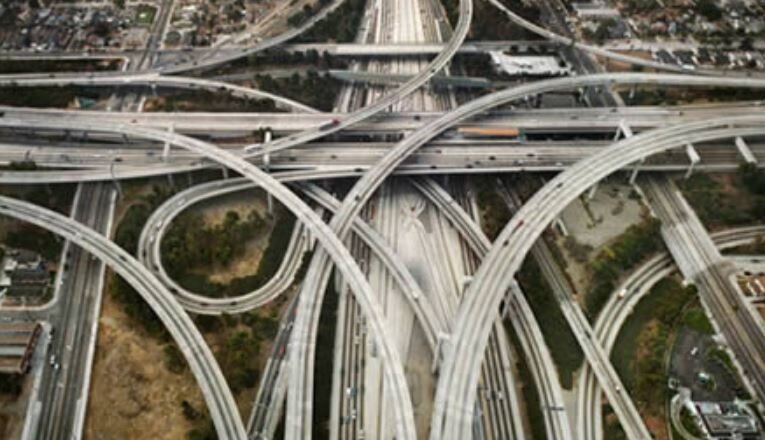
The thought group: This article, written by Kiavash Kalhor, a graduate of political science, published on the “Think Tank” page of Iran newspaper, briefly examines the “conflict between China’s engineering state and America’s lawyerly society.” In other words, this article introduces and explains the central idea of the new book by Dan Wang, a Chinese-American philosopher and researcher at the Hoover Institution at Stanford University, titled “Breakneck: China’s Quest to Engineer the Future.” According to Kalhor, Wang’s innovative idea is that the current competition between China and America should be viewed not through traditional classifications (like socialism/capitalism), but through the confrontation of two new types of government systems: 1. The Engineering State (China) and 2. The Lawyerly Society (America).
In the first section, the Engineering State of China, Kalhor writes that the system administered by engineers and technocrats has the main goal of “building,” intense pragmatism, and rapid project execution. The advantages of this government, from Wang’s perspective, include astonishing capacity for infrastructure development, such as bridges and highways in Guizhou province, and rapid mass production (like Shenzhen), even disregarding short-term economic justifications. Kalhor then reflects Wang’s views on the dangers, based on which the mechanical approach to society, which sees humans only as numbers, leads to “maximum engineering disasters,” such as the one-child policy and the strict implementation of the “zero-COVID” policy, which had immense human costs.
In the second section, Wang refers to the Lawyerly Society of America. According to Wang, the nature of such a system, dominated by legal professionals, is characterized by an excessive focus on judicial processes and administrative regulations. He considers one of this system’s incapacities to be a lack of strategic thinking and practical action, because lawyers have endless tools to “stop anything possible.” This has led to a “low-agency society” where the government is helpless in providing basic services, such as widespread delays in the California high-speed rail project compared to China.
Kalhor reflects Wang’s conclusion from these two situations by stating that he believes China is transforming into a “fortress” preparing for long-term conflict with the West, emphasizing self-sufficiency and resilience, but this approach has led to phenomena like “brain drain (RUN).” He advises America to win the competition by breaking the monopoly of lawyers and finding a balance between legal protections and the need for physical development, reviving its construction capabilities. This article follows below:
****
Dan Wang
Among non-mainstream visual media in Britain that are widely viewed on YouTube, Novara Media YouTube channel stands out. Novara Media was founded in 2011. This media started as a small project, but now has become one of the main voices in the alternative media space in England. About two months ago, the guest on one episode of this program was a Canadian-born Chinese-American author and professor named Dan Wang.
Wang studied philosophy at the University of Rochester and worked as a senior technology analyst in China from 2017 to 2023. After leaving China, he joined Yale Law School as a visiting researcher and is now a research fellow at the prestigious Hoover Institution at Stanford University. The reason for his fame, which led to him being a guest on the Novara program, is the publication of his book titled “Breakneck: China’s Quest to Engineer the Future.”
This book, which has earned him considerable fame, was recently published by “W. W. Norton & Company” and proposes an innovative and analytical idea, based on extensive travel and observations by the author. Many reports and numerous interviews with him explaining his idea exist, but this report seeks to present his theoretical idea and initiative within the framework of the conflict between China and America, by looking at parts of his book – which have been collected concisely.
Two Origins
The starting point of Wang’s idea is the proposition that existing theoretical frameworks are insufficient for accurately describing the structure of China’s and America’s governments. Wang argues that traditional classifications like “socialism versus capitalism” or “dictatorship versus democracy” are no longer sufficient to explain current dynamics. Instead, he proposes a new framework: the opposition between the “Engineering State” (Engineering State) in China and the “Lawyerly Society” (Lawyerly Society) in the United States.
Dan Wang defines China as an “Engineering State”; a system that “cannot stop building and proceeds at a breakneck pace.” In his view, this definition originates from a combination of political leadership and governance philosophy. Wang clearly shows in his book that engineers literally governed modern China.
From his perspective, after the ideological chaos of the Mao era, Deng Xiaoping brought technocrats to power. By 2002, all nine members of the Standing Committee of the Communist Party Politburo were engineers. Hu Jintao with hydraulic engineering education and Xi Jinping with chemical engineering background are just two examples of this trend. Even in Xi’s third term, “the Politburo was filled with executives from aerospace and arms industries.” Wang uses an interesting analogy for this difference, writing: “This would be like the CEO of Boeing becoming the Governor of Alaska in the United States.”
According to him, engineers see the world as a set of technical problems and executive processes that also have technical solutions. Instead of abstract legal debates, they seek to “get things done,” which leads to intense pragmatism. In explaining the dangers of this approach, Wang warns that “their perspective can lead to a mechanical approach to society in which humans are merely numbers in an equation.”
Opposite this idea is the United States government, which is a Lawyerly State or Society. Wang provides statistics showing that half of the US Congress and most US presidents, except for Hoover and Carter who were engineers, have legal backgrounds. Although this society may seem attractive, the dominance of the legal approach is the root cause of countless problems in the United States.
From his point of view, in America, “designing new laws and committees often replaces strategic thinking” and this is not the only affliction of this political system. He borrows an idea called “process fetish” to show “how the US government must navigate a labyrinth of judicial and administrative reviews to get anything done.” The greatest affliction of this political system, in Wang’s view, however, is not these two problems, but something he calls the loss of societal agency. Lawyers have endless tools to delay or halt projects. He writes “the goal of many American legal elites is not building, but stopping anything possible,” which has led to a situation Wang calls a “low-agency society.” In this society, he believes the government is incapable and helpless in providing basic services.
To show the objective difference between these two governments, Wang provides a very clear and concrete comparative example of high-speed rail projects in America and China. By comparing the time and cost of building the Beijing-Shanghai line with the Los Angeles-San Francisco line in California, he ironically writes: “The margin of error in estimating the opening time for a partial section of the California train equals the total time China spent building the Beijing-Shanghai line!”
Social Engineering Laboratory
One of the greatest advantages of Wang’s book is that he organizes a significant part of his analysis based on extensive observations he has made. One important chapter in his book, to illustrate what he calls the “social engineering laboratory,” is about a trip he took to Guizhou province. In his opinion, this “poor and mountainous province in China is the ultimate laboratory of the engineering state,” and he writes that China’s engineering government has turned this highly inaccessible province into the “museum of bridges of the world.”
According to Wang’s statistics, this province contains 45 of the world’s 100 highest bridges, and he describes how the central government poured massive investments into this region, ignoring short-term economic logic. Again based on his statistics, Guizhou now has 11 airports and over 8,000 kilometers of expressways. However, he also writes that this social engineering laboratory of the Chinese government, despite this modern infrastructure, remains one of China’s poorest provinces. Nevertheless, “even China’s poorest province has infrastructure superior to America’s wealthiest states.”
He acknowledges that the priority of the Chinese government is physical development as a tool for political legitimacy and national cohesion. He is also well aware of the frightening dimensions of this engineering state and mentions them, writing that “Guizhou is one of China’s most indebted provinces and many projects lack economic justification.” In his view, “in China’s political system, political incentives for building can lead to massive resource waste.”
Core Technological Power
In the third chapter, Wang discusses the heart of China’s technological power, Shenzhen. He argues that China’s strength lies not in scientific invention like America, but in engineering capability and mass production. China has significantly advanced itself through massive investment in training human resources using American capital; for example, he points out that Apple – an American company – has trained millions of Chinese workers and engineers to build the most complex electronic devices to precise standards.
He quotes Tim Cook (Apple CEO) as saying that “in China, he can fill several football fields with tooling engineers, something impossible in America.” This astonishing power of China results from the country’s remarkably flexible political and economic system, such that “in Shenzhen, if a design needs modification, the new component can be produced in batches of thousands by the next morning.”
Maximum Engineering Disasters
One of the most detailed and shocking sections of Wang’s book is where he refers to the one-child policy in China and “zero-COVID” policy in an attempt to show why the dominance of the engineering approach in politics and society can also be disastrous.
According to Wang, the architect of China’s one-child policy was a rocket scientist who used control theory and mathematical models to calculate that China’s optimal population was 700 million people; using precise computer charts, he convinced China’s leaders that population was an adjustable variable and should be strictly regulated. Wang provides shocking details of the policy’s implementation; from “shock troops” taking women by truck for forced abortions to a 1983 campaign where 16 million women were sterilized. According to him, this policy in China was the madness of the engineering state overwhelming social policymaking, creating catastrophe.
But according to Wang, the “zero-COVID” policy followed the same logic and was merely the digital and modern version of the same approach. Wang, who was living in Shanghai during the pandemic, experienced the two-month lockdown in 2022. He describes how a city of 25 million people suddenly shut down and people fought for food. One of the most shocking details relates to a story he tells about speaking drone patrols; he writes, “drones shouted at night: suppress your soul’s desire for freedom.”
He correctly and meticulously considers one consequence of this government to be sudden shifts and changes and damaging flexibility in changing approaches, writing that “the abrupt end of this policy in December 2022 was another example of the engineering state’s characteristic; a sudden shift in direction without regard for human costs, exactly like turning a valve on or off.”
A Fortress Ready for Conflict
In the concluding sections of the book, Wang looks to the future. He describes China transforming into a “fortress” preparing for long-term conflict with the West. Wang writes that Xi constantly speaks of “extraordinary conditions” and “dangerous storms” in his speeches. The appointment of executives from aerospace and arms industries to the highest levels of power indicates the battle array of this fortress.
The goal is no longer consumer welfare; rather, it is self-sufficiency and resilience against potential Western blockade. Wang believes that while this isolationism increases military capability, it culturally and diplomatically castrates China. At the end of the book, Wang argues that what China’s engineering government promised for years and sought to achieve is deeply unsatisfactory for a large part of the country’s new generation. In this chapter, he refers to the phenomenon of (RUN) or the flight of elites, wealthy individuals, and creative youth from China to areas like Thailand or Western countries. In his view, brain drain indicates an erosion of trust in the future promised by the engineering state.
The end of his book contains a set of normative recommendations for the US government as well. According to him, by understanding its flaw and weakness in building, the US government must quickly attempt to compensate for its shortcomings. He writes: “America must create a balance between legal protections – which now excessively impede progress – and the need for physical development.” Wang suggests that American elites should become more diverse, and the monopoly of lawyers should be broken so that engineering and manufacturing voices are also heard. The book ends with the idea that the 21st-century competition is between a country that “builds but represses” and a country that “is free but cannot build.” The eventual winner of this protracted conflict, in his opinion, will be the government that can absorb the strengths of the opposition without accepting its harms.





