We damaged the reading culture from serious readers / Zabihollah Mansouri had a strange and tragic life
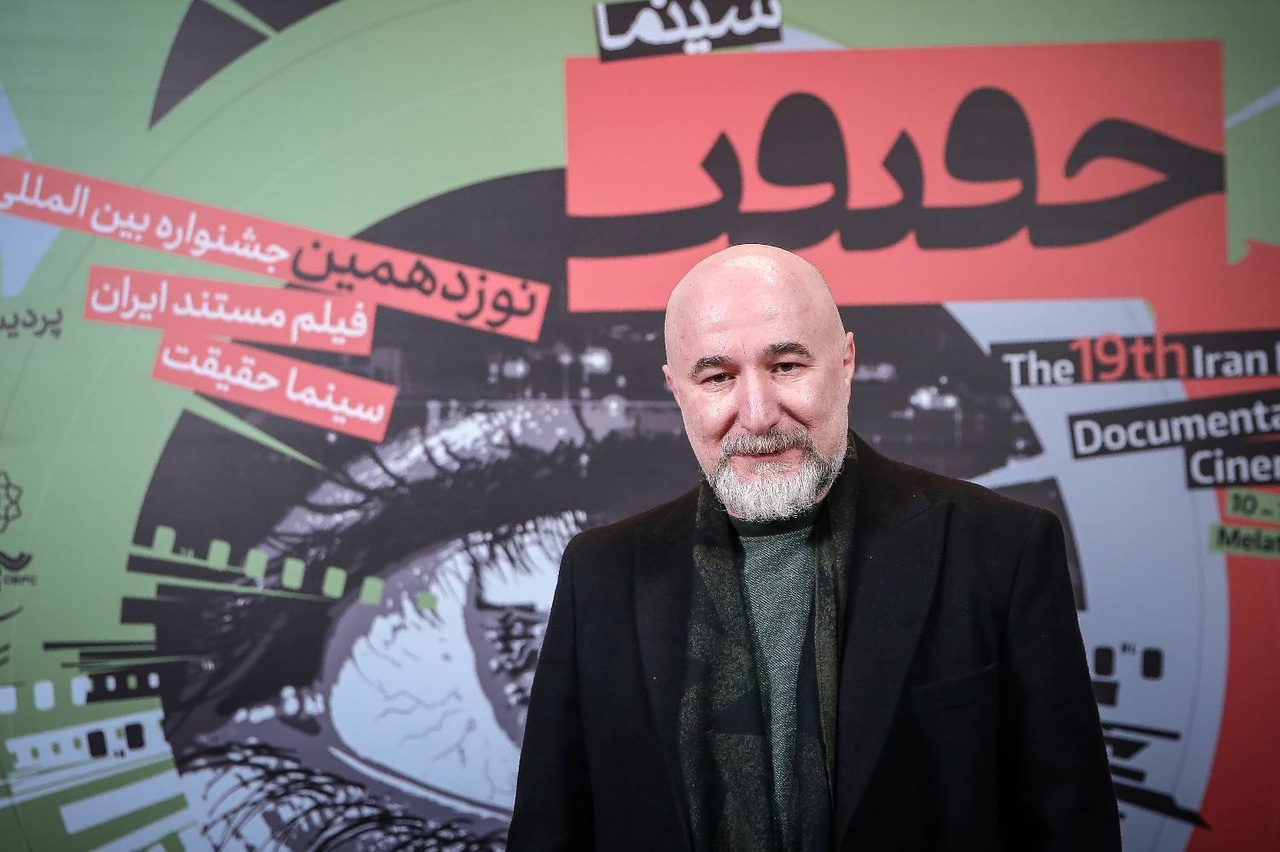
IBNA Art Service – Ahmad Mohammad Tabrizi; The documentary “Punching in the Ring of Translation,” centered on the life of Zabihollah Mansouri, was screened at the 19th Cinema Verite festival and succeeded in deciphering the life of this author and translator. Reza Behboudi, a veteran actor in cinema and theater, plays the role of Mansouri in this documentary, and his presence has added to the documentary’s appeal. In an interview with IBNA, Behboudi talks about Zabihollah Mansouri and his role in interesting the general public in reading.
Mr. Behboudi, why did you agree to act in the documentary “Punching in the Ring of Translation”?
There are several angles to look at this issue. For my generation, who were teenagers in the 1980s, Zabihollah Mansouri was an author and translator whose captivating books could be read. I became interested in books in elementary school and loved reading. Reading his books, such as “Sinuhe the Egyptian,” “Khajeh Tajdar,” and “God of Alamut,” which were famous and pleasant reads for many audiences, was part of my entertainment and enjoyment during that era.
I played several short historical roles in the series “The Women’s Secret Network,” directed by Afshin Hashemi, one of which was Zabihollah Mansouri in his youth. Due to the nature of the work, some of these roles were somewhat stereotypical, but mostly characterization was attempted for the character.
Regarding Mansouri’s youth and his claim of being a boxer and boxing champion, we took a slightly humorous approach to the story. We did the characterization with a bit of humor due to lack of time and the approach taken in those scenes. There, I noticed that my face was suitable for this role. While other roles in this series mostly required makeup, I didn’t need any for Zabihollah Mansouri. Of course, with some foundation work, we made his body bigger to match the boxing atmosphere according to his own claim. I also added a bit of Kermanshahi accent to the dialogues, which created a playful execution.
So, did you come to the documentary “Punching in the Ring of Translation” after the experience in “The Women’s Secret Network”?
Apparently, Mr. Shahparrad had seen that series and contacted me, saying they were making a documentary about Zabihollah Mansouri and wanted to reconstruct his appearance during an interview with Esmail Jamshidi. I was eager, but due to lack of time and multiple jobs, we couldn’t coordinate.
Mr. Shahparrad and his team were very patient, and finally, two days before the 12-day war, we managed to shoot these scenes. If we hadn’t, I think the documentary wouldn’t have been made. My personal interest and the sketches I had made of his character in the series came together to lead me to play the role of Zabihollah Mansouri in this documentary.
Zabihollah Mansouri has many opponents and proponents. What perspective do you personally have on this character?
Apart from the fact that an actor should take the side of the role, I think we should consider the overall outcome. If we get into the details and cling to them, everyone in their life has definitely had mistakes, flaws, and weaknesses. In the overall outcome, one must see how useful this person’s life was. Mansouri caused more people to read books than other authors and translators of his time. Although a large part of those books were entertaining, he also introduced and promoted more serious works to people.
So you evaluate Mansouri’s overall impact on Iran’s reading culture as positive?
The most important thing about Zabihollah Mansouri is that he got a group of people into the habit of reading. This is a very important point. The publishing industry must pay attention to economic conditions and acquire its primary market from general readers so that it can also publish specialized books alongside it. If publishing houses want to publish only a certain kind of special and serious books, they will go bankrupt. Many publishing houses have gone bankrupt over the years and could not reconcile their income and expenses. It’s the same in other countries, and their publishing industry does not wait for a particular class to read a philosopher’s book and only print that for that specific class.
If publishers do not take these issues into account, after a while they will not remain viable in a country with such complex policy-making and economic conditions. Good publishing houses have been lost. Such a policy cannot be a model for the publishing industry where only serious books are printed.
Therefore, friends who criticize Zabihollah Mansouri do not understand these issues. We were hurt most by serious readers who labeled these books as “yellow” and gradually caused the weakening of the reading culture. Alongside various factors that damaged reading, this case also had an impact.
What effect has belittling the taste of the general audience had on the fate of reading culture?
We hurt the group that enjoyed this style of books. We took away the opportunity from them to progress to more serious books alongside reading “Sinuhe” and “The Mad Surgeon.” If we had a reading culture, we should have worked to ensure that the person who, in our opinion, made superficial choices would gradually turn to serious reading. But we didn’t do this, and when this connection is cut and disconnected, that person not only doesn’t turn to serious books but also abandons books at the level of “Sinuhe.” This is what has happened, and the publishing industry, alongside other factors, has been hurt by it.
Imagine a crowd sitting behind a publishing house at 3 AM to buy the new Harry Potter version, and someone there wants to humiliate them by saying, for example, if you are a reader, you should read Heidegger’s “Being and Time.” Unfortunately, we always fall off one side of the fence.
My overall impression of Mansouri’s life and existence is very strange, attractive, and tragic. His book writing did not result in material wealth for him; for example, we cannot say he wrote this volume of work to buy a penthouse. Mansouri only got an apartment in the last few years of his life and had an ordinary, meager existence. He certainly had passion and enthusiasm that made him sit for hours and do translation work in different fields.
There aren’t many photos or films of Zabihollah Mansouri available. How did you get close to his character and what sources did you use?
I had previously read Mr. Jamshidi’s books. If I want to reveal a secret of acting, it is that there is a picture of him while translating. For me, that moment where a photo of him in his translation room in the magazine “Khandaniha” was taken was inspiring. I see him in the figure of someone who, with a head full of thoughts, problems, and fatigue, wants to concentrate and write. These were inspiring for me, and as an actor, I start with one element and spread it throughout the character’s body language.
In the film, I play a lot with my head and hands. Regardless of whether we have a lot of facts about Mansouri or not, I hope there has been behavioral and verbal consistency in the role. Overall, this documentary is not a review of one person but a review of an era, and this is important and attractive for documentary cinema.





