Martyr Ahmad Eskandari, a security figure who has remained unknown
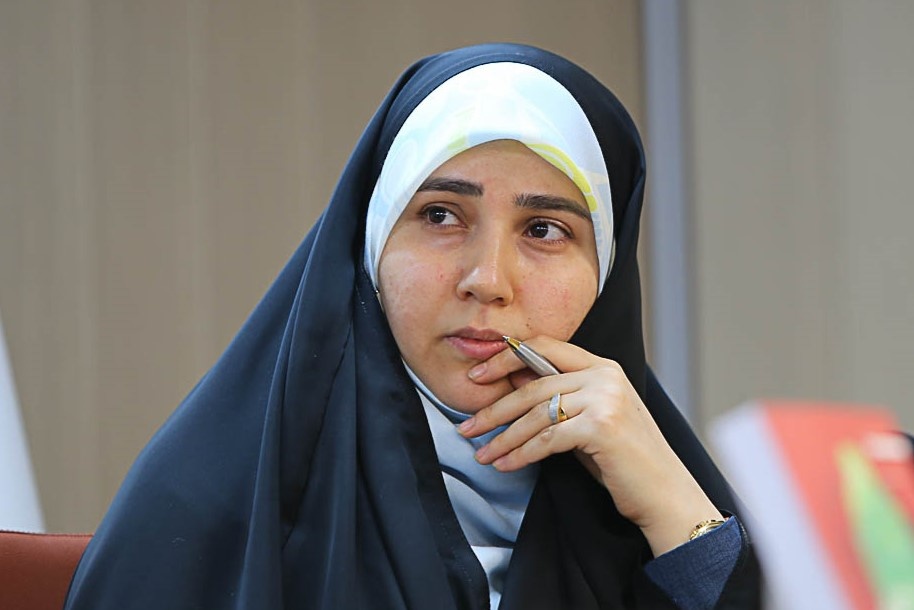
Masoumeh Mohammadi, the author of the book “Nominated for Assassination,” spoke about the research process for her work during an interview with a correspondent from the Iran Book News Agency (IBNA). She stated: “The interviews provided to me offered very general information about the martyr and did not paint a clear picture of him for me. Furthermore, the previous interviewer had only approached a few individuals who did not have much information about the martyr’s activities. Therefore, I was forced to search for people closest and most relevant to the character of Martyr Eskandari and extract the most detailed possible memories.”
She added: “The operational aspect of the martyr, the work he did to form secret and visible patrols, and his actions in fighting the Monafeghin (hypocrites) had been completely neglected. Even regarding the war front, they had not approached his commander, Sardar Fazli. Only one or two people who had a distant connection with Martyr Eskandari had been interviewed, and no information about the martyr’s activities on the front had been provided.”
The author of “Nominated for Assassination” mentioned the difficulties and challenges in accessing confidential documents about Martyr Eskandari and stated: “With high hopes, I wrote a letter to the Office of the Commander-in-Chief. Unfortunately, after follow-up, I reached a dead end and received no response. My goal in writing this letter was to access confidential bulletins, information, reports, and balance sheets that the martyr regularly registered with the Sepah (Islamic Revolutionary Guard Corps) to present a more complete narrative. However, this was not possible through administrative channels, and unfortunately, I failed.”
Referring to the security implications and confidentiality of the martyr’s activities during her research, she stated: “Martyr Ahmad Eskandari was an operational and security person, and it is undoubtedly difficult to access information about security forces. I had a complex path ahead of me. I had to go after security personnel to collect memories from the martyr’s friends and colleagues from forty years ago. Each of these individuals had their own status and were reluctant to be interviewed. Even those who had retired refused to cooperate and insisted on keeping information confidential.”
Mohammadi continued: “This made my work more difficult. In the meantime, I encountered people who did not remember the martyr or insisted that he had not carried out such activities. This was despite the fact that a few days before his martyrdom, Ahmad Eskandari wrote a letter to his wife detailing all his activities, from the formation of Al-Qari’ah and Sarallah and the fight against the Monafeghin to his position as Deputy Operations Commander of the Tehran Sepah and ultimately as Deputy Commander of the 27th Mohammad Rasoolullah Division. He emphasized that as long as he lived, no one should know about these responsibilities. The text of the letter is also included in the book’s document section. What stronger document than the martyr’s own handwriting could attest to his authenticity? I became certain based on that handwriting and my conversations with others.”
The author of “Nominated for Assassination” pointed to contradictory accounts during the research process and explained: “A total of at least thirty-five interviews were conducted. I worked for months to gather information bit by bit that was nowhere else recorded. The individuals were diverse, and each had their own perspective and point of view. Everyone recounted the events through the lens of their memory, and it was natural that I would arrive at numerous, sometimes contradictory, accounts. By synthesizing everything, I tried to reach the most logical narrative; because I had heard all types of stories and, standing outside the fray, I had the opportunity to compare and arrive at a more logical narrative.”
She stated that more than 85 percent of the book’s content is based on historical documents and research findings: “The emphasis on the figure of eighty-five percent is to compare the ratio of existing data and historical information with the extent of the author’s intervention in the text. Naturally, a part of the text requires writing skills, proceeding with embellishment, visualization, and so on. Even in some parts of the book, I reconstructed the images I had and clothed them in narrative. Because forty years had passed, and many events had undergone changes. But the images were constant, and I had to pay close attention to them. For example, one of the martyr’s comrades said that he used a short-range radio in Operation Valfajr Moqaddam, while this had no precedent in that area. Specialists also refuted this. But by looking closely at a picture I had of the martyr, a device similar to a radio, slightly larger than today’s phones, can be seen in his hand, which indicated it was a radio and confirmed the comrade’s memory.”
Mohammadi discussed the reasons for the formation of the Al-Qari’ah group by Martyr Eskandari: “The Al-Qari’ah group was in fact the Sepah’s secret patrols in fighting the Monafeghin and played a very important role in surveillance and striking at organizational safe houses. Martyr Eskandari was one of the founders and commanders of Al-Qari’ah. He was responsible for organizing these patrols, and due to their successful experience, he was also assigned to form the visible patrol or Sarallah patrol. The title ‘Nominated for Assassination’ also stems from events that happened to the martyr. According to his colleagues, due to his extensive activities against the Monafeghin, this group repeatedly planned to assassinate him and targeted him for assassination, but by God’s grace, they failed each time. Once, a family named Eskandari living near the martyr’s home was mistakenly assassinated instead of the martyr’s family.”
The author of “Nominated for Assassination” pointed to the overlooked and unknown character of Martyr Ahmad Eskandari and explained: “A combination of reasons has led to Martyr Ahmad Eskandari remaining unknown. First, his calm, reserved, and unpretentious personality; he always worked with a silent lamp (in secret). Second, security issues, the full dimensions of which have not been revealed even after years. Third, after several years, I realized that some individuals, for personal reasons, did not want and did not allow the martyr to be highlighted.”





