Local literature is not a genre, but a cultural sensitivity
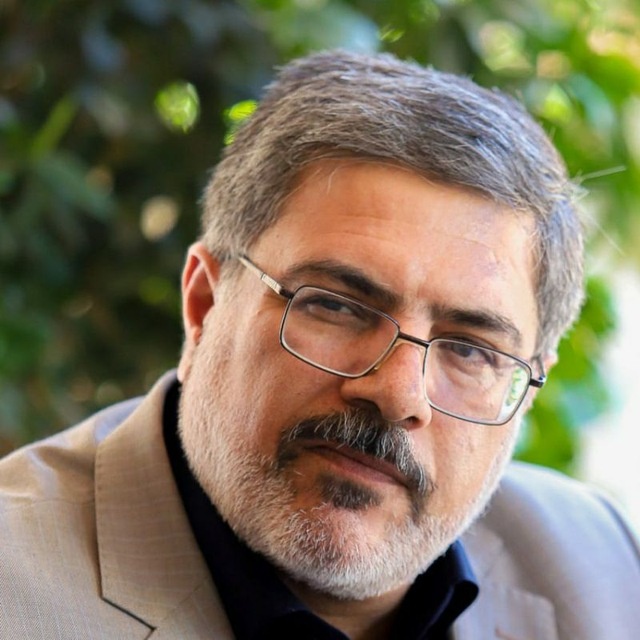
Service of Provinces of Iran Book News Agency (IBNA) – Fatemeh Bahrami: Mohammad Reza Rahbari is an active writer and researcher in the field of fictional and dramatic literature; a figure who has been increasingly mentioned in Isfahan’s literary scene in recent years by attending book review sessions and writing analytical articles. He is among the researchers whose lived experience in Isfahan and years of work with fictional texts have shaped his perspective on the city’s local literature, enabling him to approach Isfahan’s literature from a combined angle of literature, urban identity, and folk culture. In his writings and interviews, Rahbari emphasizes that local literature is not an independent genre, but a type of cultural sensitivity; a sensitivity that the writer develops towards the language, space, history, and life-world of their region, reflecting it in their narratives.
In this interview, he speaks about the components that, in his belief, nourish Isfahan’s local literature; from the role of accent and geography to the impact of architecture and collective memory. He also raises points about the current state of Isfahan’s literature, the contribution of new generations, and the necessity for support from cultural institutions; points that can be helpful for a better understanding of regional literature and its less-seen potentials.
What components feed Isfahan’s local literature? Collective memories, accent, geography, or cultural traditions?
Ethnography, cultural traditions, accent and Isfahani Persian, political and social history of Isfahan, and human and physical geography are among the most important components. When we speak of geography, we mean all environments surrounding humans.
From your perspective, what are the most important characteristics that distinguish Isfahan’s local literature from other regions?
Mohammad Ali Sepanlou, one of the first to propose classifications of fictional schools based on geography in Iran, considered attention to formalism and introversion to be centered on the specific mindset of the Isfahan school. Focus on language and heavy atmosphere are two other characteristics added by Nasibe Fazlollahi (see: Isfahan Story, 2014). Some others have summarized the characteristics of this school as attention to details. However, these criteria are overly general.
Ghahreman Shiri, in his book “Iranian Fiction Writing Schools,” provides a more precise classification of the Isfahan school by considering influential factors, both regional and supra-regional. He first provides general explanations in seven chapters (anti-current, fusion of traditional and modern narrative, narrative-breaking, sensitivity to identity loss, artistic and social dissent, doubt in beliefs, and beginning and end) and then, in the conclusion, lists fifty characteristics for this school in more detail and without categorization, which are summarized here by topic: Linguistic economy and disregard for stylistic embellishment in language and prose, creating diversity in language and expression, thought-provoking beginnings and endings in fiction writing, use of modern and complex mentality and perspective, complexity of narrative structure, cyclical plot structure connecting the end of events to the beginning, disregard for conventional narrative attractions for engaging the audience, achievement of an indicative style including omission, distancing, and fragmented narrative, abundance of subtle and natural allusions and implications to add to the semantic range of signifiers, modeling great Iranian and international writers, giving agency to historical, natural, and social determinism, highlighting intergenerational conflict, and portraying a dissatisfied and combative human face.
To what extent do old oral tales and stories of Isfahan have a presence and influence on collective memory and literary production today?
If you mean to what extent oral tales have been used as literary material, I must say I haven’t specifically studied Isfahan’s fictional literature with this purpose in mind, and cannot offer a precise evaluation. However, my historical studies on fictional literature show that, apart from a few notable examples like Jamalzadeh’s “Sar-o Tah-e Yek Karbas” in the past and Houshang Golshiri’s “Jennameh” later, there hasn’t been serious attention to oral tales and stories. Nevertheless, in recent years, the younger generation, both in children’s and adult literature, has shown more serious attention to this area.
What role has Isfahani language and accent played in shaping the literary identity of this city?
More attention should be paid to language and accent, but I don’t see deep work yet; for example, unlike the attention shown by some Kurdish writers to the Kurdish language, we are still stuck at the level of words and accent, and haven’t worked much on syntax.
Which contemporary authors or works can be considered prominent examples of Isfahan’s local literature?
Among poets, more effective attention to Isfahan is visible; from the past to today. For example, the late Keyvan Qadrkhah or Mr. Golabchian have focused almost their entire poetry collections on Isfahan and its culture.
Among fiction writers, besides famous names like Houshang Golshiri, Hormoz Shahdadi, and Mohammad Kalbasi, many writers from the next generation, such as Mohammad Rahim Akhavat and Ahmad Bigdeli, have reflected Isfahan in their stories. But the younger generation, like Farhad Bardbar, Marzieh Kohrani, Marzieh Golabgir Esfahani, and others, have shown more precise attention; an attention closer to deep living in Isfahan.
A writer who has two unfinished novels remaining and focused both on the language and accent, as well as the relationships of marginal people in Isfahan, with their complexities and inherited culture, is Behrouz Badakhshan, with his two works “Sahraye Roghan” and “Badri”. But the writer who has focused on Isfahan in all his works for over a decade and reminds me of Patrick Modiano, is Ali Khodaei, who has represented what he perceived in his books “Nazdik-e Dastan,” “Adamhaye Chaharbagh,” and “Shab Begardim Esfahani.” Although that complex Isfahan with its rich cultural and historical background, whose signs we see in the city’s historical texture, has not yet been represented in our fiction. There are other writers whose names cannot be mentioned here.
How have architecture, urban spaces, and Isfahan’s life-world been reflected in literary works?
If we consider James Morier’s “The Adventures of Hajji Baba of Isfahan” as the first representation of Isfahan in fictional literature, which focused more on Isfahani culture than the city’s physical structure, new narratives of Isfahan’s natural, man-made, and human environment have been presented in fictional literature from the 1980s and 1990s onwards. Even women’s narratives of Isfahan are seen in works from these two decades, which were absent in previous works.
Reviewing prominent recent fictional works related to Isfahan shows a change in the type of representation of the city and its gaining characterization within the stories. If in the earliest works, representation was only limited to mentioning the names of parts of the city as the location of an event, the works of the last two decades show writers’ self-awareness regarding various aspects of urban identity, urban memories, and human relationships with place.
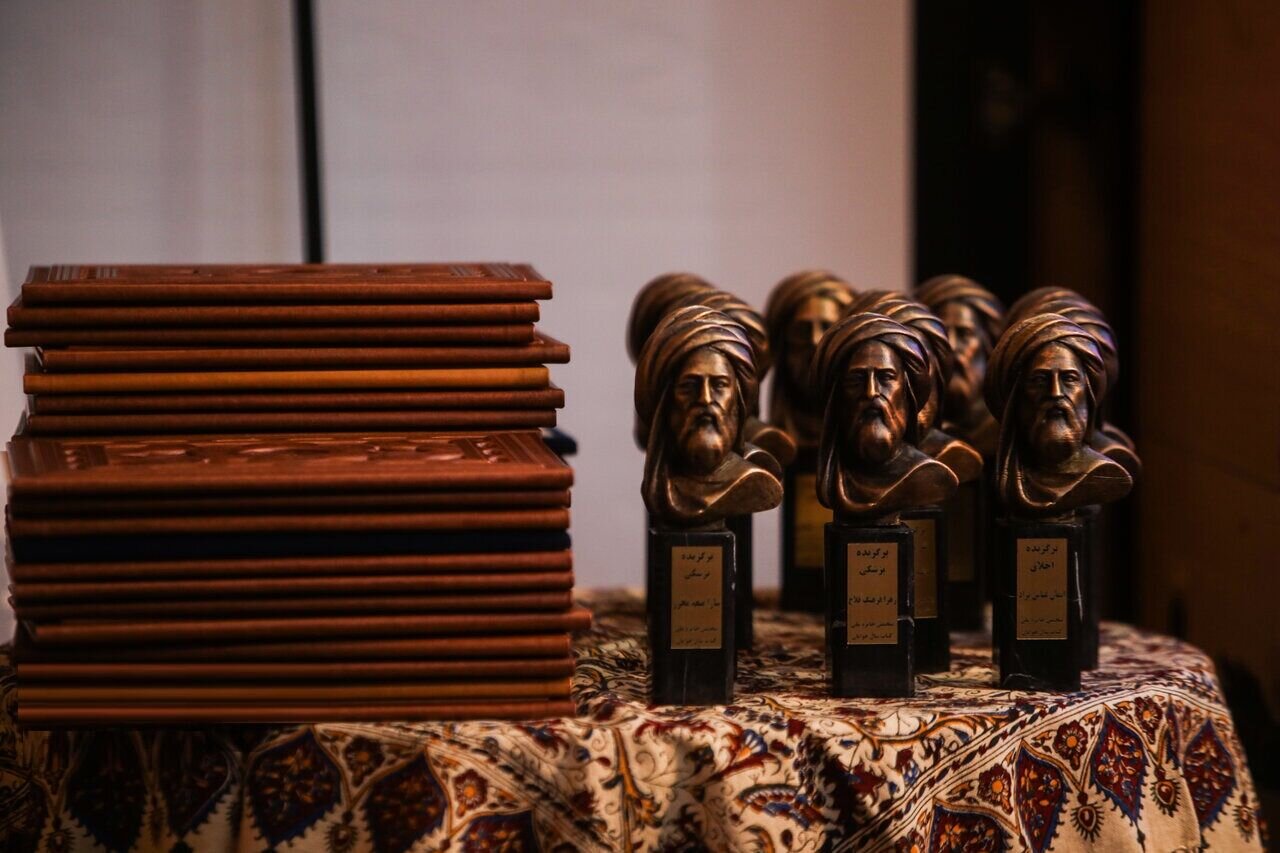
Especially in the “Recreation” literary award held last year, where I reviewed the novels as a judge, an appropriate reflection of this city was seen in the works of Isfahani writers or those interested in Isfahan. For example, in Motahereh Shirani’s novel “Lapis Lazuli Earth and Sleeping Dragon,” the Serdar-e Feisarieh was recreated; and similarly in Fatemeh Talebi’s novel “Hasht Behesht Palace.” Some writers have also focused on specific corners of Isfahan and its folk culture; such as Rezvan Nilipour on customs and Azita Masjedi on old public baths.
How do you evaluate the current state of Isfahan’s local literature? Is it growing, fading, or changing?
It is growing. Our writers have reached a self-awareness about Isfahan.
What actions should be taken to strengthen and sustain Isfahan’s local literature, and what is the role of cultural institutions, universities, and writers?
To strengthen and sustain Isfahan’s local literature, literary awards should continue, as previously addressed by the Jamalzadeh and “Recreation” awards, and now by the Isfahan Literary Award. These awards can be effective, but more important is supporting research in local history, oral history of neighborhoods, guilds, and other areas, as well as supporting sociology, archeology, ethnography, and literature of Isfahan to discover lost corners of the city and turn them into material for writers.