Land, Language, and Women are the Common Denominators of Alikhani’s Stories
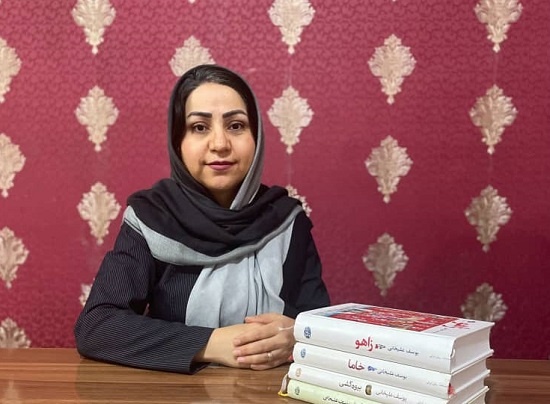
Fatemeh Parhamrad, in an interview with a reporter from the Iran Book News Agency (IBNA), recently had a book authored by Fatemeh Parhamrad and titled ‘From the Dreams of Naneh Ghadam-Kheir and Oos Valibaba’ published by Amout Publications, which is a book in critique and review of the works of contemporary Iranian short story writer Yusuf Alikhani. In this book, the author has explored various aspects of Yusuf Alikhani’s stories.
Fatemeh Parhamrad told IBNA that her motivation for writing this book was a curiosity to delve into Alikhani’s works after reading the novel ‘Khama.’ She stated: “About three years ago, I came across the novel ‘Khama’; a novel that strangely captivated me. For this reason, I became curious to know more about its author and his other works. I started searching, and this was the beginning of an in-depth study of Yusuf Alikhani’s fictional works. The further I went down this path, the more significant points I discovered, which increasingly demonstrated the necessity and importance of deep analysis of these works and introducing them to the audience, and the result was a book.”
The author of the book ‘From the Dreams of Naneh Ghadam-Kheir and Oos Valibaba’ spoke about the position of Alikhani’s fictional works in contemporary literature, saying: “Yusuf Alikhani’s fictional works are not only in the field of fiction but also valuable for cultural and social studies, especially popular culture, psychological, and sociological dimensions. Alikhani knows storytelling well and, from the heart of these stories, has delved into the depths of ancient texts, and by utilizing his awareness and knowledge in this field, as well as his lived experiences, he has created stories that have something to say in cultural, social, and psychological dimensions.”
She referred to her method of analysis in this work and added: “In this collection, short stories are examined separately, and novels are also separately considered in terms of narrative structure, as well as symbols, signs, myths, and sometimes linguistics. In the content analysis of the works, efforts have been made to study existing critiques, opinions, and research, and each story is analyzed and reviewed from different dimensions and angles.”
Parhamrad also explained the chapterization of the book: “The book is organized into five chapters; the first chapter deals with the life and works of Yusuf Alikhani, the second chapter is dedicated to his three short story collections (Ghadam-Kheir Was My Grandmother, Ejdehakushan, and Bride of the Willow). In the third chapter, three novels, Bivehkoshi, Khama, and Zahoo, are analyzed and reviewed; the fourth chapter is dedicated to the cultural studies value of Yusuf Alikhani’s works, and in the fifth chapter, social concepts and the position of women in these works are addressed.”
She summarized the common denominator of Alikhani’s stories in three words and said: “Land, language, and women are the common denominators of Alikhani’s stories. This author, by creating a special fictional place called ‘Milk,’ has shaped a unique fictional world in which culture, beliefs, rituals, customs, and women are at the center of attention. Also, in all these works, elements of nature, including mountains, trees, and water, have become personified and speak of the pains of today’s society.”