Minister’s Advisor Complains About Textbooks / Voluminous and Opportunity-Wasting
According to Khabaronline, Esmail Bahrizadeh, advisor to the Minister of Education and Director General of the Ministerial Office, speaking at the closing ceremony of the first meeting of the working group for drafting the document of the twelfth student parliament, held at the National Student Organization, emphasized the importance of emulating the path and conduct of martyrs, stating: ‘Our duty towards the blood of martyrs is heavy, and the prerequisite for this path is diligent work and precise understanding of missions. Voluntary participation of students during holidays is a sign of their responsibility and maturity.’
Mehr News reported: He commemorated the memory of Imam Khomeini (RA) and the martyrs of the Revolution and the Sacred Defense, noting: ‘Today, the country’s security and authority are indebted to the bravery of the martyrs, and we must continue their path.’
Emphasis on the Role of Government and Ministry of Education in Educational Transformation
The advisor to the Minister and Director General of the Ministerial Office of Education, referring to the current government’s priority of ‘transformation in education,’ considered this approach a unique opportunity and stated: ‘For years, we always wished for a government that would prioritize education in its programs. Now this has happened, and the President himself has held more than 80 specialized meetings in less than two years to improve the state of education.’
He regarded the President’s continuous presence in schools and field monitoring of educational equipment as a sign of the government’s seriousness in improving quality, saying: ‘A standard model for classrooms is to be implemented in all schools across the country after finalization.’
Return to School and Focus on School-Centered Activities
Bahrizadeh explained two main policies of the Minister of Education in the field of upbringing and learning: ‘Programs should move beyond a mere showcase and be accessible to all students at the school level. The slogan “Every student a role; every student an organization” must be transformed into an operational program in schools.’
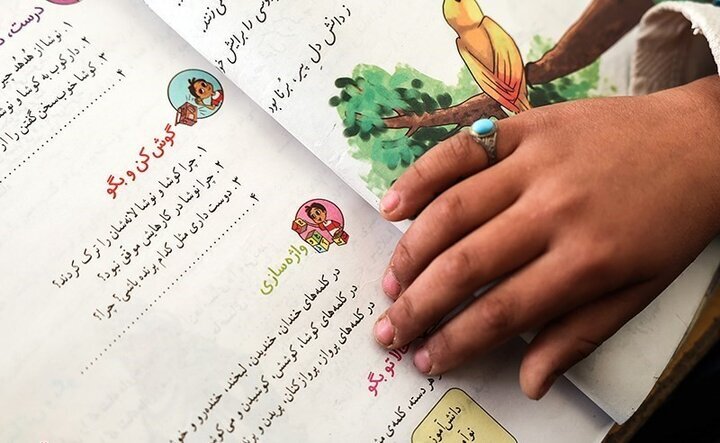
The advisor to the Minister and Director General of the Ministerial Office of Education criticized the memory-based nature of the educational system, saying: ‘Textbooks are voluminous and opportunity-wasting and leave no room for teaching life skills, communication skills, artistic activities, or even working with new technologies like artificial intelligence. Real transformation occurs when the curriculum is designed according to the needs of today’s life. The specialized working group for curriculum transformation holds continuous weekly meetings, and fundamental changes are underway; although the realization of final results will be time-consuming.’
Educational Equity and Quality; Two Main Pillars of the Government
In terms of quality, Bahrizadeh also considered deep and lasting learning experiences, such as students’ participation in the student parliament, as an example of ‘effective learning’ and added: ‘Educational equity is not just “equality” but rather “intelligent allocation of resources” to bring all students to the finish line. These experiences will transform students into future managers of the country.’
The Role of the Student Parliament in Educational Policymaking
Bahrizadeh emphasized that the student parliament ‘is not a mere showpiece institution,’ stating: ‘This parliament is a workshop for training future managers and policymakers. You are not just consumers of the educational system; you are its partners and observers.’
He asked the students in the document drafting working group to write a document that is ‘forward-looking, operational, and inspiring’ and warned: ‘An idealistic approach without considering the country’s capabilities will remain only on paper. If a strong and implementable document is drafted, it will be possible to present it directly to the President.’
The advisor to the Minister and Director General of the Ministerial Office of Education, in another part of his speech, explained the necessity of prioritizing student issues and the role of the student parliament in shaping the country’s future, addressing the students: ‘Solving all problems is not possible, but “solving one or two problems will also be a very significant achievement.”’