Shams Tabrizi Document Project is the Most Valuable Step in Solidifying Shams’s Legacy
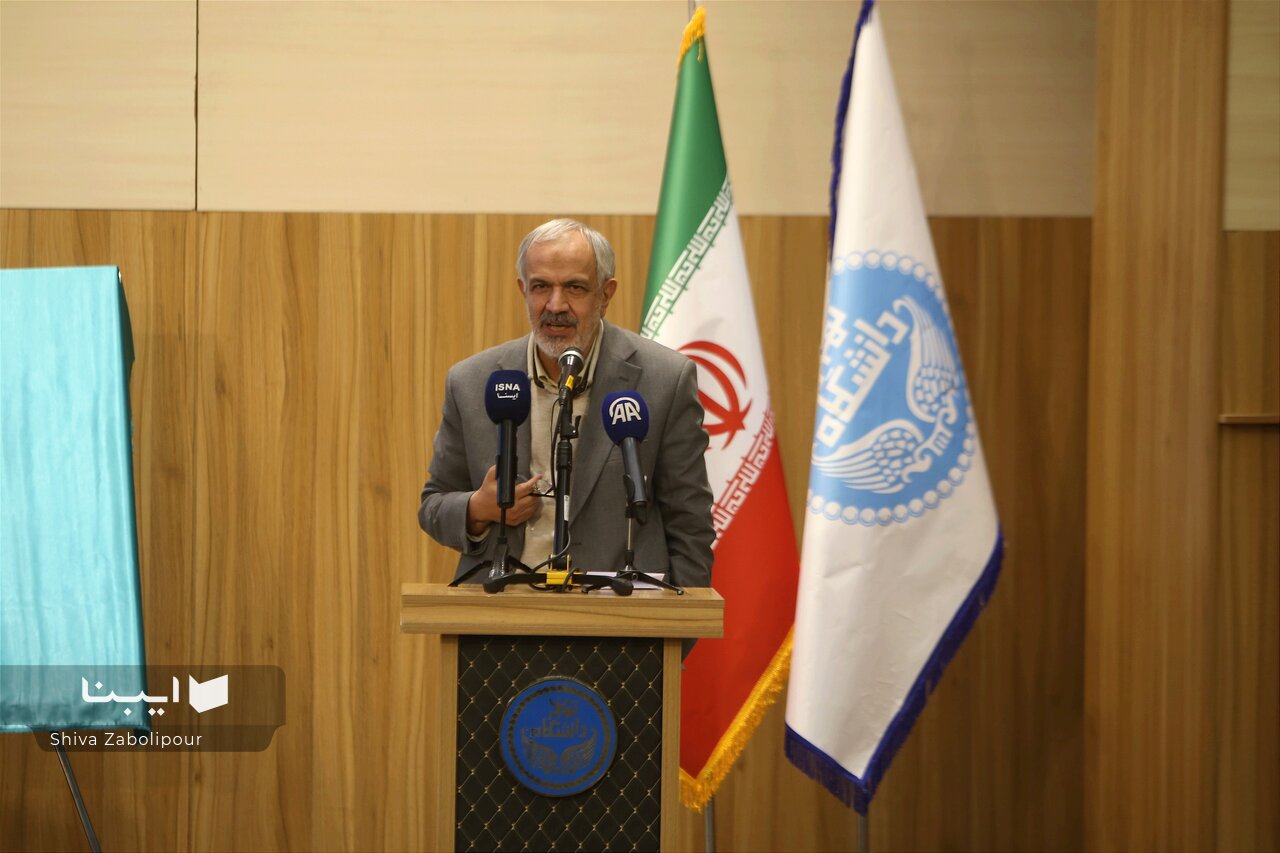
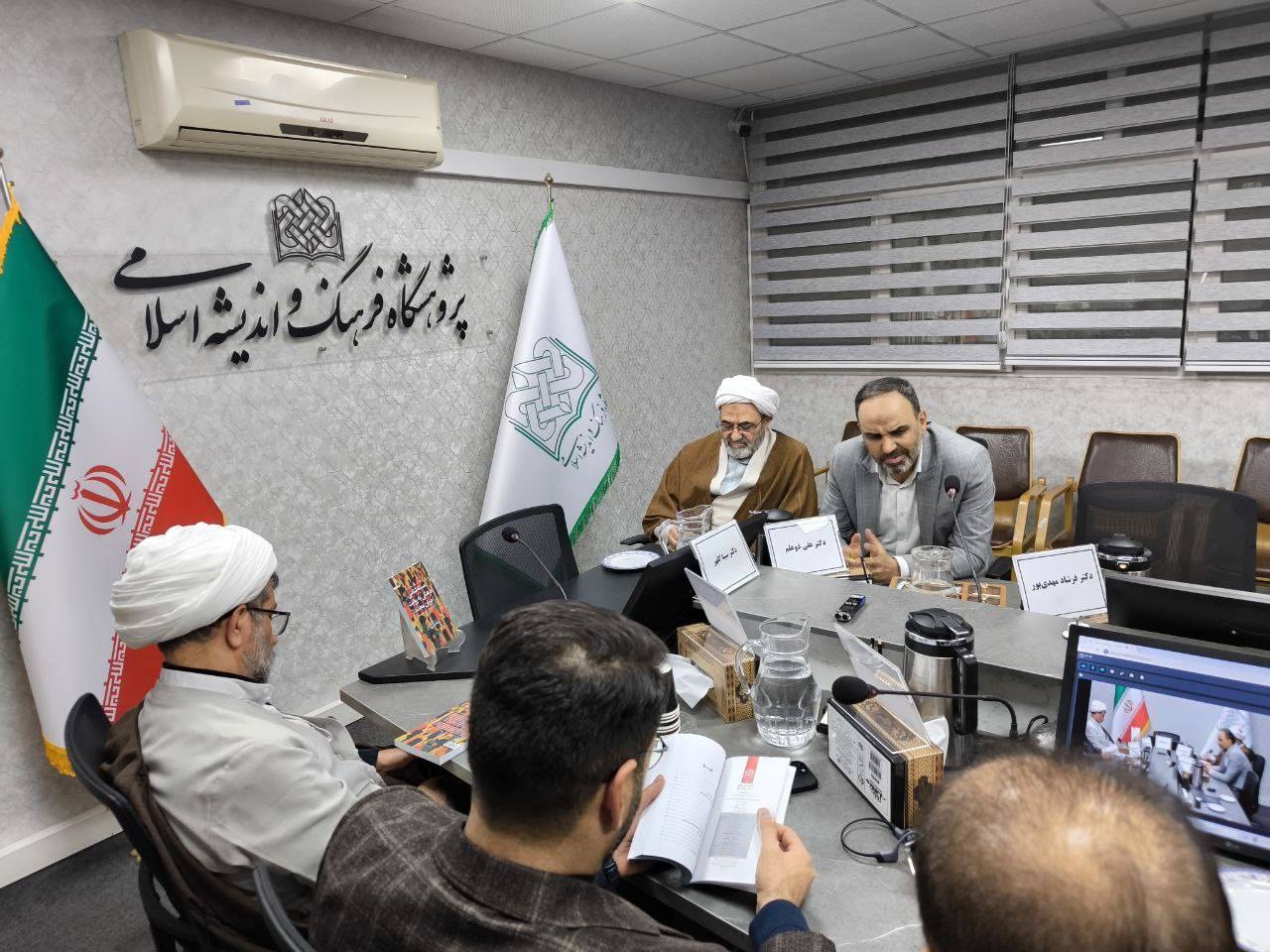
Literature Service, Iran Book News Agency (IBNA) – Marzieh Negahban Marvi: The unveiling ceremony of the book ‘Astan Shams Tabrizi,’ by the efforts of Mir Hossein Hasanzadeh and with an introduction by Mohammad Ali Movahed, was held with the presence of cultural figures in Allameh Amini Hall of the Central Library of Tehran University. In this ceremony, the first phase of international documents related to Shams Tabrizi was published after ten years of research.
Seyed Hossein Hasanzadeh, author of the book and CEO of Payam House of Knowledge and Culture, addressing the establishment of this institute in 2014 in the name of Professor Abbas Zaryab Khoei, said: “Our goal is to develop cultural research in the field of ideas that have transcended geographical boundaries. The works and influence of Shams Tabrizi and Rumi from the 7th century until now are traceable from India to the Balkans and have expanded to Europe and America in recent decades.”
According to Hasanzadeh, the project to identify and analyze documents related to Shams Tabrizi began in 2015, and now, after ten years, its first phase, including 40 authentic documents from archives in Iran, Turkey, the US, India, Russia, and France, has been published. These documents are presented with Persian explanations and English subtitles in the new book of this collection.
He announced, referring to the publication of the book ‘Hojreh-e Khorshid’ (Chamber of the Sun) in 2022 and works in progress: “Soon a new work by the institute’s researchers will be published, which will open new horizons in the field of Shams studies.”
The CEO of Payam House of Knowledge and Culture also announced the start of the second phase of the project, aiming to compile a specialized encyclopedia of Shams Tabrizi, adding: “The historical and architectural features of mausoleums attributed to Shams in Iran, Turkey, Afghanistan, Pakistan, and India have been examined, and the figures associated with these attributions have been studied in terms of their life periods and historical congruence.”
In another part of his speech, he referred to the potential for cultural cooperation between Iran and Turkey, stating: “Turkey has had successful planning in the field of cultural tourism. Cooperation between the two countries can be effective in better introducing the legacy of Shams and Rumi.”
Hasanzadeh, thanking Professor Mohammad Ali Movahed who wrote a comprehensive introduction for the book, said: “He could not attend the ceremony due to air pollution. We wish him health and long life.”
He acknowledged the efforts of a group of researchers and project companions, adding: “This work was published without government financial support and solely with the participation of enthusiasts and civil institutions. Pre-purchase of copies by cultural patrons enabled the printing of 500 exquisite copies of this book.”
End of Doubts About the Location of Shams’ Mausoleum
Continuing the ceremony, Hojjatollah Ayyubi, Head of the International Center of the Ministry of Cultural Heritage, reviewing his experiences over the past two decades regarding the identification and introduction of Shams Tabrizi’s tomb in Khoy, emphasized that the publication of this book will put an end to doubts about the location of Shams’ mausoleum.
Ayyubi, recalling the years he held social and cultural responsibilities in the Ministry of Interior, said: “Twenty years ago, when I was working as the Deputy for Social Affairs, we went to Khoy and saw a serious national demand for the revival of Shams’ tomb. Only a historic minaret and an area of about 400 square meters remained. When I met Professor Movahed, he stated decisively: “This is the tomb of Shams Tabrizi, do not doubt it.” This very statement illuminated our path.”
He referred to the organization of the first major program in 2006, adding: “With the cooperation of the people, the municipality, and the then-officials, a great work began. Professor Shajarian, Shahram Nazeri, and many other luminaries of culture and art attended that ceremony. In just a few months, the 400-square-meter area was expanded to 7000 square meters, and the people of Khoy stood on rooftops; it was as if their centuries-old wish had come true.”
Ayyubi also explained about the Shams memorial design competition: “400 works and models reached us, and prominent judges reviewed these designs. Professor Nader Ardalan presented a simple and beautiful design and even said he considered this design his cultural testament. The devotion of the people of Khoy to Shams and Rumi in those years was unprecedented.”
The Head of the International Center of the Ministry of Cultural Heritage considered the most important achievement today to be the publication of the new book by the Zaryab Culture Institute and said: “If one day many doubted whether this was Shams’ mausoleum or not, today, with the publication of this book, not a shred of doubt will remain. Maps, documents, travelogues, and international records are so thoroughly compiled in this book that even one-third of it is sufficient to prove the matter.”
According to him, the existence of nine locations attributed to Shams Tabrizi in various countries, including Pakistan, India, and different regions of Iran, demonstrates the depth of devotion of people worldwide to this great mystic: “This book shows that Shams Tabrizi is a global figure and his mausoleum in Khoy has historical and documented roots.”
Ayyubi, appreciating Dr. Seyed Hossein Hasanzadeh and the Zaryab Foundation, stated: “This work is even more valuable than constructing a building. Iranians and culture enthusiasts can build structures, but compiling such documents is a monumental task. I am confident that with the publication of this book, Khoy’s path as the national and international center for Shams Tabrizi will be traversed with greater speed.”
The Importance of Documentology Research
Continuing the ceremony, Ahmad Masjedjamei, Deputy Head of the Great Islamic Encyclopedia, referring to the academic standing of Khoy and the prominent role of its thinkers in Iranian culture, described the new initiative in the field of Shams studies as “a great and necessary work.”
Masjedjamei, in his speech, first addressed the relationship between Shams and Rumi, saying: “Just as some philosophers have elucidated the relationship between Socrates and Plato, the connection between Shams and Rumi is also of the nature of inspiration and oral transmission of knowledge. Shams ignited a fire in Rumi’s soul, without which we would not know the Rumi of today.”
He added, referring to the historical role of the people of Tabriz and Azerbaijan in defending Iran and national culture: “Tabriz has repeatedly shown its commitment to national identity. It is this cultural capacity that has played a lasting role in the subject of Shams Tabrizi as well.”
Masjedjamei then recalled parts of his experience during his tenure at the Ministry of Culture and Islamic Guidance: “In those years, efforts to organize the area around Shams’ mausoleum were very difficult. There was a small and limited area, but national prestige and attention led this complex to find a new status. Local officials, including Mr. Sepehri, diligently worked to clear surrounding houses and expand the space.”
He said, referring to the importance of the documentology work done in the new book of the Shams Tabrizi project: “The work of Dr. Hasanzadeh and his research team was not just about collecting documents; it was about solidifying a historical legacy. In this collection, administrative documents, foreign letters, and official correspondences have been examined, some of which bear credible signatures from the Qajar and Pahlavi periods. This level of precision and authenticity multiplies the value of the work.”
Masjedjamei added: “These documents are not only for the past; some of them should also be examined in contemporary history, and new chapters will be added to it in the future. Such research is always accompanied by the discovery of new documents.”
He said, referring to the oral tradition in Iranian culture and Shams’s role in transmitting inspirations to Rumi: “This project is a continuation of that oral tradition; a tradition that reached its peak during Rumi’s time and today, by becoming a written work, gains additional value.”
Masjedjamei also recalled artistic activities related to Shams and Rumi and said: “Ms. Saberi, a prominent theater artist, had a successful performance on this topic, and even the possibility of performing it in Konya was discussed. In our negotiations with Turkish cultural officials, there was a good reception for performing these works abroad.”
He concluded by thanking the project’s stakeholders, saying: “This book and this research are the cultural heritage of Khoy and Tabriz, and indeed the national heritage of Iran. Its publication not only resolves doubts but also paves the way for extensive cultural cooperation at the regional level.”
Keeping Alive the Status of Shams and Rumi
Farzaneh Azam Lotfi, Associate Professor at the University of Tehran, also spoke about the documents of Shams and Rumi’s book and their importance in India, comparing a mantra about Indian thought and tolerance with Shams’s words. Stating that in the international and Asian studies section, they seek to keep alive the status of Shams and Rumi, she suggested: “We should have a Rumi Studies and Shams Studies section at the University of Tehran.”
The Importance of Manuscripts and Cities’ Social Capital
Ali Sadeghzadeh, a researcher at the National Archives and Library Organization, also spoke about the importance of manuscripts and explained about the book ‘Astan Shams Tabrizi.’
Akbar Irani, CEO of the Written Heritage Research Institute, also said in his speech: “The credibility of cities and countries is not in national assets like mines, oil, and gas, but in their social capital. It is important where the mausoleums of great figures are located, as they carry national value and economic resources that, unfortunately, we do not know how to utilize or have not been allowed to utilize.”
A Memory of the Plan to Create Shams’ Mausoleum in Khoy
Irani continued with a memory: “Amin Riyahi wrote two articles about Shams’ tomb in Khoy, which the late Doaei published in Etela’at newspaper. Mr. Amin Riyahi said that Ataollah Mohajerani, the then Minister of Guidance, called and said, “I read your article, and we want to go to Khoy tonight, and now that it has been proven that Shams’ tomb is in Khoy, a mausoleum should be established in Khoy.”
Unveiling of Documents and the Book ‘Astan Shams Tabrizi’
At the end of the ceremony, with the presence of figures such as Zhaleh Amouzgar and Hijabi Kirlangiç, the Turkish Ambassador to Iran, the documents related to Shams’ tomb in Khoy and the book ‘Astan Shams Tabrizi’ were unveiled.