Expanding Book Reading for People with Special Abilities Strengthens Cultural Justice
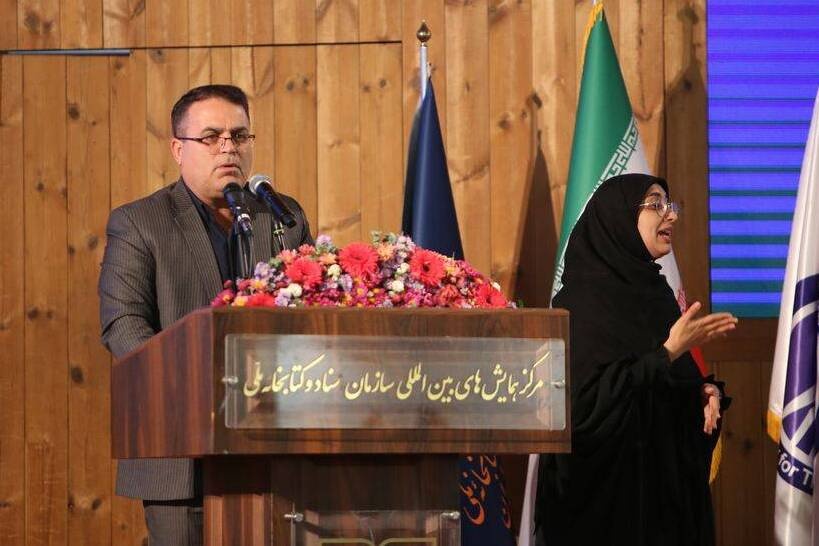
According to the Iran Book News Agency (IBNA), citing the Public Relations of Iran House of Book and Literature, the closing ceremony of the third National “Kama” Festival was held on Sunday (November 30, 2025) at the Pen Hall of the National Archives and Library Organization of Iran. The event was attended by Ebrahim Heidari, CEO of Iran House of Book and Literature; Ali Rabiei, Social Assistant to the President; Mehdi Mohammadi, Deputy for Legal, Parliamentary, and Provincial Affairs of the Ministry of Culture and Islamic Guidance; Gholamreza Amirkhan, Head of the National Archives and Library Organization of the Islamic Republic of Iran; Azadeh Nazarboland, Secretary-General of the Public Libraries Institution of the Country; Akbar Jamali, CEO of the National Association of the Blind and Head of the Policy-Making Council of the National Kama Festival; Hamid Saheb, Director General of Health of Tehran Municipality; Mozhgan Farhbod, Deputy for Educational, Cultural, and Physical Education Affairs of the Organization for Exceptional Education of the Country; and a group of other cultural officials.
Cultural Justice is Always on Our Agenda
The CEO of Iran House of Book and Literature stated that in such programs, there is no place for officials’ speeches, and said: “My goal in attending is to appreciate the guests and organizers and to state a few brief points in line with the missions of the Iran House of Book and Literature and the Ministry of Culture and Islamic Guidance.”
Heidari, referring to the macro policies of the Ministry of Culture and Islamic Guidance of Iran, considered “cultural justice” one of the four main axes of the Ministry’s programs and continued: “One of the four axes of Dr. Seyyed Abbas Salehi’s programs, when he presented them to the Islamic Consultative Assembly, was the issue of cultural justice. Currently, the Ministry of Culture and Islamic Guidance, both in the field of culture and in the field of art, pays attention to various segments and strata of society, including urban and rural communities, children, adolescents, women, and especially individuals with special abilities.”
He added: “I emphasize that instead of the word ‘disability,’ the phrase ‘special abilities’ should be used, because these dear ones each have special talents and may even be more capable than many other individuals. For this reason, I was looking for a word that better reflects their dignity and status.”
Heidari continued: “In line with pursuing cultural justice, numerous programs have been designed for various segments of society, different professions, and specifically for individuals active in the field of book reading. In the previous period, with the support of Dr. Salehi, reading clubs for individuals with special abilities were formed, and I remember that one of the outstanding and very capable clubs from one of the cities had valuable activities.”
He announced the continuation of support programs for authors and activists in this field and said: “Currently, the Iran House of Book and Literature and the Deputy for Cultural Affairs of the Ministry of Culture and Islamic Guidance are ready to continue their support; including offering books with special discounts, supporting authors and activists in this field, and providing the necessary facilities to strengthen the book reading movement.”
The Necessity of Deepening Festivals Instead of Broadening Them
In another part of his speech, Heidari, referring to the importance of the National Kama Festival, called for “deepening” this event and added: “Instead of broadening the festival’s scope and adding new sections in each period, we should increase its depth and quality through critical analysis and precise pathology.”
He asked the festival organizers to review the strengths and weaknesses of the festival, utilizing the opinions of experts, critics, and members of the policymaking council, and to plan for its improvement.
Justice Instead of Pity; Investing in a Human Future
Ali Rabiei, Social Assistant to the President, as one of the speakers at the ceremony, stated: “Just as experience and knowledge are valuable in every individual’s life, in society, access to knowledge for everyone, including the blind and visually impaired, is a sign of cultural maturity and social justice. The moral and humanistic measure of any society is the extent of its attention to individuals seemingly with fewer abilities.”
He added: “Books written in the field of the blind, whether research-based, narrative, or experience-based, are mirrors that compel us to understand blindness not as a defect but as a different experience of being in the world. In these books, humanity takes precedence over any administrative or medical concept, and this is its most valuable achievement. Being blind in many of these works is not a limitation but a narrative of another type of perception; a perception that is sometimes clearer and more human than what the sighted eye sees. What emerges from these writings is a social lesson, a life lesson: that society is healthy only when all voices, even the quietest and softest, are heard.”
Rabiei, highlighting the unique characteristic of these books, said: “For me, the most important asset of this festival is that by reading these works, we enter life from the perspective of other human beings. The books in this field are not actually about the blind; they are about all of us. Society is built not on pity but on justice and empathy. A future where all blind children can receive textbooks, storybooks, and scientific books from their first years of schooling will be a more human, more popular, and more just future.”
The National Library; A Treasure Trove of Iran’s Written Heritage
Gholamreza Amirkhan, Head of the National Archives and Library Organization of the Islamic Republic of Iran, at the closing ceremony of the third National Kama Festival, stated that this organization hosts this cultural program, and said: “The National Archives and Library Organization, as a treasure trove of Iranians’ written heritage, including books, manuscripts, periodicals, and various information carriers, has been serving Iran’s ancient culture for over 88 years. This organization is fully prepared to take steps to facilitate access to its services in the fields of archives and libraries and asks citizens to report any potential problems to the organization.”
In another part of his speech, referring to the abilities of various segments, he mentioned two prominent examples: Jorge Luis Borges, the great Argentinian writer and former head of the National Library of Argentina, who was blind himself, and quoted his famous sentence: “To me, the library is like paradise.”
Emphasis on Developing Cultural Services and Solving Challenges
Aliakbar Jamali, CEO of the National Association of the Blind and Head of the Policy-Making Council of the National Kama Festival, also stated at this ceremony that this event was held based on the association’s policy for developing cultural services, and said: “Given the importance of books and the effective role that books play in people’s lives, we decided to promote and expand books and reading among the disabled community by holding such programs.”
He also, referring to the challenges of producing books for the blind, continued: “Regarding the production of study materials and audiobooks for the blind, unfortunately, we face problems in accessing books. I request the esteemed officials of the Ministry of Culture and Islamic Guidance to consider this festival in the calendar of annual festivals.”
Arasteh Bidarbakht, director of Avaye Kalar Publications, also expressed happiness at being present at this cultural event and, referring to the history of her publishing house’s activities, said: “My husband, Kourosh Nasiri, and I, since the day we published the book ‘The First Teachers’ in 2010, vowed to publish the works of authors with other abilities as much as we can.”
She added: “Disability is not a limitation. We have authors who type with only one finger but believe that if writing is forgotten, the issues of disability will also be forgotten. To date, we have published 34 works by these talented individuals, and fortunately, we have had two winners at the Disability Cultural and Artistic Creation Center Festival.”
Hamid Saheb, Director General of Health of Tehran Municipality, also posed a fundamental question at this ceremony: “Which is more important, the city or the citizen?” He stated: “Culture and issues that improve the human condition, cultural issues that empower people to protect themselves, their neighborhood, and their society, must be prioritized. This is the missing link that was marginalized in past eras.”
Culture; The Main Axis of Development
Mansour Shadkam, Deputy Director of the Iranian Association of the Blind and Secretary of the Third Book Festival for People with Disabilities (Kama), also spoke for a few minutes to the attendees at this ceremony. In part of his speech, he said: “Books are one of the main pillars of culture. Radio and television, periodicals, cinema, and television are also other pillars that can promote culture, but books play a more fundamental role because they are more accessible. Books are so important that a country’s progress index is measured by the extent of individuals’ use of books and reading. Any country with a higher percentage of reading is more culturally advanced.”
Mozhgan Farhbod, Deputy for Educational, Cultural, and Physical Education Affairs of the Organization for Exceptional Education of the Country, also said at this ceremony: “The Kama Festival, which is remembered by the slogan ‘the language of ability and empowerment,’ raises two issues: one is the discussion of books and reading, and the other is the discussion of culture. We need a culture that is created and strengthened: a culture of equal opportunities. This gathering present here shows that this culture is taking shape, but it is not enough. We must embed equal opportunities within society and strive for it to become an inseparable culture of the lives of all people in our society.”
Names of Winners and Honorees of the Third National Kama Festival
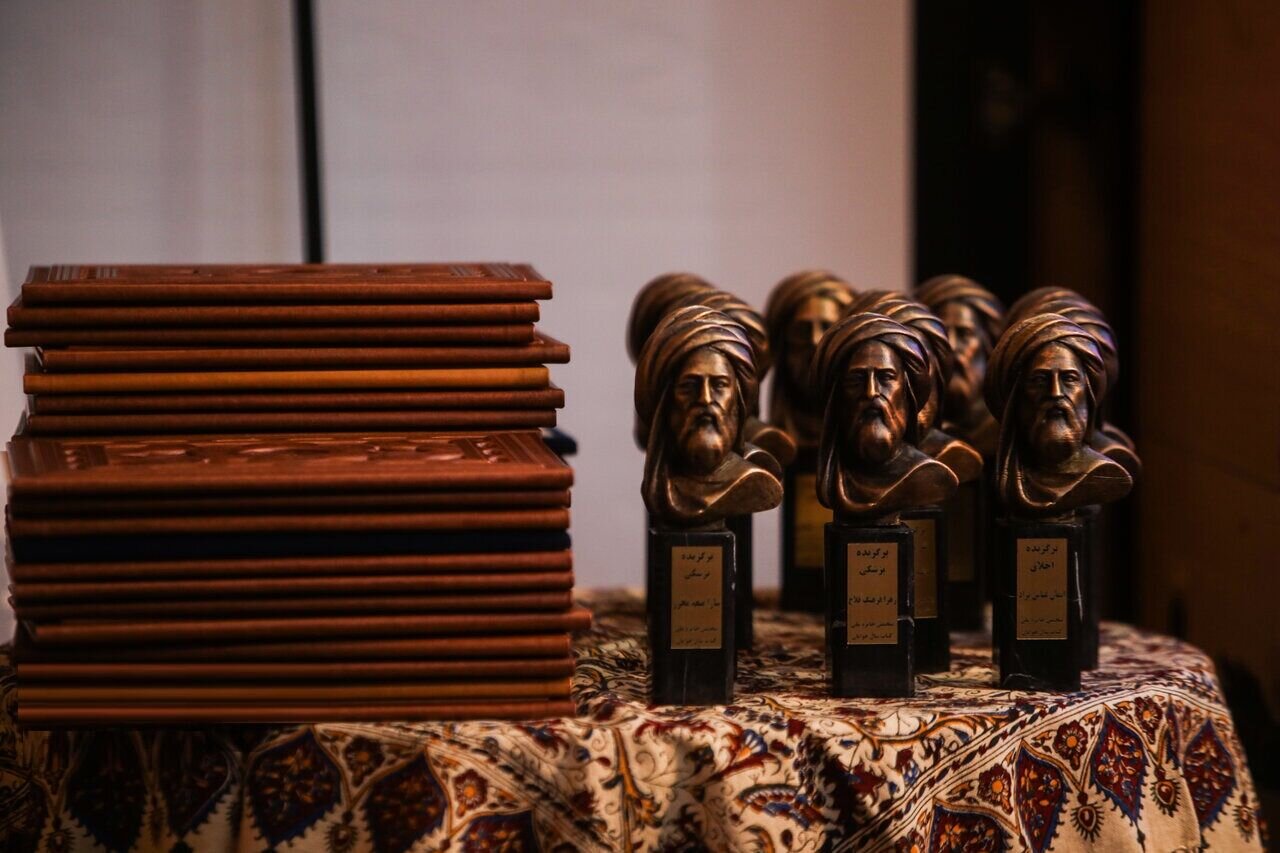
Honorable Mentions for Authors with Special Abilities
- Majid Ashouri for the book “I Am Not I”
- Ali Abbasi for the book “A Narrative of Woman, Disability, and Independence”
- Keikhosrow Rangraz and Vahideh Nazari for the book “A Look at the Specialized Sign Language of the Seven Arts”
- Amir Ahmadi for the book “Employment Strategies for the Blind”
- Saeed Zarouri for the book “Necessary Life”
- Ramin Nikpour for translating the book “Guerrilla Marketing for Consultants”
- Abolfazl Mohammadzadeh for the book “Heart’s Emanation”
- Halimeh Jafarpour for the book “Rain Girl”
Selected Publishers
- Avaye Kalar Publications
- Tavanmandan Publications
- Baril Nasle Mana Publications
- Baril Public Libraries Institution Publications
Selected Journalists
- Majid Saraei
- Ashkan Azar Masouleh
- Azam Chalavi
Selected Books by Non-Disabled Authors
- Mohammad Nouri and Mohammad Tabarteh Farahani for the book “Guide to Deafness Studies”
- Mohammad Nouri for the book “Encyclopedia of Blindness and the Blind”
- Mohammad Nouri for the book “Guide to Deafness Periodicals”
- Sara Siavashi for the book “Deaf: An Introduction to Iranian Sign Language Linguistics”
- Porteghal Publications for the book “The Dream of Running”
- Nveshteh Publications for the book “Wait for the Sky: My Lived Experiences and My Different Son”
- Michka Publications for the book “Where Did the Sound of the Reed Come From”
- Danjah Publications for the book “Psychology and Education of Exceptional Children”
- Danjah Publications for the book “Motor Skills of Children with Down Syndrome”
- Roshd Publications for the book “Rehabilitation of Special Groups with an Emphasis on Social Work Services”
- Roshd Publications for the book “Exceptional Children: The Context of Special Education”
- Ofoq Publications for the book “Goodnight Commander”
- Ofoq Publications for the book “The Curious Incident of the Dog in the Night-Time”
- Ofoq Publications for the book “The Most Unusual Inventions in the World”
Honorable Mention Books by Non-Disabled Authors
- Mohammadmahdi Rasouli for the book “I Die for You”
- Nafiseh Nabizadeh for the book “Saleh Jan”
- Azam Naghavi and Samira Badakhshian for the book “A Narrative of Woman, Disability, and Independence”
- Abdulhamid Ebrahimi for translating the book “Guerrilla Marketing for Consultants”
- Atefeh Dehghan and Hesameddin Qamar for the book “A Look at the Specialized Sign Language of the Seven Arts”
- Mohammad Nouri for the book “Ahmadreza’s Autobiography”
- Porteghal Publications for the book “I Am Helen Keller”
- Ofoq Publications for the book “Wonder”
- Nveshteh Publications for the book “Teaching Sexual Issues to Adolescents with Autism”
- Shahr Danesh Publications for the book “Support for Women with Disabilities Against Domestic Violence and Their Access to Justice”
- University of Rehabilitation Sciences and Social Health Publications for the book “Orientation and Mobility Supplementary Curriculum for Visually Impaired Students”
- University of Rehabilitation Sciences Publications for the book “Early Pre-Linguistic Intervention for Children with Communication Disorders”
- University of Rehabilitation Sciences Publications for the book “Early Intervention for Children with Speech Sound Disorders”
- University of Rehabilitation Sciences Publications for the book “Early Intervention in Hearing Impairment”
Selected Books by Authors with Special Abilities
- Mansour Shadkam for the book “Encyclopedia of Blindness and the Blind”
- Farzaneh Neko for the book “Hiva’s Bravery”
- Sheyda Shahidi for the book “Guide to Deafness Periodicals”
- Sheyda Shahidi for the book “Collection of Articles on the Deaf from International Conferences and Congresses”
- Ardavan Giti for the book “Deaf: An Introduction to Iranian Sign Language Linguistics”
- Musa Esmat for the book “Samarkand”
- Ali Mohammad Etemadi for the book “The Pearl of Yazd: A Passage Through the History and Culture of the Beautiful Village of Tarzajan”