Hadi Marzban wanted to stage ‘Parizad’ for its Iranian identity.
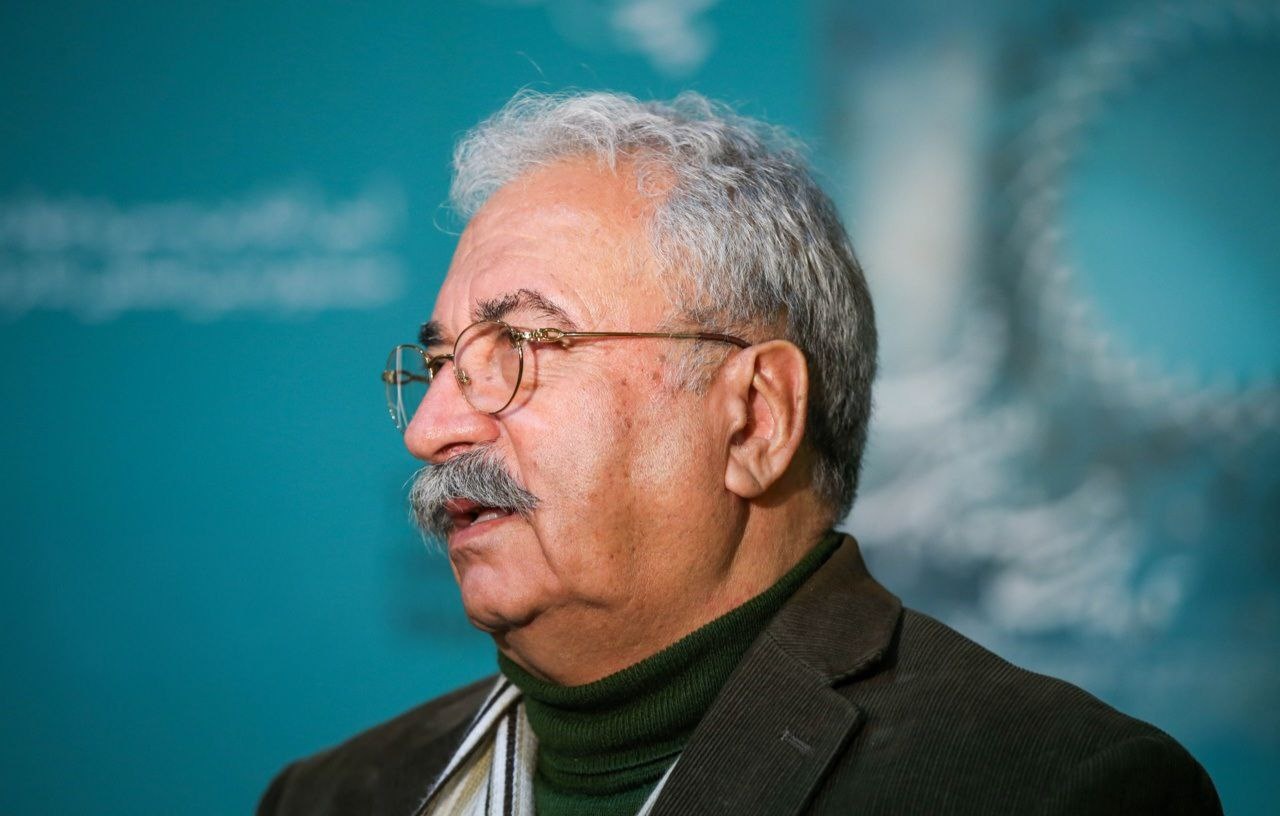
Hadi Marzban always emphasized the importance of Iranian theater and its cultural identity, believing that theater should be rooted in Iranian culture, history, and language. His perspective on Iranian identity in theater inspired many playwrights and led to eager collaboration with authors whose works reflected Iranian identity. “Parizad,” written by Sara Alahian, is one such play that chooses Iranian history as a backdrop for its narrative. It is an adaptation that is completely Iranian, and as the author herself states, it bears the signature of an Iranian adapter. “Parizad” was the last play Hadi Marzban intended to stage in mid-December; regrettably, this did not come to pass, and due to his passing, the play did not get the opportunity for performance. We interviewed the playwright of this work, which you can read below.
Could you tell us a bit about the play “Parizad”? Where did the initial idea come from?
The play “Parizad” is an adaptation of Guy de Maupassant’s short story “The Dumpling.” I had read this story many years ago, and in 2016 (Iranian year 1395), I began adapting this text. This text has many moral layers and a strange subtext, and I didn’t want to produce a foreign version of it; I wanted to work on its translation/adaptation. I started writing various versions until I reached the current one. I chose the year 1941 (Iranian year 1320) for this play, a year when, amidst famine and war, a group of individuals, each representing a segment of society, want to flee Iran to go to the Caucasus. These individuals include a Haji merchant with his two wives, a Qajar prince with his wife and mentally impaired son, an intellectual with his wife, and Parizad (a courtesan), along with a man named Asghar, who are traveling from Tabriz to the Caucasus in a car. It’s winter in the play, and these individuals get stuck in heavy snow and are forced to stay in an inn. Along this journey, everyone treats Parizad rudely, and events unfold at the inn that change everyone’s behavior towards her.
Of course, there is a difference between the play and the performance that the late Hadi Marzban was going to direct; he changed the ending of the play for the performance. I modified the ending of the play for the performance according to his view and perspective.
Why did you choose the historical period of 1941 (Iranian year 1320) for the play?
One of the reasons I chose the year 1941 was that this period is a significant point and a kind of rupture in our history; an internal collapse had occurred. Reza Shah was on the verge of leaving, and Mohammad Reza Shah was about to take his place. Famine and insecurity existed in the country, and the people’s inability to decide their own fate was practically evident. Although until then Reza Shah was called “Reza Khan” and everyone spoke of a regular army, the army collapsed in one day, and Mohammad Reza came to power, who was not even allowed to attend the meeting of the leaders of the allied countries held at that time. In fact, this inability to determine human destiny and powerlessness in fateful moments made the atmosphere of 1941 a suitable ground for me to pose a question.
There is a parallel between this historical period and the subtext of “Parizad”: the question of what remains of a person when their agency is taken away. You see, “Parizad” has a philosophical foundation, and I chose this historical point precisely for this reason; because during that period, heavy pressures were exerted on society. In “Parizad” too, people in normal circumstances say: “We support you,” but when they are under pressure, that morality collapses, and those values disappear. In other words, the very concepts known in our Iranian culture as preserving honor, zealousness, and the like, are challenged under pressure.
I wanted to show in the subtext of the work how these values transform and sometimes even act contrary to themselves when people are in a state of crisis. In my opinion, war always blurs the boundaries of morality. I intended to show what behaviors people resort to when a society suffers from insecurity; behaviors that can even become aggressive and oppressive, and judgments become hasty and immature.
This historical period was very compatible with the subtext of my work, and that’s why I chose it. For writing this work, I conducted extensive research; I seriously studied the history of that period and also did detailed research to find the appropriate language and expression for each individual character.
In the play, each character symbolizes a segment of society, and each has its own particular viewpoint. For example, I have placed a type of ideology based on Iranian delusion and imperial delusion in one of the characters. The “Qajar Prince” speaks in a particular manner, and the intellectual character also has a distinctly different tone and logic of speech. Furthermore, their dialogues are completely distinct from each other; that is, the characters do not speak alike, but rather according to their social level and position. The difference in tone and dialect of each of these individuals, in addition to creating distinction, also expresses their ideology and perspective; without being jarring, it clearly reveals how each thinks. The play is a story with many characters; it has 14 characters, and these 14 main characters are almost simultaneously present on stage in all scenes. One of my challenges was that none of the characters would be suddenly removed due to another character becoming more prominent. To reach this version, the play was rewritten and revised many times to maintain the balance among the characters.





