Two-volume collection ‘Investigation of Geopolitical Factors of Central Asia’ published in Bojnord
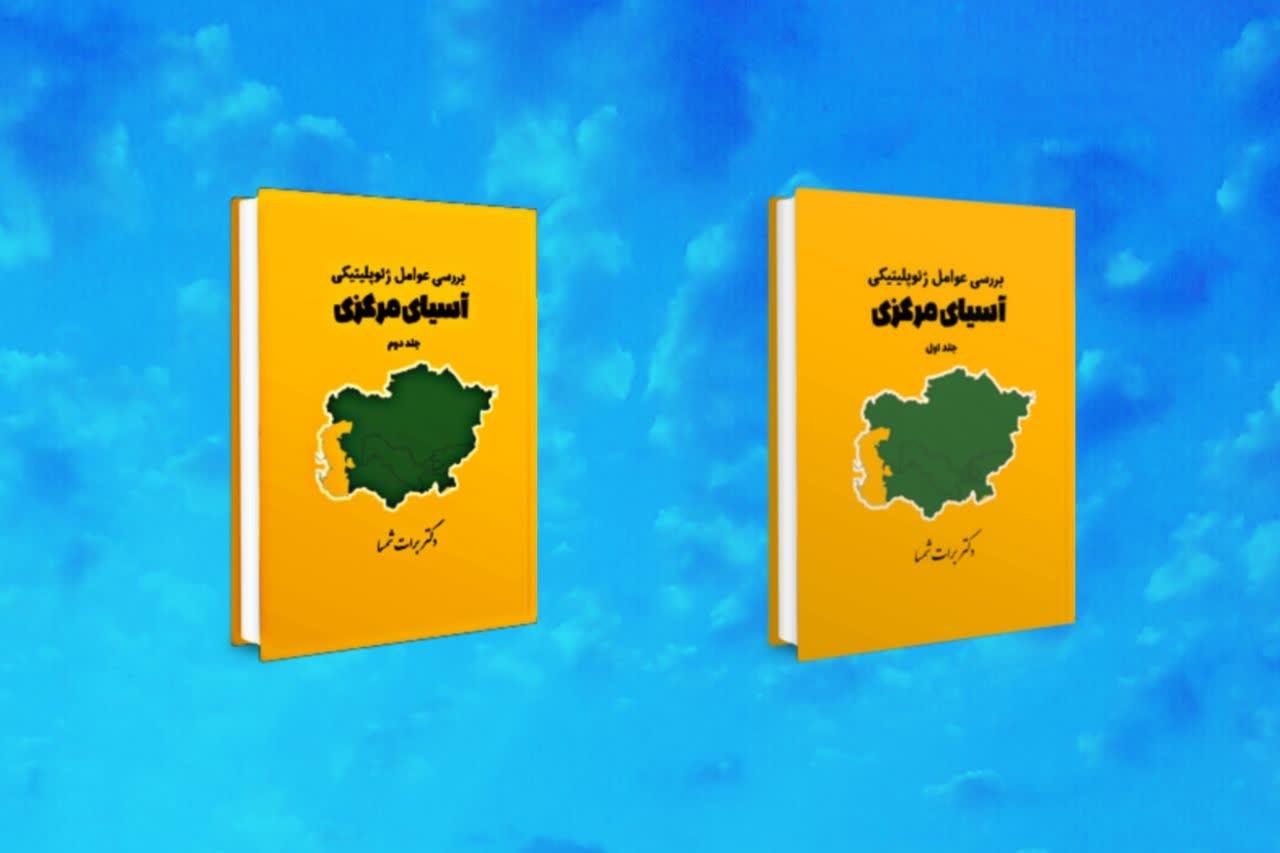
According to the correspondent of the Iran Book News Agency (IBNA) in Bojnord, the two-volume collection ‘Investigation of Geopolitical Factors of Central Asia,’ authored by Barat Shamsa and published by Zaban-e Elm Publishers in Bojnord, was officially released to researchers, academics, and those interested in international relations and geopolitics. This work, which is part of comprehensive reference research on Iran’s foreign policy in Central Asia, has analyzed various dimensions of Iran’s position in this strategic region with an analytical and systematic approach.
In this collection, the author, while reviewing Iran’s historical presence and influence in Central Asia, elaborates on the geopolitical factors affecting the country’s foreign policy. The author has endeavored to provide a clear picture of Iran’s capacities, shortcomings, and opportunities in this field through data, historical experiences, and contemporary developments.
The book examines the influence of regional and extra-regional powers in shaping the political and security order of Central Asia.
Analyzing the role of influential countries such as Russia, China, Turkey, and Western actors, the author demonstrates how the rivalries and overlapping interests of these powers have directly impacted Iran’s foreign policy in this domain, thereby emphasizing the increased necessity of considering geopolitical factors.
In the final section of this two-volume collection, Shamsa, based on his comprehensive analysis, presents a proposed strategy for Iran’s foreign policy in Central Asia. These proposals are formulated based on a combination of Iran’s historical and cultural capacities, mutual economic needs, security ties, and the new requirements of international competitions.
The author emphasizes in this collection that utilizing these strategies can pave a new path for enhancing Iran’s interactions with regional governments and ensuring a more effective presence in geopolitical equations.
This two-volume collection, in addition to its practical analyses, has enriched the existing academic literature on the Central Asian region and Iran’s foreign relations by compiling and categorizing analytical, historical, and field resources. One of the prominent features of this research is the presentation of new and less-considered solutions for optimizing Iran’s relations with the countries in this region; solutions that, if given attention, can lead to more effective organization of Iran’s diplomatic, economic, and cultural interactions.
This work has been published in two volumes in a Quarto format, with the first volume having 505 pages and the second 261 pages.
The publication of this collection by Zaban-e Elm Publishers is considered an important step in strengthening scientific resources in the field of geopolitics at the provincial and national levels, and it is expected to be welcomed by the academic community and researchers in foreign policy.





