In this book, we can see our own lives, fears, and hopes.
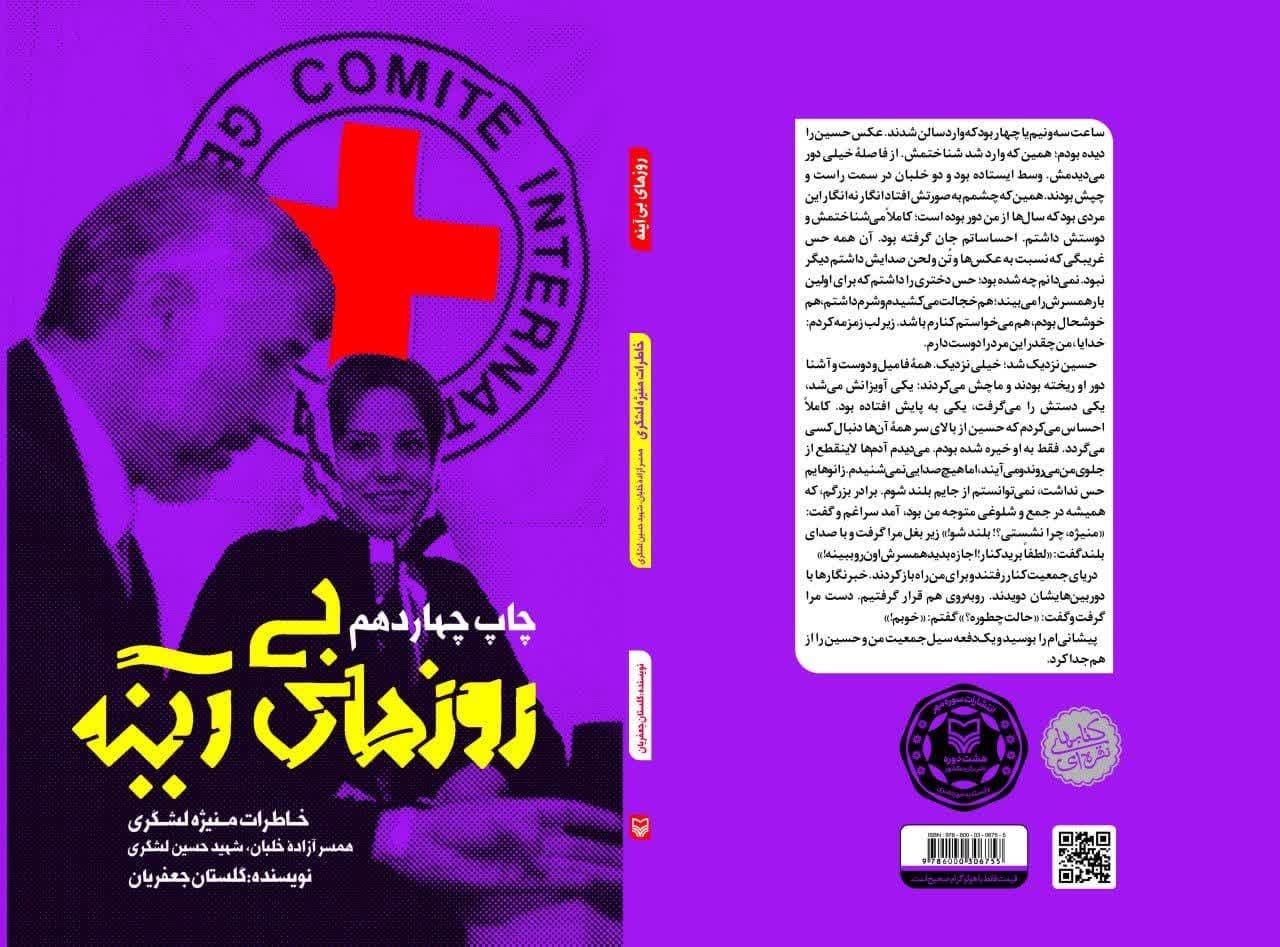
Homeland and Resistance Service, Iran Book News Agency (IBNA) – Mohammad Hossein Abbasi: In late 2024 (1403 Solar Hijri year), the Bosnian translation of Golestan Jafarian’s book ‘Days Without Mirrors’ was published in Bosnia and Herzegovina by the local publisher ‘Dobra Knjiga’ – meaning ‘Good Book’ – with Nermin Hojić as the translator. The publication of this work can be considered one of the successful experiences in the field of resistance literature; an experience whose first and crucial step was the correct selection of the book for translation. I will write about the translation process, the selection of the work, and related cultural collaborations in a separate note; but here, the focus is solely on the reactions that emerged after the book’s publication.
Eight Bosnian readers – ranging from students and researchers to enthusiasts of contemporary literature – recorded their opinions in writing after reading the book. These feedbacks, without any mediation or additional explanation, represent the readers’ direct engagement with the text, and there is also the possibility of publishing their Bosnian versions. In this report, only the views of four of them are presented, and in another report, the opinions of the other four readers will be reflected.
A careful review of these writings clarifies three essential points: first, all readers have studied the book carefully and completely, which indicates the attractiveness of the narrative and the author’s style. Second, the impact of the work has prompted readers to go beyond mere reading, to pick up a pen and write down their feelings and perceptions. Third, there is a diversity of messages and perspectives presented; each reader found a different lesson from the narrative and reacted to it with their unique viewpoint.
What follows, without any interpretation, is a report on the first group of these feedbacks; an honest record of Bosnian readers’ encounter with ‘Days Without Mirrors’.
Sadžida Džuvić
Master of History and Head of the Library of the Institute for Research of Crimes Against Humanity and International Law, University of Sarajevo
She, who spoke alongside the publisher’s director at the book launch ceremony at the Sarajevo International Book Fair in 2025 (April 10, 2025), introduced the book in her initial assessment as follows: The book ‘Days Without Mirrors’ is a documentary story about an ideal family life suddenly split into two halves under the influence of war: a lost life, of which nothing was heard for fourteen years, and a remaining life with the family, i.e., the wife and son. The confessions of Manijeh Lashgari, the wife of the freed captive Hossein Lashgari, are vividly portrayed by Golestan Jafarian and translated from Persian to Bosnian by Nermin Hojić, a translator with precise linguistic sensibility. This is a story about a hidden and invisible battle outside the battlefield, a battle that takes place within a person, often in solitude, and the effort to find the strength to live, not for oneself but for loved ones.
Elsewhere in her text, she introduces Hossein as follows: Hossein’s fate could have been different if he had only agreed to one interview. It would have been enough to say that he had flown over Iraqi soil, and his prison sufferings would have ended. But he chose truth and honor, and thus accepted to remain in captivity, facing various tortures whose consequences followed him until the end of his life.
His strength, despite the worst abuses, remained unconquerable, and in captivity, steadfast and strong, he was able to memorize the Quran. His power, endurance, steadfastness, and loyalty to his homeland and moral principles are astonishing.
Sadžida says about the book’s writing style and the author’s craft and art: The book, with its very simple language and numerous indirectly raised topics, is read quickly. The author, with simple and evocative language, introduces the life of an Iranian family and their customs. On the pages of the book, we will feel as if we are sitting beside them, leaning on embroidered cushions, clearly seeing the gramophone and records in a box that only Manijeh’s father and her elder, authoritative brother can touch, and watermelons and melons cooling in the courtyard pool. The author effectively conveys Manijeh’s feelings so that the reader feels concern, experiences the days, and awaits news of Hossein.
Ajša Hafizović
Journalist, writer, and translator
Hafizović was an Arabic translator during the Bosnian War and was present on the front lines. She is the author of a book called ‘On the Side of Humanity’ (Na strani čovječnosti), which she wrote by continuously following legal processes related to the Srebrenica genocide and interviewing individuals involved in that field. Regarding ‘Days Without Mirrors,’ she wrote: ‘I read this book in one sitting. It truly doesn’t allow you to put it down. It’s a very noble and inspiring story. I can say that you “hear” this book more than you “read” it, because when you hold it, you have a feeling similar to watching a documentary; it’s as if you see Manijeh telling her life story with Mr. Hossein. She does this with short, well-measured sentences, but behind these sentences lies a storm of unspoken emotions, as her nature, upbringing, and pride dictate. This book is a narrative of sincere love, fundamentally woven with threads of love for family and homeland, and imbued with deep faith in the heart.’
Hafizović recounted her view on Manijeh’s love for Hossein: ‘This book is a narrative of sincere love, fundamentally woven with threads of love for family and homeland, and imbued with deep faith in the heart. The two are bound together by a pure love; a love they have nurtured with a noble and selfless relationship. Faith and love for their homeland are deeply rooted in their being and have given their lives in this world a special meaning. Their lives have a meaning bestowed upon them by God.’
Medina Odobašić
Third-year History student at the Faculty of Philosophy, University of Sarajevo
At the beginning of her writing, she describes the story of how she started and finished reading the book: ‘When I finally started reading it – around midnight – I thought I would just read one chapter and then go to sleep and leave the rest for tomorrow. However, what happened was that I continued reading non-stop that very night and did not put the book down until I finished it – around 2:30 AM. I didn’t want to interrupt my reading.’
In the middle of her note, this history student writes about the book’s impact on her thoughts and the lessons she learned from it: ‘The book, in addition to narrating a woman’s love for her husband, gives the reader many lessons about the customs of the Iranian people and the history of this country. The story itself, Manijeh Lashgari’s memoirs, is very emotional. The hardships she and her husband endured and the love that remained between them truly make for a cinematic story. Her love, courage, sacrifice, and patience during the eighteen-year wait for her husband’s return – while not knowing if he was alive or not – are truly astonishing. Below, I have selected a passage that, in my opinion, best describes their love (a picture of the page is provided below *).’
He had repeated this several times: ‘Manijeh, I want you to be my partner in the next world too; will God grant me this favor?’ I would say: ‘Oh no, Hossein! I can’t bear for there to be war there too, and for you, being brave, to leave again and for me to be alone!’ He would laugh and say: ‘No, there’s no war in the next world. We’ll live comfortably together.’
Amila Rebihić
Student at the Faculty of Philosophy, University of Sarajevo
The points this student wrote in her evaluation of the book ‘Days Without Mirrors’ are very noteworthy. She initially wrote very honestly: ‘At first, I had no desire to write, as I am more interested in reading than writing. But after two hours of continuous and uninterrupted reading, this book inspired and motivated me so much that I decided to write a few lines.’
She then begins her assessment with these sentences: ‘I am writing this review exactly at the moment I have finished reading the book, and the feeling within me is difficult to express in words. “Days Without Mirrors” is not just a book, but a testament to love, suffering, loyalty, and the incredible power of the human heart. From the very first pages, I felt I was entering a story that would transform me. As an optimist who imagined a happy ending, I never thought this story would shake me so deeply and break me from within.’
Amila then writes about her beautiful feelings, reflecting on the first part of the book – Manijeh’s youth and marriage to Hossein – and then speaks with another emotion about the part that had the most impact on her: ‘But all that beauty ended with a historical cut. Manijeh remained, waiting; and Hossein left, not by his own will, but forced by circumstances that tore thousands of families apart. And this is where the part that affected me the most begins: eighteen years of waiting. Eighteen years in which she did not lose her faith, eighteen years in which she never gave up hope of seeing him again; a hope to touch his hands and hear his voice again. In a world where love often lasts only as long as it is easy and painless, this story seems almost unreal. All these years of loyalty, patience, and hope in the most difficult possible conditions is not just love; it is sacrifice and a testament that true love knows no boundaries or obstacles. While reading, scenes appeared before my eyes: a girl who, from the heart of a young love, transformed into a strong woman; and a man who, despite suffering and separation, never stopped loving. Their steadfast commitment is a testament that when love is real, it can endure the toughest trials of life.’
The four important passages in this note are lessons she learned from reading this book. The expression of these teachings, from the perspective of a European student, is valuable in itself and shows how much a good narrative can make a reader reflect from various dimensions:
- Point One: ‘While turning the pages of this book, I felt as if I was standing before a vast mirror in which I saw my own weaknesses and ingratitude. I realized how often we complain about small life problems, while there are those who have endured years of pain, waiting, and longing, and despite all this, have emerged stronger, their bond with their love deeper than before.’
- Point Two: ‘What particularly moved me was that I was reading this novel while on a video call with my fiancé, who is also a soldier. It was at that moment that I realized how little we appreciate the moments God has given us; how little we are grateful that we can talk, laugh, and share life with those we love.’
- Point Three: ‘True love is not only made of beautiful moments and the realization of shared dreams, but it is formed in the heart of suffering, waiting, and pain, and only then does it become unconquerable. I learned that love is the force that gives meaning to a person to continue living even when all hope is gone.’
- Point Four: ‘The book “Days Without Mirrors” is not just a love story, but a mirror in which all of us can see our own lives, fears, and hopes. For me, this was a book that made me reflect on myself, pause, and understand that what I have today is not little; rather, it is a great blessing from God.’
The concluding sentences of this student’s note, in her own words, are moving: ‘In conclusion, I can say that this book deeply moved me. It was the first book I read in one breath, and it left an impression that will remain in my heart for a long time. It taught me gratitude, patience, and the power of love. If one day someone asks me what true, real, and lasting love looks like? I will say: exactly as described in “Days Without Mirrors.”‘





