This book reveals why the tomb of Lady Fatimah (AS) remains hidden.
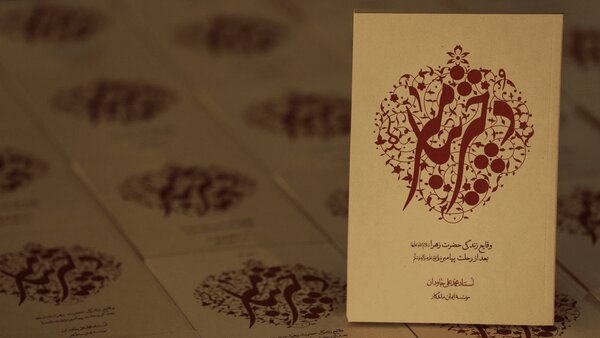
According to Mobalegh Think and Culture website, with the demise of the Holy Prophet (PBUH), Medina was no longer the peaceful city it once was; tears had not yet dried on faces when a shadow of deviation fell upon the path of the Ummah. In those days of sorrow, the Prophet’s daughter (AS) became a symbol of steadfastness and raised the voice of truth amidst the clamor of politics.
The book ‘Daughter of the Prophet (PBUH)’ by Mohammad Ali Javdan is a documented and thought-provoking narrative of these painful days; days when the history of Islam took on a different character.
This work, published by order of the Social and Cultural Deputy of Tehran Municipality and with the cooperation of Iman Mandegar Institute, is based on the lessons of Allama Seyyed Morteza Askari. It analytically and factually re-examines events from the Saqifah incident to the martyrdom and secret burial of Lady Zahra (AS). Relying on credible sources such as Tarikh al-Tabari, Sahih al-Bukhari, Kafi al-Kulayni, and Irshad al-Sheikh al-Mufid, the author extracts history from official documents to reveal the hidden face of that era.
The book is compiled in two sections; the first section, with a polemical and analytical approach, examines the Saqifah event, the non-allegiance of Amir al-Mu’minin (AS), and the usurpation of Fadak. In this narrative, Fatimah (AS) is not just the Prophet’s daughter, but the first defender of Wilayah (guardianship); a lady who stood against the return of Arabian ignorance and challenged the legitimacy of the government with her words. The second section, however, has a different tone; it describes the sufferings, sermons, and final moments of the life of Siddiqah Tahirah (AS); from her nightly cries to her will for a secret burial, which itself is a document of protest and oppression.
‘If we look at the history of that era from the perspective of official historians, it is reported as a relatively peaceful period, and historians and narrators have been able to conceal the serious conflicts and deep crises of that era, and this is the other side of history! But by searching, we will find signs and clues in various documents and records which, by arranging and combining them, we can learn more about the depth of this crisis and the intensity of the conflict which, on one side, was the ruling government with all its power, and on the other side, the family of prophethood.’
The book ‘Daughter of the Prophet (PBUH)’, in 144 pages and quarto format, has been published by Vajeh Pardaz Andisheh Publications. This work is an invitation to read history from the angle of truth; where a lady stood so that the light of prophethood would not be extinguished.