Azad Mard

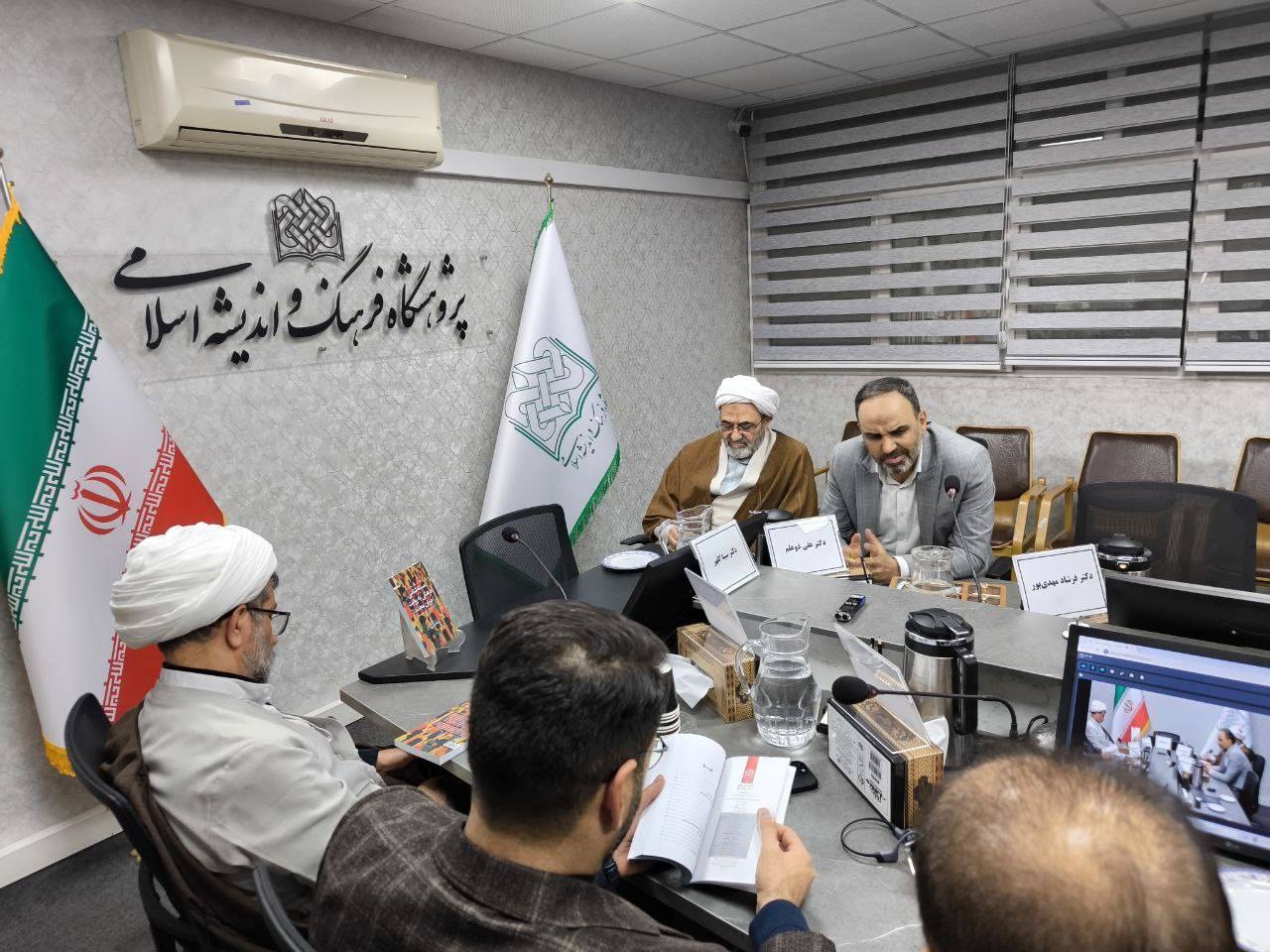
According to Iran Book News Agency (IBNA), quoting the Imam Musa Sadr Cultural and Research Institute; the ‘Azad Mard’ session, commemorating the 31st anniversary of the passing of Ayatollah Seyyed Reza Sadr, was held with the presence of his family members and enthusiasts at the Imam Musa Sadr Cultural and Research Institute.
At the beginning of the session, Hamid Ghazvini, an oral history researcher who hosted the program, explained: “In recent years, the name of Agha Reza Sadr was mentioned in many of the institute’s programs and projects, especially oral history, and we always wanted to do something in his name and for him.”
He continued: “One of his personality traits was his wide circle of connections, which included everyone from intellectuals to the general public.”
Following the initial explanations, a short documentary titled ‘Azad Mard’, directed by Amin Hossein Alipour, about Seyyed Reza Sadr was screened.
Unveiling of the Memorial Book
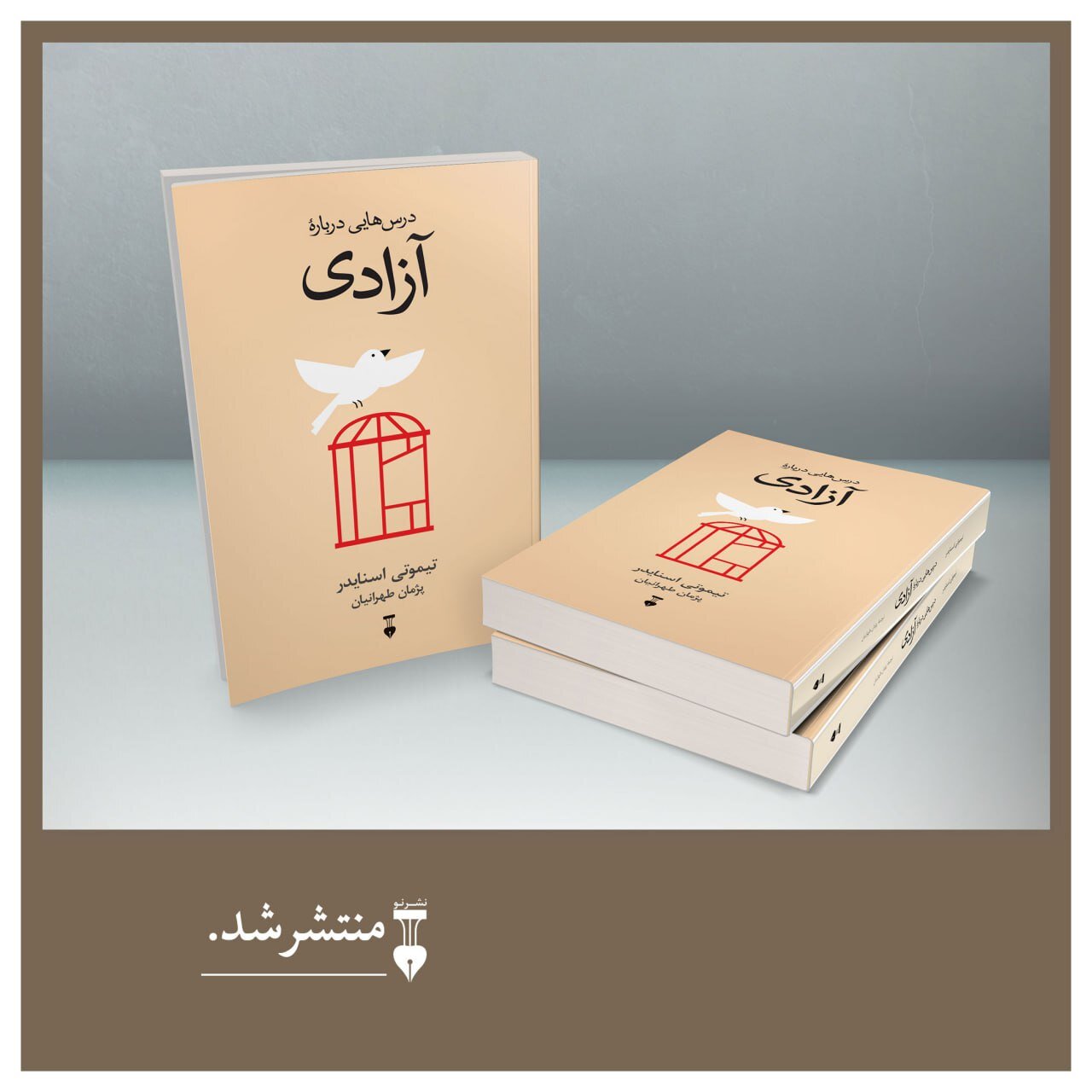
Subsequently, the memorial book of Ayatollah Reza Sadr, titled ‘Azad Mard’, was unveiled, and Dr. Kazem Sadr, Professor of Economics and his eldest son, provided explanations about it. He said: “Part of this book consists of scholarly articles written by those who attended his classes, and some are memoirs of his character and ethics.”
After the introduction of the book ‘Azad Mard’, his dedicated website was also unveiled.
This book includes an examination of his scientific and jurisprudential status, an introduction to his works, interviews with some of his students and relatives, and two of his unpublished articles.
Among the individuals who contributed to this memorial book are Grand Ayatollah Seyyed Mousa Shobairi Zanjani, Ayatollah Seyyed Mohammad Javad Alavi Boroujerdi, Ayatollah Seyyed Bagher Khosrowshahi, Ayatollah Mostafa Mohaghegh Damad, Sheikh Hossein Ansariyan, and Seyyed Mohammad Sadr.
This work was compiled by Zahra Adib.
He Considered Islam a Religion of Moderation
Then, Mohammad Sadr, a member of the Expediency Discernment Council and son of Seyyed Reza Sadr, spoke about his father. He began by saying: “One of humanity’s greatest weaknesses is attachment to material possessions, status, and position. My father, whom we addressed as ‘Aghajan,’ was indifferent to these two matters. My mother used to say about him that for your father, banknotes were no different from white paper.”
Mohammad Sadr continued: “Many asked him to write a treatise and pursue religious authority, but my father took no action in this regard.”
He added: “Another of his characteristics, which aligns with the title ‘Azad Mard,’ is that he was very averse to pretense and flattery, and I never witnessed such behavior from him during his life.”
Mohammad Sadr said: “A point that always concerned me was that he specialized in various fields, to the extent that some historians attended his sessions. At the same time, he was truly politically astute and accurately understood political issues, despite having no related university education.”
He clarified: “He raised issues that sometimes, due to our youth at the time, we didn’t understand or accept, but with the passage of time, we realized their correctness. During a period when revolutionary fervor was very prevalent, he repeatedly said: ‘Islam is a religion of moderation; extremism has no place in Islam.'”
He Believed the Path to Change was Cultural Work
Mohammad Sadr continued: “The last sentence I heard from him, which is very valuable, was: ‘We are all against dictators, but we are not against dictatorship.’ He believed in cultural work and said that until Iran’s culture changes, this weakness will not be resolved. At the same time, he affirmed that cultural work is time-consuming and yields results in the long run.”
He Was a History Expert
Gholamhossein Emadzadeh, Professor of Philosophy at Shahid Beheshti University, was another guest at the ceremony. Having attended Seyyed Reza Sadr’s sessions in his youth, he spoke of his scientific mastery and ethics.
Emadzadeh said: “Agha Reza Sadr’s personality was multifaceted, and he specialized in many Islamic sciences. In some historical matters, he had specific views and analyses that could be very helpful in understanding historical issues. Similarly, in philosophical and doctrinal subjects, he had innovative ideas.”
He continued: “More important than his views was the characteristic that he acted upon what he believed, and there was absolutely no duality between his views and his actions. This is a behavior we see in some clerics, but Agha Reza was committed to what he had achieved.”
Emadzadeh added: “Once he came to Mashhad, and I visited him. He said, ‘This Mashhad of mine is a different Mashhad.’ I was about to travel when someone called me and said they wanted to bring me some religious dues. When they were supposed to come, it was after I had started my trip, so I said it was wrong to delay my trip for collecting dues.”
He then referred to one of Seyyed Reza Sadr’s views: “He raised an issue in principles and philosophy regarding the difference between conventionalities and realities. He considered the scope of conventionalities to be broad and said that in principled matters, conventionalities are very applicable. He regarded the ruler’s decree as a type of conventionality and discussed how to distinguish conventionalities from realities, which is very useful in the science of principles.”
He Became a Master Without a Teacher
After Emadzadeh’s speech, some family members shared memories of Seyyed Reza Sadr.
Houra Sadr, the director of the institute and niece of Seyyed Reza Sadr, read a letter from him, written one year after the abduction of Imam Musa Sadr, in response to her letter. This letter was written in response to a letter Houra Sadr had written to her uncle, and its date is one year after the abduction of Imam Musa Sadr.
The text of the letter is as follows:
In His Name,
My dearest darling! … Your letter arrived, I kissed and smelled it; it carried your scent and your character.
It is hoped that you, Mom, Hamid, and Maliheh are well and all live in good health, remaining strong and steadfast against the adversities of time, never frowning. The Arab poet says:
يَتَجَلَّدِي لِلْمَشَاتِمِينَ أَحِينَ أُفَضِّعُ
إِتِّي لِبَيْتِ الدَّهْرِ لَا أَتَضَعْضَعُFrom the information we have received, Baba (Imam Musa Sadr) has also made the same decision in Qaddafi’s prison to endure hardships and difficulties, not frowning and remaining invincible. We have been informed by some hypnotists that Baba is fortunately well, and now Sheikh Mohammad Yaqoub and Abbas Badr Al-Din have been brought to him. After a long separation, the three of them are now gathered together, and this incident itself will be a harbinger of health and imminent freedom.
I do not know what the person who went from Omel with the parliament to Paris did, and if any result was obtained. Inshallah, they have brought good tidings.
Convey my greetings to Mom and tell her on my behalf that she must be strong and powerful in this painful incident. These are classes in the school of society for everyone, and everyone’s class and lessons are of a certain kind. One must show resistance to successfully pass this test and be proud in this society. Tell her not to allow the slightest tremor to affect herself, and to be firm like an iron mountain against the hardships and difficulties of life, for “Indeed, your Lord is in observation.” The good thing about this matter is that God sees and knows and will take revenge.
I intended to travel to that land for Nowruz holidays but am banned from leaving the country. Because upon returning from my last trip, I had 400 dollars in trust, and the airport officials wanted to take it from me, but I did not give it, whatever God wills.
Convey my greetings to Rabbab’s house and tell her to write to us about your conditions. Tell her to call; because we cannot call.
I haven’t heard from Sadri Joon for two or three days.
Dr. Chamran came to Tehran from Ahvaz for two days and returned soon.
Farideh Hojjati Kermani, his granddaughter, also spoke about family gatherings: “We used to gather at Aghajan’s house on Thursday nights, and every week after dinner, he would talk to us. The interesting point was that despite the numerous sessions, the topic and details of his talks were never repetitive, and each time he expressed new ideas. I remember my father, Ali Hojjati Kermani, saying that we do not have anyone as comprehensive as your grandfather. This is despite the fact that he did not have many teachers, and these qualities and mastery originated from within himself.”
The Azad Mard session concluded with the remembrance of Seyyed Reza Sadr and his brother, Imam Musa Sadr, whose fate and freedom were always a concern for the elder brother, who complained about the negligence and indifference in this matter.
Biography
Seyyed Reza Sadr was born in Mashhad in 1921 (1300 Solar Hijri). He spent his childhood and adolescence under the tutelage of his father and learned preliminaries and literature in Mashhad. He then moved with his father to Qom and studied advanced levels under great seminary teachers such as Seyyed Shahabuddin Mar’ashi Najafi and Seyyed Mohammad Mohaghegh Damad. After that, he studied advanced jurisprudence (Kharej Fiqh) and principles (Usul) under Seyyed Sadr al-Din Sadr (his father), Seyyed Mohammad Hojjat Koohkamari, and Seyyed Hossein Boroujerdi, and learned philosophy and mysticism from Imam Khomeini.
With the passing of Seyyed Hossein Tabatabaei Boroujerdi, he began teaching, instructing in jurisprudence, principles, mysticism, and philosophy, and also led prayers. At the request of Seyyed Mohammad Kazem Shariatmadari, he came to Tehran in 1967 (1346 Solar Hijri) for preaching and guidance and led congregational prayers, promoted religious decrees, interpreted the Quran, and taught ethics at Imam Hussein Mosque in the current Imam Hussein Square.
In 1977 (1356 Solar Hijri), he returned to the Qom Seminary and engaged in religious activities. Finally, he passed away on November 2, 1994 (11 Aban 1373 Solar Hijri) in Qom and was buried in tomb number 33 in the courtyard of Hazrat Masoumeh Shrine.