Either Break This Tight Circle of Gatherings or Forget This Bogus Title / A Letter to the Secretary of the Poetry Festival
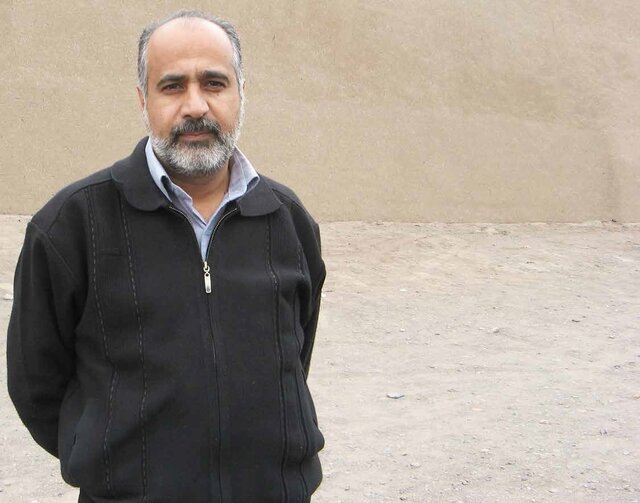
According to Khabaronline News Agency, Abdoljavad Mousavi, a poet and journalist, wrote the following in a note titled “A Letter to the Secretary of the Poetry Festival,” addressed to Seyyed Ali Mirafzali, the scientific secretary of the Fajr Poetry Festival, in Hammihan newspaper:
“Greetings and salutations to the dear Mr. Mirafzali,
Perhaps if someone else had been chosen as the secretary of the Fajr Poetry Festival, I would not have written these few lines. Just as I haven’t written them in these years. There was no need. To be honest, there is no need even now, except that I think it is likely that you, unlike other friends who have held such responsibilities over the years, might take my words more seriously.
You surely know well that the cornerstone of the Fajr Poetry Festival was laid incorrectly from the beginning, and for this reason, it could never appear as a proper and reputable festival. This is in stark contrast to the Fajr Film Festival, which, because it had a correct foundation, is still tolerable despite all its ups and downs.
Nevertheless, due to your distance from the center of events, you might not have truly perceived some of the disasters. I, whether by luck or misfortune, have witnessed firsthand how disorganized and unprepared the friends responsible for holding the first Fajr Poetry Festival were. In subsequent years, the situation did not improve. Perhaps this was because poetry had been outside the circle of attention for many years, and they still didn’t really know what to do.
Thus, the first thing on their minds was addressing the poets’ living conditions—a good initiative that could have happened outside the festival. As it turned out, the festival practically became about favoring certain friends. The circle of beneficiaries was so limited that in the very first years, when they wanted to give an award to one of the poets, they didn’t know under what title to do it.
I vividly recall one of the professors, born of a jury member mother, approached me, saying, ‘So-and-so, suggest a title so we can give such-and-such a number of coins to so-and-so.’ These gatherings continued until Rouhani’s government came to power, and there was hope for specific cultural developments. In the very first year, Abdoljabbar Kakaei became the secretary of the Fajr Poetry Festival and sought to dismantle these gatherings.
To be fair, he did not do a small amount of work within his capacity; the diversity and pluralism he introduced in the festival’s jury and scientific committee were commendable. Perhaps inviting Yadollah Royai was a bit ambitious, which, although not made possible by political uproar, became the festival’s Achilles’ heel and an excuse to thoroughly embarrass Abdoljabbar.
Rouhani’s government also compromised as much as it could in the first years, under the pretext of bringing the JCPOA to fruition, and the work again fell into the hands of the same limited group and gathering organizers. Now, all the country’s poetry has fallen into the hands of those same award-recipients. There are seven, eight, or ten people who are ubiquitous, like Zebelkhan (a popular Persian cartoon character known for being everywhere).
In romantic and religious poetry. In classical and modern poetry. In qasida and song. In protest and promotional poetry. In humorous and serious poetry. On billboards, exhibitions, and… Frankly, if you put them all through a meat grinder, you wouldn’t even get a Hossein Monzavi, let alone a Behzad Zarrinpour. Of course, Your Excellency has the chance that in the Ministry of Culture and Islamic Guidance of Pezeshkian’s government, there is someone like Gholamreza Tariqi, who is one of the luminaries of our contemporary poetry; but the work does not proceed with poets and writers. The reins of power are still in the hands of people outside the circle of culture and art. Let me not digress.
The point is that the Fajr Poetry Festival is not so important as to confer dignity and status upon you by offering you the title of secretary. You have done so much substantial work in the field of poetry, research, and criticism that these gentlemen should be honored that you have favored them by accepting such a responsibility. So now that it has come to this, either break this tight circle of beneficiaries’ gatherings and establish a new covenant, or simply forget this bogus title, which will ultimately bring you nothing but weariness.
I know that disrupting the lavish feasts of the special rent-seekers is not an easy task. All those who, over the years, have attained the status of master through these very festivals and have achieved great wealth through poetry, which is economically the poorest of arts, will not sit idly by and will create many difficulties and troubles for you. But they haven’t put a gun to your head, my brother.
Starting today, make it a condition with your friends at the Ministry of Culture and Islamic Guidance that you will not accept any upstream recommendations and will organize this festival with full authority. Certainly, one flower does not make a spring, and organizing one good festival and depriving the perpetual merchants of poetry from a feast will not bring about a special change, but at least your dignity and reputation, as one of the noblest and most respectable figures in contemporary poetry and literature, will be preserved. And that is enough for us.





