‘Grave in the Eye’ Explores Men, Narrates Women’s Multi-Generational Suffering

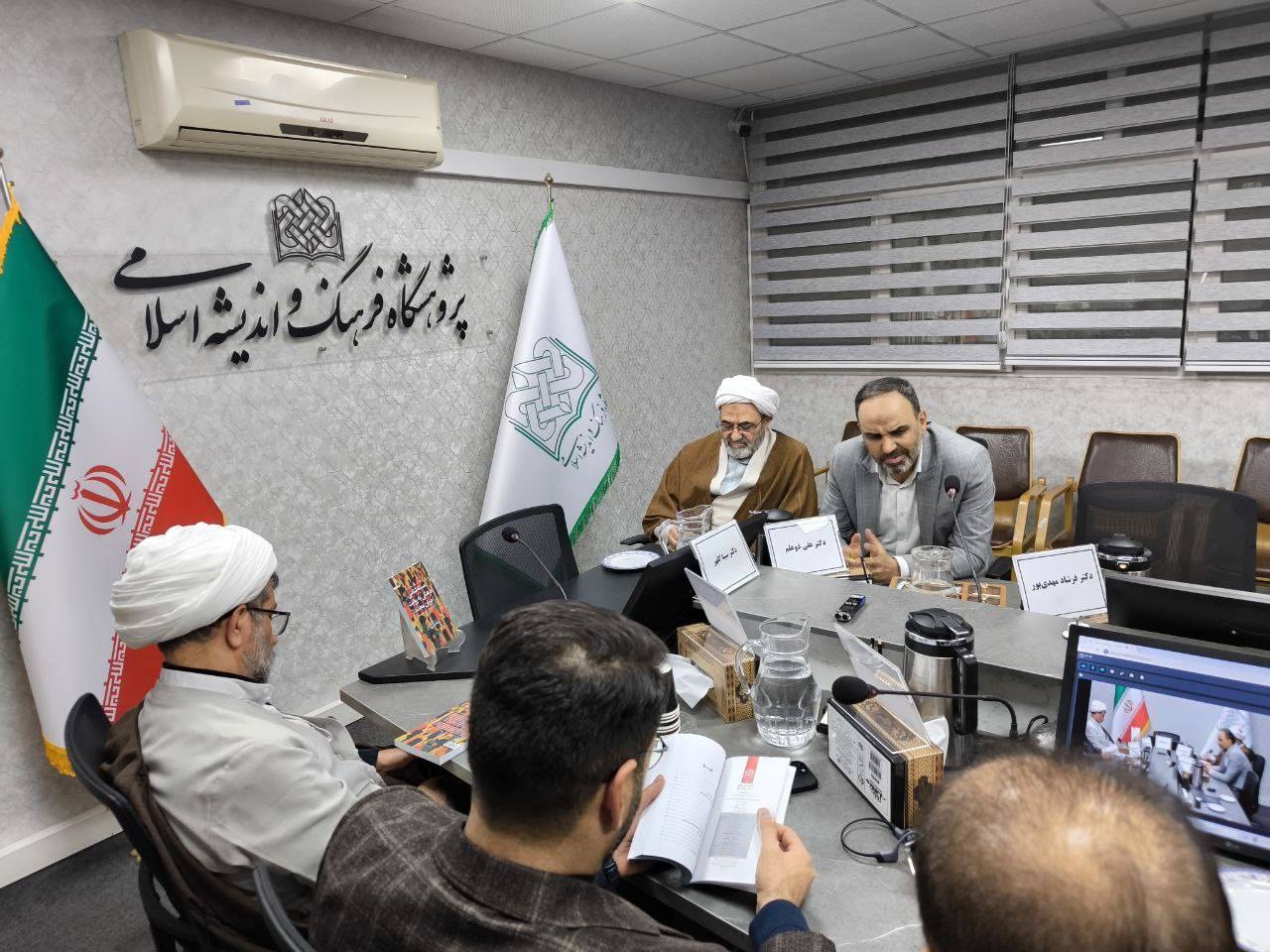
According to the correspondent of the Iran Book News Agency (IBNA) in Qom, Mostafa Soleimani, a writer and psychologist, stated in the ‘Story Afternoon’ program, hosted by Roya Hosseini, regarding the novel ‘Grave in the Eye’ by Azam Zolfi-gol: ‘We are dealing with a thematic, psychological, and profound work, considered a psychoanalytic production.’
He continued: ‘The core of the story is about a woman on the verge of psychological collapse; amidst war, migration, and the destruction of her home, she is set to return to the past and confront herself. She must decide and rewrite herself anew.’
Soleimani clarified: ‘Ms. Zolfi-gol has succeeded well in this endeavor. Roya was at odds with her world, she wanted to be herself but couldn’t exert enough power, yet in the end, we see Roya changing. Not that something extraordinary happens, but her mindset changes. She accepts to be both her father’s daughter and a free woman with her own choices.’
The psychologist further stated: ‘I see this novel as feminine, meaning it addresses women’s concerns across several generations and embodies a feminine life. In the story, we have a feminine subject. An exploration in the field of women takes place; in a way, in a world where men are central, the novel was not misogynistic but rather man-exploring.’
The author emphasized: ‘Also, in the ending, we are faced with a scene where Roya stands before a mirror and sees herself. The protagonist accepts herself with her possessions and lack thereof. She gains self-esteem, and the novel’s title also finds meaning: the real grave is not in the ground, but in our minds and thoughts. It is a place where we achieve awareness and confront our conscience. The brilliant point of the story is the transformation of a woman’s conscience into the novel’s main stage. Although this work needs re-editing.’
I Wanted to Express the Suffering of Women Across Several Generations
Azam Zolfi-gol, in another part of this program, spoke about the idea behind her novel: ‘I wanted to express the suffering of women across several generations. Thus, I narrated five generations over a period of about 70 to 80 years. But the main core of the story was the murder of Negar by her father and his not being punished. Therefore, I chose ‘Roya’ as the narrator to show the process of pursuing justice, even though she was Negar’s stepmother.’
She added: ‘Also, I did not intend to write a psychological story, but it practically happened, and my feedback from the audience was that they empathized with the story.’
Roya Hosseini, the expert host, summarized the story: ‘In her youth, Roya falls in love with her cousin, Mersad, and despite her parents’ strong opposition, she marries him. The joys of married life do not last long for her, and she remains alone in Mersad’s large and magnificent mansion.’
She continued: ‘To escape loneliness, Roya raises Negar, Mersad’s daughter from his French wife. Negar becomes Roya’s entire world and grows into a beautiful girl interested in photography. It is the late Iran-Iraq war, and Negar intends to go to the front to document the bravery of the fighters with her camera, but her father, Mersad, a war profiteer who increases his wealth by smuggling antiquities, intends to send Negar to Europe, until finally, tragedy strikes.’