‘Tirmast’; A Metaphor for Wound and Survival

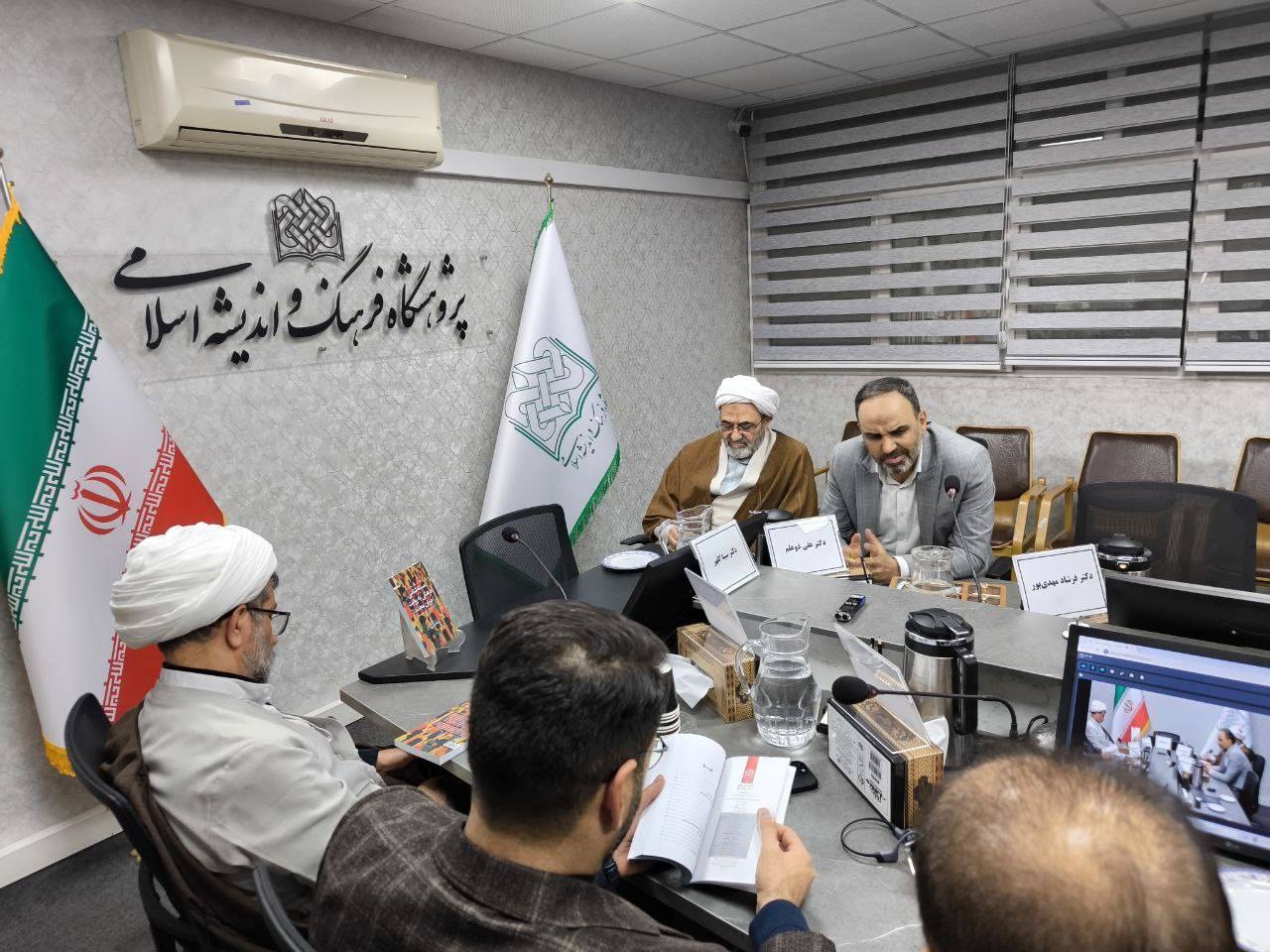
Literature Service of Iran’s Book News Agency (IBNA) – Somayeh Khatouni: In this session, Ali Shadkam first analyzed the structure and themes of the work, and then Mahmoud Gholipour expressed his views on the language, characterization, and narrative of the novel.
Shadkam, after noting the intelligent choice of the title, considered it a metaphorical representation of the novel’s content and the main character’s situation; a word that draws our attention to the importance of the psychological layers and existential dimensions of the main character. He then described the main plot and structure of the novel, explaining: ‘Tirmast’ is about a killer who searches for his next victim in a restaurant outside the city limits. The book is organized into ten chapters, each comprising two parts, with the first part narrated from a first-person perspective and the second parts narrated in a limited third-person style. This narrative shift allows the reader to see situations and actions from various angles and gain a deeper understanding of the characters’ relationships and developments.
Polyphonic Structure, Interpretability, and Other Postmodern Components in the Novel ‘Tirmast’
Continuing the session, Ali Shadkam delved into a more detailed analysis of the novel’s narrative structure and conceptual layers. Referring to the alternating use of first-person and third-person perspectives, he deemed ‘Tirmast’ to possess a polyphonic space; a space that, with the help of narrative diversity and the use of subplots within the main plot, creates multiple perceptions of reality. This brings the novel closer to a postmodern work within its genre. Shadkam added that although the work cannot be considered fully postmodern, signs and elements of postmodernism are visible in it, including the polyphony of narration, the existence of multiple narratives, particularism, and uncertainty. The book is structured in such a way that the reader is ultimately free to interpret its meaning. Each chapter of the novel explores a new concept and adds a layer of meaning to the previous one. Different audiences, depending on their experience and mindset, can connect with various parts of the work.
Shadkam described ‘Tirmast’ as a suspenseful novel; a work in the psychological crime genre that engages the reader from the outset with several fundamental questions: Who is the narrator, and what is their relationship with the intratextual reader? The gradual discovery of the answers to these questions forms part of the novel’s main suspense, which successfully carries the reader to the end of the book. Shadkam considered one of the novel’s main themes to be the narrator’s relationship with his mother, a connection that forms the psychological core of the work. He pointed out: The narrator never refers to his father as ‘my father’ but always as ‘my mother’s husband.’ In contrast, he views his mother as his sole source of authenticity and emotional connection. In this section, the author, with particular subtlety, re-examines one of the oldest concepts in psychoanalysis, namely the Oedipus complex; the son, in rivalry with his father, is attached to a mother who, in his subconscious, is the source of his life and death.
This critic further pointed to the philosophical sub-layers expressed in the novel’s sub-narratives; concepts such as free will and determinism, the survival of linguistic systems, and references to ancient myths. He considered the presence of these elements a significant factor in enhancing the work’s value. In his opinion, this approach has transformed the narrative into a novel beyond its genre, namely a psychological thriller.
Shadkam concluded his remarks by stating: In Iranian literature, this genre has received less attention. Before the revolution, we had prominent examples in the 1960s and 70s, but in recent decades, such works are rare. Fortunately, this novel has managed to fill the existing void and, with precision and coherence, utilize the components of this genre.
Balance Between Thought and Story Elements
Continuing the review session for ‘Tirmast’, Mahmoud Gholipour, referring to the difference in educational perspectives in Iranian and Western literature, said: In Iran, storytelling education is mostly focused on classic story elements, but in Western universities and academic traditions, this education emphasizes philosophy and thought. In my opinion, Ms. Kashfi has managed to strike a balance between these two realms; she writes thoughtfully and shapes the narrative structure of the work based on precise story components.
He added, referring to the narrative structure: In ‘Tirmast’, we encounter a first-person narrator who is involuntarily engaged with his own mind and psyche. He derives his entire being from his mother. The author intelligently conceals the identity of this narrator and his relationship with the reader until late in the book, and this gradual discovery creates an effective kind of suspense.
Crisis in Contemporary Storytelling and Lack of Serious Works
Gholipour then addressed the pathology of contemporary Iranian fiction, stating: In recent years, Iranian stories have become excessively internalized. Writers create within the closed world of their minds, and their works resemble psychoanalytic notes more than novels. This extreme introspection has severed the work’s connection with the outside world and the audience. When literature enters the realm of self-talk, it means the writer has retreated into themselves. This type of writing is no longer engaging for the audience because it does not reflect the public world. Part of this phenomenon stems from economic and social conditions; in a society where the public sphere is restricted, its writers inevitably seek refuge in personal solitude. But a true artist is one who can break this mirror and reintroduce ‘the other’ into the world of the story.
He added: In ‘Tirmast’, the author has managed to establish a balance between the internal and external. Although the narrator is first-person, the third-person narrative in parts of the novel pulls us out of excessive immersion in the narrator’s mind and brings us back to the real world. This back-and-forth makes the novel vibrant and multi-layered. A story comes alive when ‘the other’ is involved; ‘the other’ as a character, an idea, or a voice. When the work only transpires in the narrator’s mind, its world becomes closed and self-sufficient. But when the narrative engages with others, with loves, fears, and human relationships, we, as readers, also find ourselves present in it.
The Concept of Liberation in the Novel ‘Tirmast’
Gholipour, referring to the concept of murder in the novel ‘Tirmast’, emphasized: From its beginning until today, human history has carried within it the desire to ‘kill to achieve a goal’. In his interpretation, if we base our reading on Nietzsche, murder is in fact the manifestation of the ‘will to power’, and it is enough for an individual to enter the magnetic field of murder for all their weaknesses, motivations, and hidden layers of personality to be revealed.
Referring to the duality of power and weakness, he reminded that at the moment of confronting death, even the most powerful individuals reach the peak of helplessness. In the novel ‘Tirmast’, the characters’ placement in the liminal state of death reveals their inner selves.
Gholipour then referred to the language of the work, considering it to possess an internal musicality. He said: The linguistic structure in ‘Tirmast’ is arranged in such a way that it creates new layers of meaning, and this feature is a sign of the work’s maturity.
This critic concluded his remarks by emphasizing that the novel ‘Tirmast’, alongside its cohesive linguistic structure and internal rhythm, has succeeded in showcasing the deep layers of human psyche, ethics, and power in contemporary man.