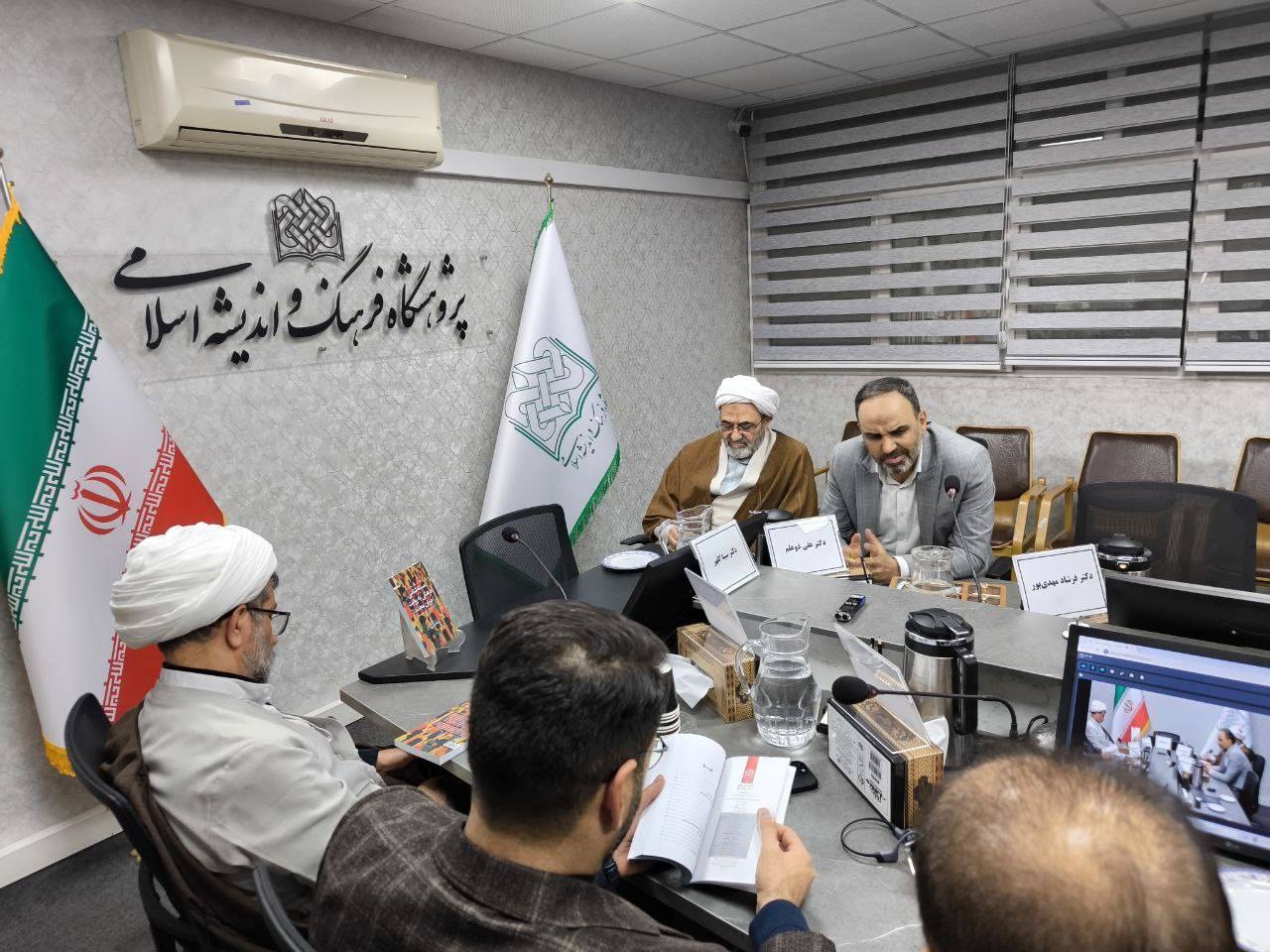
Unveiling Ceremony for the Book ‘It’s the Same Everywhere’ Held

According to Iran’s Book News Agency (IBNA); Before delving into the book’s content, perhaps you could tell our audience a little about yourself. Who is Sadegh Jalali, and how did his journey lead to the writing of ‘It’s the Same Everywhere’?
In fact, ‘I am known simply as Sadegh Jalali, and my full name is Seyed Mohammad Sadegh Fard Jalali.’ My professional field is far removed from writing, and I view writing purely as an inherent and professional interest. Regarding the genesis of this book, my path began with an interest in humanity; not just humanity as a philosophical subject, but as a being full of contradictions, emotions, and a desire to be understood.
For years, I’ve moved between studying psychology, philosophy, and literature, striving to build a bridge between thought and the lived experience of contemporary humans.
For me, writing is neither a job nor merely an art, but a way to converse with myself and the world.
The book ‘It’s the Same Everywhere’ is the result of this conversation; an attempt to show that humanity, wherever it may be in the world, fundamentally shares one voice: the voice of searching for meaning.
The unveiling ceremony for ‘It’s the Same Everywhere’ was met with widespread public reception, perhaps indicating people’s empathy with the book’s worldview. How do you interpret this reception, and what did it mean to you?
For me, that day wasn’t just a ceremony; it was a kind of dialogue between me and those who had touched the world of the book.
The public’s reception wasn’t a validation for me, but rather a sign of our shared need to understand each other.
I felt that people longed to hear words that were of ‘us,’ not ‘me.’
That day I realized that if a book is written with sincerity, it finds its own way; from the author’s heart to the reader’s heart, quietly but profoundly.
Where did the initial idea for ‘It’s the Same Everywhere’ originate?
The idea began with a simple observation; that wherever I went, I saw people with concerns that appeared different on the surface but were fundamentally similar.
I realized that humans, regardless of culture and geography, live with shared fears, hopes, and loves.
The book was born from this perspective; from the desire to say, ‘We are more alike than we are different.’
There’s a simplicity yet depth in the book’s title. Why did you choose this name?
I wanted to choose a title that seemed ordinary at first glance, but when you grasp its meaning, you reach its depth.
‘It’s the Same Everywhere’ is a phrase that can be a complaint, an acceptance, or a comfort.
For me, this title symbolizes the recurrence of humanity; the recurrence of emotions that flow in every corner of the world.
It seems your book takes a humanistic view of the similarities among people. Where does this perspective originate for you?
This perspective formed within me over years of conversations with people. I realized that everyone, behind their different exterior, carries a wound, a hope, or a longing similar to another’s.
In my opinion, being human means precisely this repetition of feelings in various guises.
I believe that if people reflect more on their inner similarities, distances will diminish.
If you wanted to convey the book’s main message in one sentence to someone who hasn’t read it yet, what would that sentence be?
Perhaps this: ‘Wherever you are, people ultimately think like you, feel like you, and long like you.’
What was the most challenging part for you during the writing process?
The hardest part was writing about emotions I was still grappling with myself.
A writer must write about pain they have overcome, not pain they are still submerged in.
And sometimes, distancing oneself from what is still alive within you is the hardest thing in the world.
What impact do you think this book will have, or is intended to have, on its readers?
I hope that after closing the book, the reader’s view of people will soften.
We usually judge others from the outside, but this book is an attempt to see from within.
If even one person acts more kindly towards another after reading it, my mission will be accomplished.
What feedback and criticisms have you received so far, and in your opinion, how much room for improvement does this work have?
Much of the feedback I received was honest and thoughtful. Fortunately, many readers deeply connected with the book’s main concept — human similarities and mutual understanding — while criticisms regarding its story and narrative style were also raised, which were entirely valid and highly valuable to me.
And I will certainly endeavor to consider these points in subsequent books.
In my opinion, no work is perfect, especially when it’s one of the author’s first.
I myself believe ‘It’s the Same Everywhere’ is the beginning of a journey, not the end.
There’s still much to learn; from prose and narration to deepening concepts and characters.
For me, criticism is neither a threat nor an upset, but an opportunity to see from a different angle.
If someone from outside can see something in my writing that I haven’t, it means the work is alive, and that’s the greatest thing for any writer.
Today, Sadegh Jalali is recognized as one of the country’s youngest emerging and successful authors. How does this title make you feel?
Honestly, every time I hear this phrase, the word ‘responsibility’ stands out more in my mind than the word ‘successful’.
For me, success is not an external word; it’s not something society bestows upon us, but an emotion that must spring from within.
If this title is to have any meaning, perhaps it lies in my ability to play a small part in keeping people’s minds and hearts awake.
I am at the beginning of this journey, and there are thousands of subjects I must learn from the masters of this path.
The path of writing is endless; the further you go, the more you realize that what you know is but a drop compared to what you don’t know.
For me, writing is not about being seen, but about ‘seeing better’.
For a final thought, in Mr. Sadegh Jalali’s opinion, what is the role of a writer in today’s world? Can they still be expected to influence the path of humanity and society, or should they be considered silent observers of change?
I believe a writer is no longer a hero of transformation; they are not tasked with building, but rather with seeing.
In today’s world, the writer is not a herald of change, but a vigilant observer of humanity. Their work is not in the clamor of reform, but in the solitude of words and the search for a truth often forgotten.
For me, a writer is not a ‘teacher,’ but more of a ‘reminder.’
They do not seek to teach anything, but rather strive to recreate what has been destroyed or forgotten in the corners of the human mind.
Sometimes, simply by recalling a feeling, a gaze, or a simple truth, they can bring humanity back to itself.
If a writer can break some of this silence and bring humanity closer to its true self for a moment, their mission is fully accomplished.
Contact Me
Mr.sadeghjalali@gmail.com