Children’s Santour Unveiled; An Account of an Experience with Love
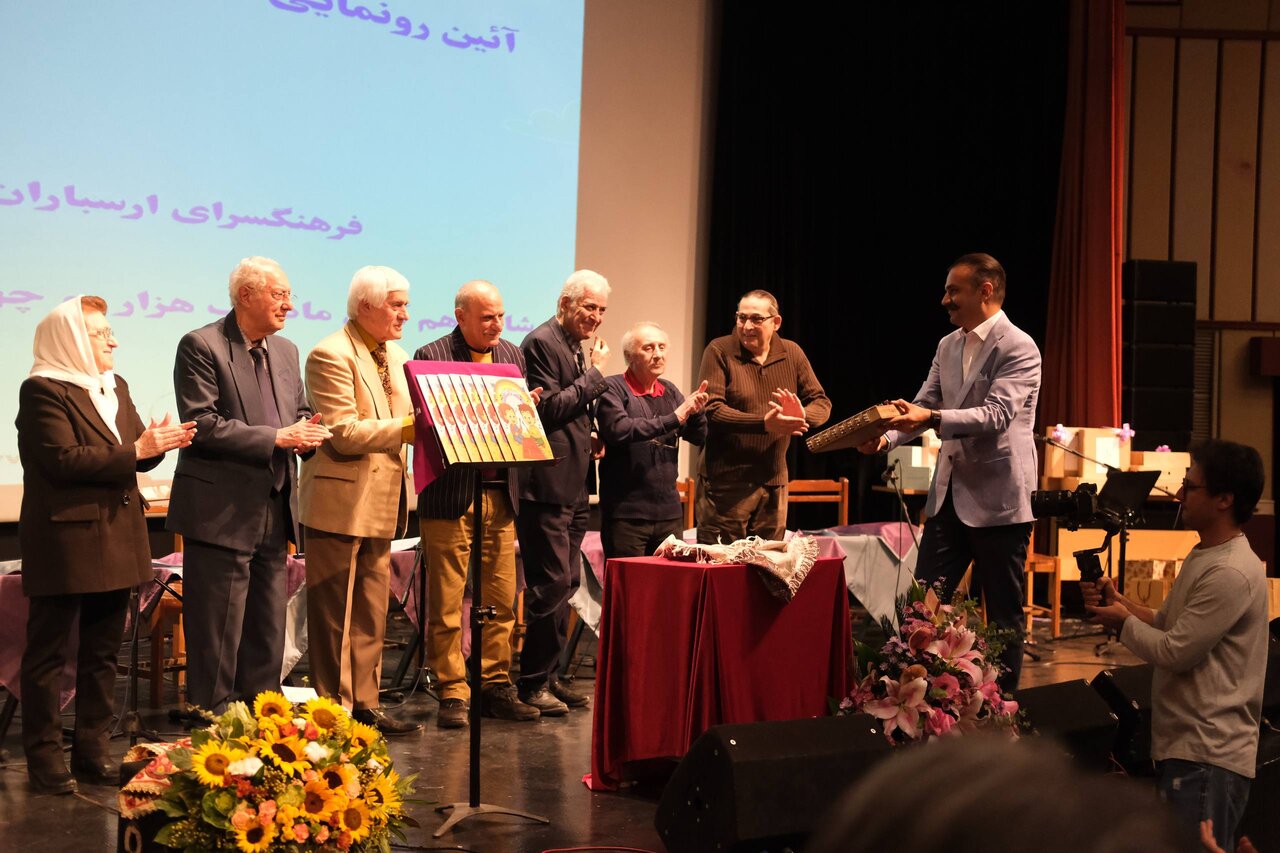
According to Mehr News Agency, quoting the project’s media affairs, the unveiling ceremony of the children’s santour and book, written and created by Davood Shirazi, was held on the 16th of Aban. The event took place at Tehran’s Arasbaran Cultural Center, attended by artists such as Ardavan Kamkar, Arjang Kamkar, Reza Zhaleh, Hengameh Akhavan, Javad Bathaei, Ali Tahriri, Milad Kiaee, Reza Parvizadeh, Mahyar Tamasokni, Pedram Derakhshani, Pouya Saraee, Mohammad Reza Zadeh, Keivan Taleb, Babak Dashtinezhad, Reza Mahdavi, and Amir Rahmani.
At the beginning of the ceremony, Fariborz Rostami, a music researcher, commented on the creation of the children’s santour: ‘I congratulate Davood Shirazi because he had the courage to break free from conventional molds and create such a santour. The value of his work lies in creating the first melodic instrument with which Iranian music can be played simply. This greatly aids children’s music classes and familiarizes children with Iranian musical intervals, as the instrument’s application and function are very important.’
He continued: ‘We need to understand the role of music in a child’s life and education. Based on studies, research, and over 25 years of experience, I’ve realized that four crucial elements are important in children’s educational lives. First is balance. Children sometimes lack balance; their walking might not have rhythm, or they might not jump correctly, or their two brain hemispheres haven’t reached equilibrium. When we aim for skill, balance is very important. Second is mobility, which children greatly need because in these conditions, the brain is actively giving commands. Third is the strengthening of fine and gross motor skills, important for music education, which are worked on in educational workshops like painting, pottery, and crafts. And finally, the fourth is a child’s expression. This means being able to articulate their desires and feelings. Care must also be taken in conveying concepts. We must be creativity-centered. A child should not lose creativity, so we must be model-centric rather than method-centric.’
Ehsan Tamiz, a technical consultant for the project, also stated at the ceremony: ‘Davood Shirazi has made these works accessible with love and precision to bridge the gap between old and new generations. Our children no longer need to start music with Western instruments, and this is a special event for the future of the country’s music. I hope future talents will use this instrument.’
Davood Shirazi, founder of the Santour Research Center and creator of the children’s santour and book, took the stage and said: ‘When I was teaching santour, I saw children around five years old who came to me for santour lessons perceive the instrument as a single, intertwined entity, and the interwoven strings caused confusion for them. At that time, children first had to learn flute and glockenspiel, and only after that would they return to the santour – many never returned! It was painful for me that we didn’t have any melodic Iranian instrument, and I felt that perhaps one day the roots of Iranian music would dry up this way. Therefore, I decided to do something, and today we have reached the unveiling of the children’s santour and book.’
He added: ‘In this instrument, I removed the yellow string bridges of the santour and arrived at this version of the santour in these dimensions. My goal was not to make a small santour! In a small santour, where the bridges are close together, even a professional player cannot play properly. I removed the bass bridges so that the child sees a series of separate lines and can observe the strings individually. I set the center-to-center spacing of the bridges exactly like a normal santour, so that when the child transitions to the main santour, they can play easily. This instrument can be a transitional and prerequisite instrument. An instrument that, even if a child wants to play the Tar or Kamancheh, can initially experience Iranian intervals, rhythms, and melodies through it. I designed the plectrum to be double-sided. One side has felt, and the other is without felt, and I also removed the ring.’
Davood Shirazi introduced Ala Afkhami as the instructor for children playing the children’s santour and invited young artists to perform pieces from the children’s book using the children’s santour on stage.
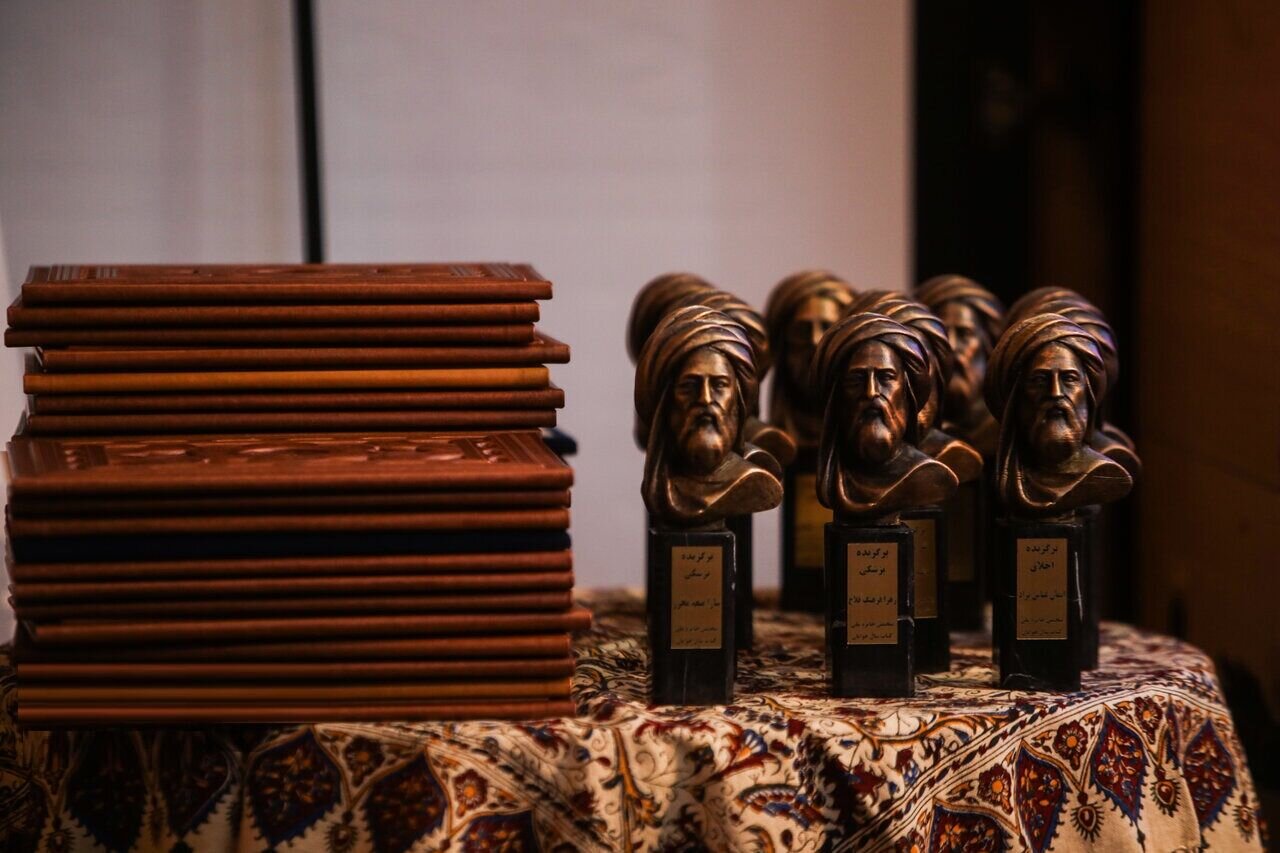
Mohammad Reza Faraji, Mehrsam Hamedani, Liana Taheri, Avisa Sabouti, Aya Isfahani, Sofia Taghavi, Nozha Bonyadi, and Dayana Safaei were the young artists of this ensemble performance, who were honored at the end of the musical presentation.