A Lady Whose Words Teach Faith, Justice, and Servitude
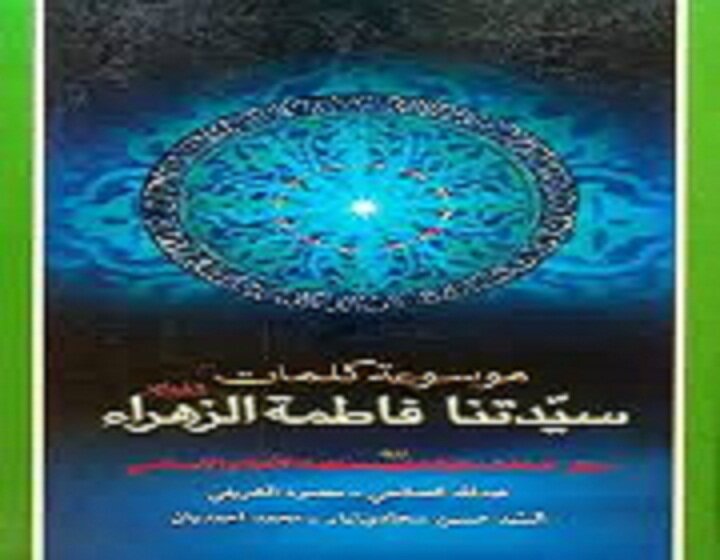
According to Fekr va Farhang Moballeq website, in these days when hearts thirst for understanding the Fatimid truth, and the remembrance of Lady Fatimah al-Zahra (peace be upon her) has brought our souls to grief and contemplation, IQNA’s Thought Service, with a special dossier, has focused on observing the light in the words of that sacred lady. We intend, in these days of mourning for the Mother of the Two Worlds, to delve into words of divine knowledge.
These words have sometimes reached us through written books and works about Lady Fatimah (PBUH) and sometimes emerge in face-to-face media dialogues with thinkers. In the first step of these conversations, join us with a written gem from this overflowing spring. The book “Mawsu’at Kalimat Fatimah al-Zahra (PBUH)” is a research work that, with a deep and loving perspective, has compiled the Lady’s sayings from historical and thematic viewpoints, enabling today’s audience to quench their thirst from the spring of Fatimid thought and prayer.
A blessed book titled “Mawsu’at Kalimat Fatimah al-Zahra (PBUH),” with the subtitle “Al-Jannah al-Hadith” (The Garden of Hadith), shines like a lamp on the path of knowledge. This work is an anthology of the luminous words of a lady whose words teach faith, justice, and servitude. Researchers at the Baqir al-Olum Institute (PBUH), with a scientific and devoted approach to the traditions of the Ahl al-Bayt (PBUH), have compiled these sayings to open a new window to Fatimid thought, prayer, and ethics.
In this context, we will review this invaluable book, which opens a path toward a deeper understanding of the exemplary lady of Islam.
This work has been translated into Persian with the collaboration of prominent translators such as Abdullah Salehi, Mohammad Sharif, Seyyed Hossein Sajjadi Tabar, Mahmoud Ahmadian, Mehdi Esmaeili, and Mohammad Babaei. This scientific committee, comprised of a group of researchers and specialists in the field of Hadith and the biography of the Ahl al-Bayt (peace be upon them), has been responsible for the compilation and writing of this work. The Baqir al-Olum Institute (PBUH) is one of the reputable scientific centers in the field of Ahl al-Bayt (PBUT) that operates in various scientific, research, and educational areas.
The Baqir al-Olum Institute (PBUH) has so far published numerous works in various scientific and religious fields. Some of these works include: the book “Sunan al-Rasul al-A’zam (PBUH)”: a comprehensive work on the biography and traditions of the Prophet of Islam (PBUH). Hadith books in various fields: such as “Al-Kafi”, “Man La Yahduruhu al-Faqih”, and “Tahdhib al-Ahkam”. Jurisprudential and Usuli works: in various fields of Ahl al-Bayt jurisprudence (PBUH). Historical and biographical works: concerning the lives of the Ahl al-Bayt (PBUH). Philosophical and theological works: in various fields of Islamic philosophy. This institute aims to promote the teachings of the Ahl al-Bayt (PBUH) and raise the scientific level of the Islamic society by publishing high-quality scientific and religious works.
The book “Mawsu’at Kalimat Sayyidatuna Fatimah al-Zahra (PBUH)” is a comprehensive and coherent work that compiles and analyzes the sayings of Lady Fatimah al-Zahra (PBUH). The main goal of the book is to introduce the profound spiritual and ethical depth of her words and to provide a clear model for researchers and Persian-speaking audiences.
The book is organized into two main sections:
- 1- Sayings of Lady Fatimah (PBUH) by chronology: This section is divided into two chapters: Sayings before the passing of the Prophet (PBUH) and Sayings after his passing.
- 2- Sayings of Lady Fatimah (PBUH) by topic: This section addresses the following topics in four chapters: beliefs, rulings, ethics, supplications, and remembrances.
This encyclopedia, by compiling the sayings of Lady Fatimah al-Zahra (PBUH) on various religious topics, provides a brief introduction to her personality, the status and dignity of women in Islam, and clarifies the authority of the words and actions of this great lady as one of the infallible ones.
This work addresses issues such as the virtues of Imam Ali (PBUH), the proof of his imamate and guardianship, supplications narrated from Lady Fatimah (PBUH), and some social and ethical issues derived from her.
Chapter One: Sayings of the Lady before the Passing of the Prophet (PBUH)
This chapter of the book collects the sayings and words of Lady Fatimah (PBUH) before the demise of the Prophet (PBUH). The contents of this chapter show how the Lady, with profound insight and precision in religious and social matters, played her educational and guiding role. The main questions of this chapter revolve around upbringing, faith, social justice, and strengthening the ethical foundations of the Islamic society during the era of the Prophet (PBUH).
In this chapter, the book’s authors emphasize the familial foundation of the Fatimid tradition; where the home is a place for nurturing hearts and calming souls. Lady Fatimah (PBUH), in the view of the encyclopedia, is introduced as a role model for the believing woman who intertwines spirituality with affection and upbringing.
Chapter Two: Sayings of the Lady after the Passing of the Prophet (PBUH)
This chapter is dedicated to the sensitive period after the passing of the Prophet (PBUH) and examines the sayings of Lady Fatimah (peace be upon her) in the social and political situations of that time. The book thematically addresses the Lady’s reactions to issues of caliphate, the rights of the Ahl al-Bayt, and the defense of the Prophet’s teachings, demonstrating how she, with inspiring words, kept clear the path of preserving religious values. Chapter Two is one of the most central parts of the encyclopedia, relying on the social and political sermons of Lady Fatimah (PBUH). This chapter shows that the divine lady did not deem silence permissible in defending guardianship and truth, and with a rational and Quranic expression, defended the right.
Chapter Three: Beliefs, Rulings, Ethics, Supplications, and Remembrances
This chapter is categorized thematically into four sections. In the section on beliefs, the Lady’s views on monotheism, prophecy, and the afterlife are examined; the section on rulings is dedicated to jurisprudential opinions and religious commands; the section on ethics recounts the Lady’s educational and behavioral points; and the section on supplications and remembrances provides examples of her prayers and their application in daily life. This chapter, by presenting practical teachings, provides spiritual and intellectual guidance for Muslims.
In the third section, a manifestation of the ascetic and prayerful spirit of Lady Fatimah (PBUH) is depicted; words that originate from the peak of servitude and love for God, opening a path for the purification of hearts and the peace of mind of believers.
The attractions and innovative aspect of the book “Mawsu’at Kalimat Sayyidatuna Fatimah al-Zahra (PBUH)” are due to the compilation of the Lady’s sayings in an organized and thematic format, making it a comprehensive and practical tool for researchers and enthusiasts in the field of Islamic studies. The smooth and accurate translation by the translators has made the content easy to understand for Persian-speaking audiences, adding an attractive and innovative dimension to it. This work not only clarifies the scientific and spiritual status of Lady Fatimah al-Zahra (PBUH) but also provides practical guidance for the spiritual and religious life of Muslims by presenting her views on various issues.
Interested readers can obtain the print version of the book from reputable bookstores such as Patogh Ketab Farda. The digital version is also available in Noor Digital Library, and for online reading or download, one can refer to Noor Digital Library. This valuable work is a light on the path to understanding the biography and sayings of Lady Fatimah (PBUH) and can be a guide for our spiritual and ethical life; a work that every researcher and enthusiast of the history and traditions of the Ahl al-Bayt (PBUH) should have in their library.





