Sixtieth print of the historical novel ‘Haydar’; a fresh look at the life of Imam Ali (AS)
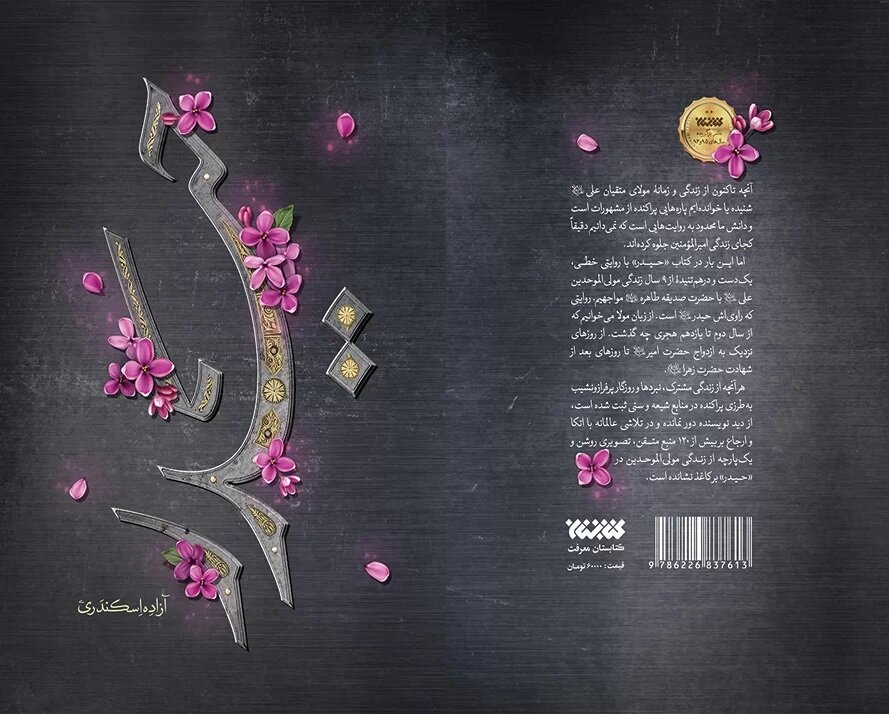
According to Mehr reporter, this work, considered one of the most popular historical novels in recent years, presents a fresh, narrative, and documented image of the life of Amir al-Mu’minin Imam Ali (AS).
‘Haydar’ is a historical novel whose author, by relying on credible Shia and Sunni sources, has recreated a part of Imam Ali’s life with a narrative and analytical approach. This work, with a fluent prose and cohesive structure, has sought to portray the human, family, and social dimensions of Imam Ali’s personality through the events from the early years of emigration (Hijra) until after the martyrdom of Lady Fatimah Zahra (SA).
In this novel, the narrative of Imam Ali’s life is told from his own perspective, and the story covers a nine-year period of his shared life with Lady Fatimah Zahra (SA). In writing this work, the author has utilized over 120 credible historical sources to provide a precise and documented depiction of their marriage days, battles, family events, and the final moments of Lady Fatimah Zahra’s life.
Azadeh Eskandari, in ‘Haydar,’ has strived to draw a continuous and integrated narrative of the life of Mawla al-Muwahhidin (Master of the Monotheists); a narrative in which the reader encounters less-told aspects of Imam Ali’s personality. According to the author, the main goal of writing this book was to represent a human and realistic face of Imam Ali (AS) within the context of early Islamic history.
This novel is particularly noteworthy for those interested in religious stories and historical works centered on the lives of the infallible Imams (AS), and it has been introduced by critics as one of the successful works in the narrative re-creation of Islamic history.
An excerpt from the novel ‘Haydar’:
“When we returned from the Battle of Badr, we stayed in the mosque for the rest of the second decade of the month. There was turmoil in my heart. I wanted Lady Fatima to be in my house, and I to be a guardian for her. Always, even in the hardest moments of war, I was unfamiliar with fear, but in those days, I didn’t know what had melted my courage. No matter how much I struggled with myself, I couldn’t step forward.
I recalled the day the Prophet asked, ‘Don’t you want to marry?’ From his tone, it was clear he wanted to arrange a marriage for me with one of the daughters of Quraish. I remained silent. I didn’t want to lose Fatima.
Fatima had reached marriageable age, and her suitors were from wealthy and renowned families. Abu Bakr had just married his daughter Aisha to the Prophet and did not expect rejection, but he heard it. The same went for Umar and Abd al-Rahman ibn Awf. Abd al-Rahman’s and Uthman’s financial situations were better than others’, and they offered such high dowries that everyone assumed the Prophet would give Fatima to one of them.”
This work, in its numerous prints, has been well-received by audiences and is among the novels that have managed to establish a connection between documented history and literary narrative.
The book ‘Haydar,’ written by Azadeh Eskandari, is available in the publishing market in 380 pages at a price of 385,000 Tomans.





